The sex life of a primrose
Our primroses, which have an interestingly complicated sex life, are just beginning to flower in the reserve’s sheltered ditches and copses.
Continue reading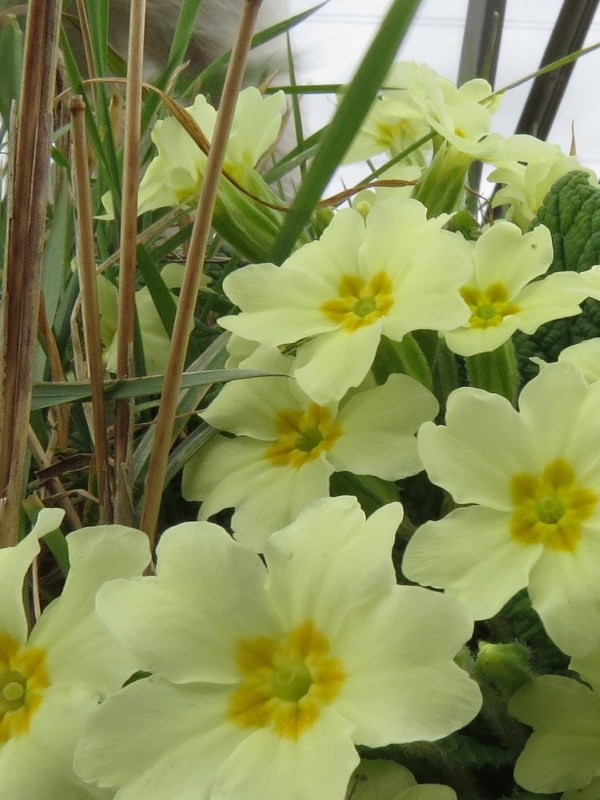
Our primroses, which have an interestingly complicated sex life, are just beginning to flower in the reserve’s sheltered ditches and copses.
Continue reading
On one of our forays into of our invertebrate species list, we just noticed this: a common malachite beetle, Malachius bipustulatus.
Continue reading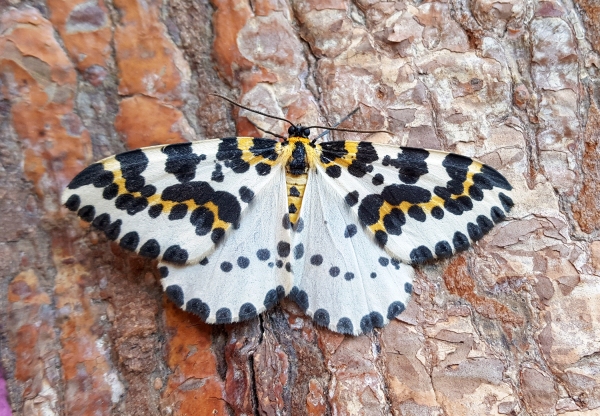
Researchers from London’s Imperial College believe they have discovered why moths and other flying insects seem to be so fatally attracted to light.
Continue reading
The reserve’s ivy blooms from the beginning of September right through November; each plant’s flowering season is quite short but a succession of plants flowers all through the autumn and into the winter. The flowers are small, green and yellow, and so insignificant-looking that many people don’t realise that that they are flowers at all.
Read on:
A real mouthful of a name:
Xanthogramma pedissequum, the superb ant-hill hoverfly, a rarity spotted by Ian early on a spring morning in 2021 and added to our species list.
Continue reading
A bloody nosed beetle (Timarcha tenebricosa) found in the short grass where the rabbits graze at the end of Sleepers Field.
Continue reading “Bloody nosed beetle”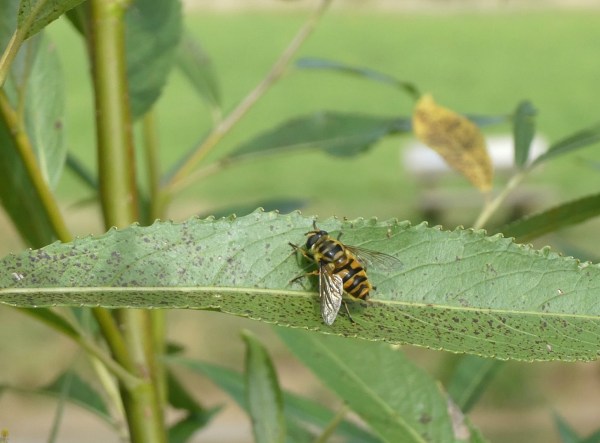
From the willows by Village Green’s pond, Ian has sent us this image of another new species for the reserve’s lists: Myathropa florea, the Batman hoverfly.
Continue reading
There are always European hornets working somewhere in the reserve and we know of at least one nest high in a tree. Here is an astonishing video of hornets at an invertebrate water hole.
Video by nature photographer, Lothar Lenz, published by Caters Clips.

Somebody asks this every year in August, as they wave wasps away from their picnic or soothe a painful sting with a vinegar poultice.
Continue reading “What good are wasps…?”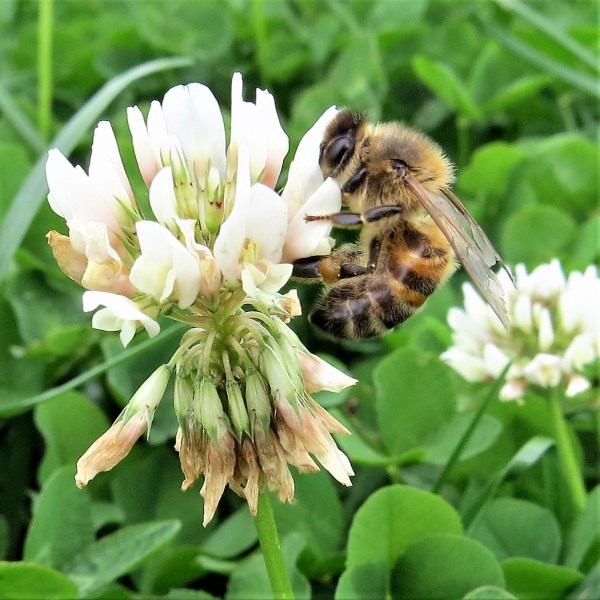
There are at least two feral honey bee colonies in the reserve, nesting high in our mature trees. Unlike common wasps, honey bees don’t die at the end of the summer; the colony stores enough food for the queen and the workers to survive through the winter.
Continue reading “Honey bees”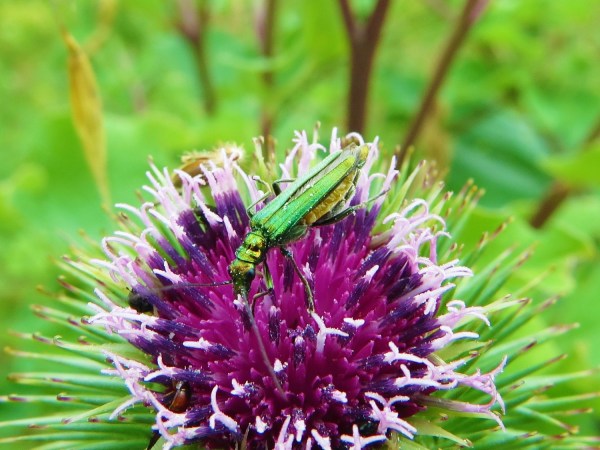
An iridescent green, female Oedemera nobilis, known as the thick legged flower beetle or swollen thighed beetle, photographed in the reserve last year. It is the male (see below) that has the strangely shaped hind legs for which the species is named


[1] by Gail Hampshire (CC BY 2.0) flickr.com; [2] © Hans Hillewaert (CC BY-SA 4.0) wikimedia.org

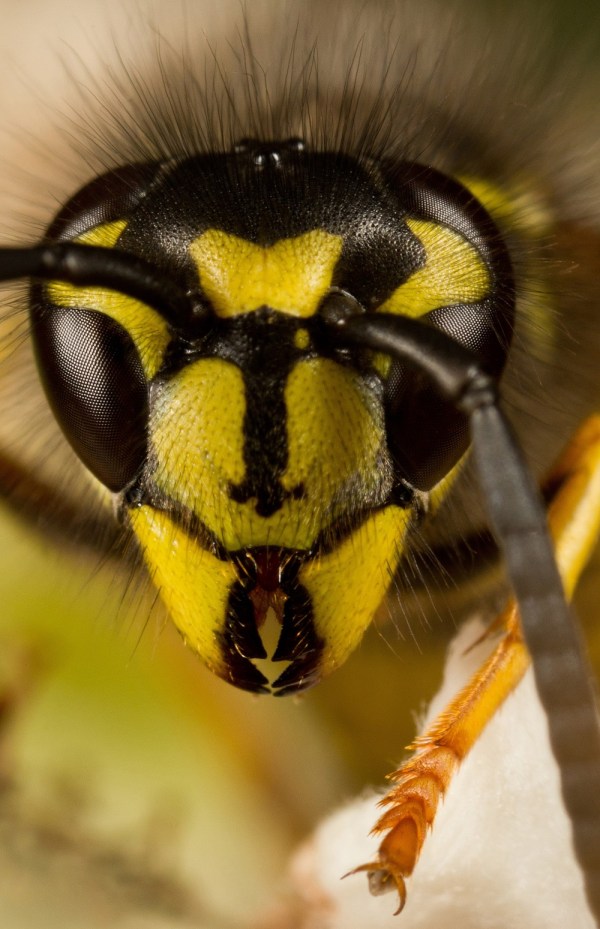
There are six species of social wasp that are native to Britain and this is a good time of year to identify them.
Continue reading “Wasp time”
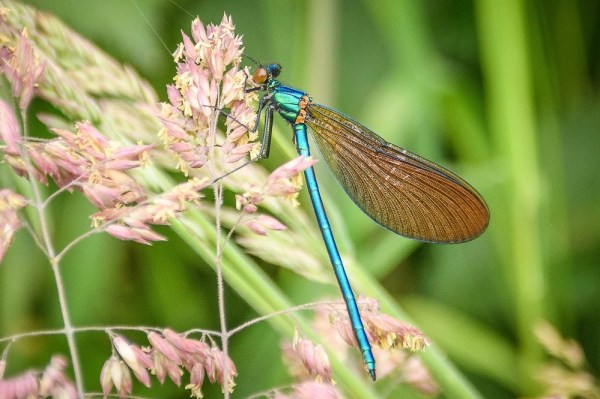
Village Green pond is prime real estate for broad bodied chasers. All summer long the flashy blue males fight over territory and the attentions of the golden brown females. Keep an eye out for them the next time you are passing.


by Simon Knight
Sunrise during summer for me means early starts in the reserve. And there is no doubt that the first couple of hours of the day is the best time to be there, especially after a clear night. As the sun rises, the dew-covered grass glistens and cobwebs sparkle as the golden light reflects off countless tiny water droplets. As the sun starts its morning climb and the first rays of light illuminate Lambrok Meadow then Kestrel Field, I love to stand in Corn Field and watch the Lone Oak as it soaks up the sun. It’s a beautiful sight.
Continue reading “Hope During the Harvest “
Some years, July sees such large and dense clouds of flying ants that the Met Office’s RADAR records them as rain storms.
Continue reading “Flying ants”
Two new insect species from Clive Knight: a flesh fly identified by Ian Bushell, our entomologist, as Sarcophaga carnaria, and a day-flying moth, Camptogramma bilineata, called yellow shell for the beautful striped pattern on its wings.
Continue reading “Two new species”
For a long time, bumblebee flight was considered to be aerodynamically impossible. We know better now and are beginning to understand how such fat furry creatures can take to the air. Here is a video about their surprising flying skills:

by Simon Knight
I love this time of year. It brings wonderful colour and interesting new life to the reserve. The fields are looking stunning in their carpet of yellow, the trees are a fresh, vibrant green and the grasses are playing host to the emerging insect life.
Continue reading “The Insects Are Out “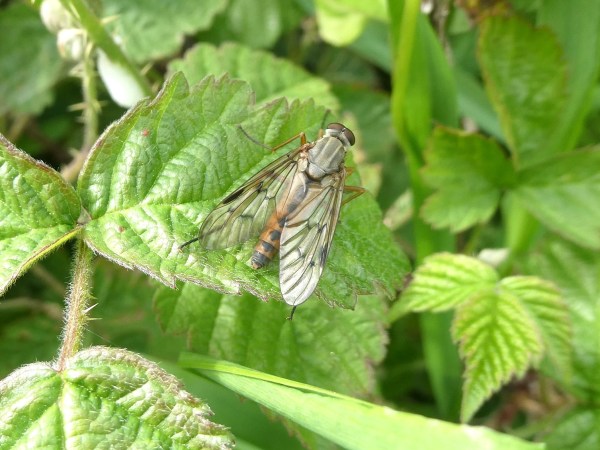
A marsh snipefly (Rhagio tringarius), a new species for our lists, spotted in the reserve on Wednesday by Ian Bushell.
Continue reading “Another new species”
Up in the heritage orchard, near the allotments, Ian Bushell has found two new species of bug for our lists: a hairy shieldbug (Dolycoris baccarum) and a cabbage shieldbug (Eurydema oleracea).
Continue reading
On the winter’s coldest day so far, let’s look back to the summer for a while: here is Simon Knight’s picture of a golden-bloomed longhorn beetle sunbathing among the grass stems.


In the world of invertebrates, black and yellow signals danger. It says to predators: I am poisonous or I will bite you.
Read on to discover more:
There are Jerusalem artichokes (Helianthus tuberosus) flowering down by the Lambrok tributary stream. They have been there for three or four years now and are spreading along the bank.
Read on:


 Southwick Country Park Nature Reserve