How did the reserve’s invertebrates make it through last week’s freezing weather?
Continue reading “Anti-freeze”Anti-freeze

How did the reserve’s invertebrates make it through last week’s freezing weather?
Continue reading “Anti-freeze”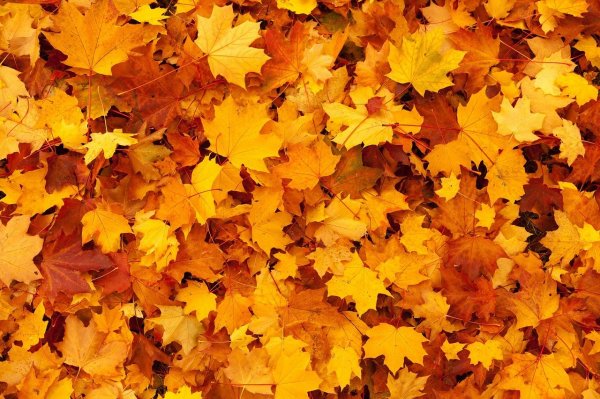
There are thousands of species of invertebrates that overwinter in the leaf litter below the reserve’s trees and shrubs. Let’s not be too eager to sweep the autumn leaves from our gardens.
Continue reading “Let the leaves lie”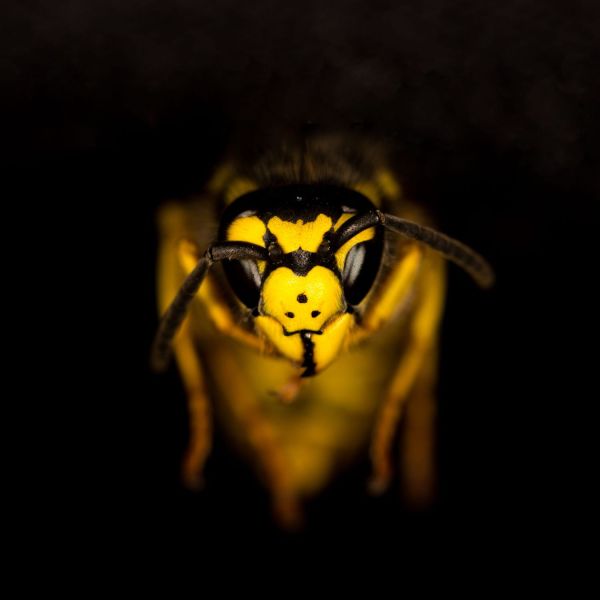
In the world of invertebrates, black and yellow signals danger. It says to predators: I am poisonous or I will bite you.
Read on to discover more:
The reserve’s’s ivy flowers between September and November; each plant’s flowering season is quite short but a succession of plants flowers all through the autumn. The flowers are small, green and yellow, and so insignificant-looking that many people don’t realise that that they are flowers at all.
Read on: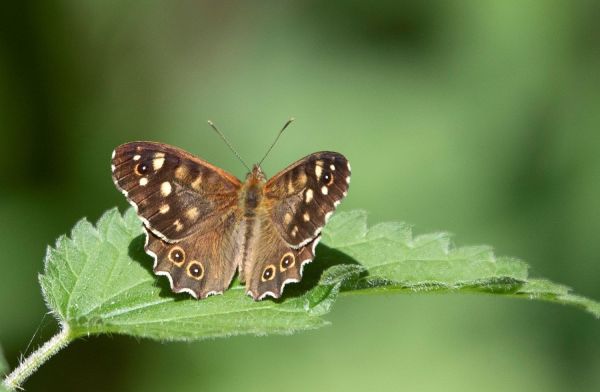
As its name implies, the speckled wood (Pararge aegeriais) is a woodland species.
Continue reading “Speckled wood”
In the UK, the populations of our more common butterflies have fallen by 46% in the last 50 years while the rarer species have declined by 77%. We have lost 60% of our flying insects in just 20 years. We have entirely lost 13 species of our native bees since the 1970s and fully expect more to follow.
Continue reading “Insect losses”
Somebody asks this every year in the school holidays, as they wave wasps away from their picnic or soothe a painful sting with a vinegar poultice.
Continue reading
Each year, more meadow browns are spotted in the reserve than any other species of butterfly.
Continue reading “Meadow brown”
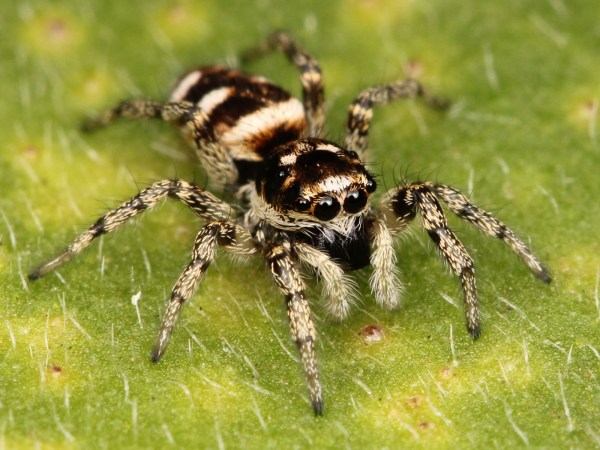
This is a jumping spider: Salticus scenicus, the zebra spider, so named for its black and white stripes.
Continue reading
by Ian Bushell
This is a Common Cockchafer – Melolontha melolontha – photographed in the reserve last week. It is also called Maybug, Maybeetle or Doodlebug.
Continue reading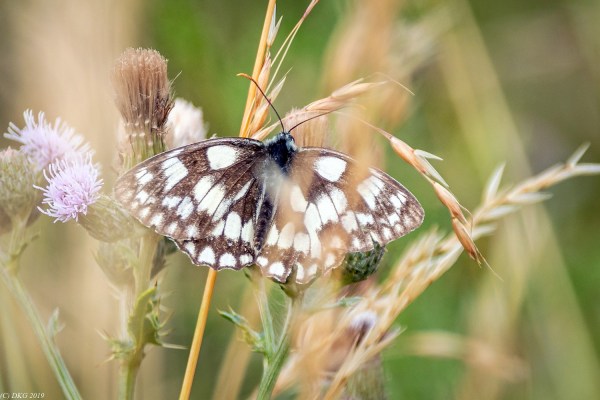
There are 59 species of butterfly resident in the British Isles and our native grasses are the major or sole foodstuffs of the larvae of around a fifth of them.
Continue reading “Grass”
A dandelion crammed with tiny bronze-black beetles.
Continue reading “Common pollen beetle”

At this time of year, our peacock butterflies are leaving their hibernation sites to feed among the reserve’s spring flowers: welcome flashes of colour in all this rain.
Continue reading “Peacock butterflies”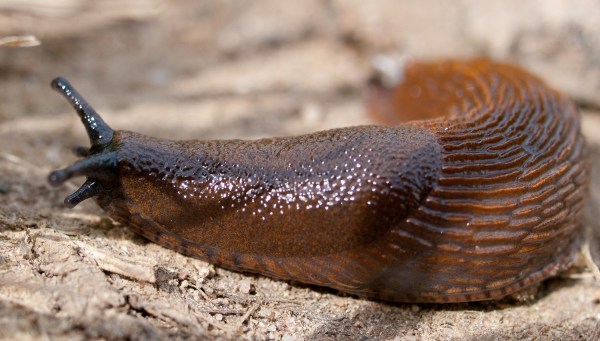
In the spring of 2022 the Royal Horticultural Society decided that slugs are no longer to be classed as garden pests. This was very welcome news.
Continue reading

The reserve’s ivy blooms from the beginning of September right through November; each plant’s flowering season is quite short but a succession of plants flowers all through the autumn and into the winter. The flowers are small, green and yellow, and so insignificant-looking that many people don’t realise that that they are flowers at all.
Read on:
There are thousands of species of invertebrates that overwinter in the leaf litter below the reserve’s trees and shrubs. Let’s not be too eager to sweep the autumn leaves from our gardens.
Continue reading “Let the leaves lie”

At this time of year, the park’s many oak trees have shed not only their acorns but a variety of galls.
Continue reading “Oak galls”
Charles Darwin calculated that there would be 53,000 earthworms in an acre of soil. That number has been adjusted upwards over the years and at the moment stands anywhere between 500,000 and a million. The reserve covers about 140 acres so, even at the lowest of modern estimates, there are 70 million earthworms in the park.
Continue reading “Earthworms”
There are hundreds of species of crane fly in this country and almost all of them go by the name of daddy-long-legs. The differences between species can be microscopically small but we think this specimen photographed in Sheep Field is either a common European crane fly (Tipula paludosa) or a marsh crane fly (T. oleracea). At this time of year they hatch in the reserve’s field in their thousands, if not millions.
Continue reading
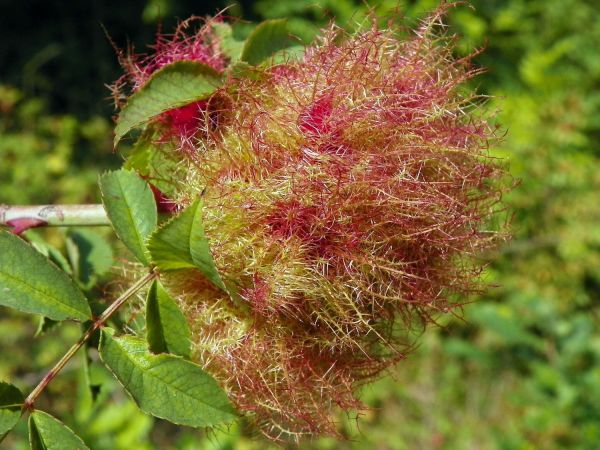
This strange growth is called a robin’s pincushion.
Continue reading “Robin’s pincushion”


 Southwick Country Park Nature Reserve