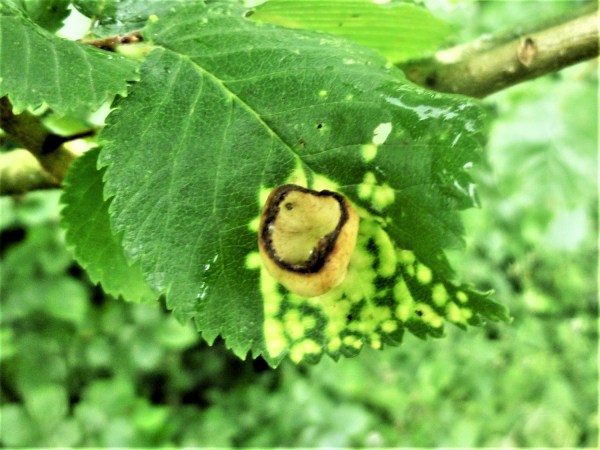
Let’s end National Insect Week with a real doozy: this is a fig gall on an elm leaf in the hedge between Sleepers and Cornfield. It is caused by Tetraneura ulmi, an elm-grass root aphid with a very complicated and quite astonishing life cycle.
Continue reading “Fig gall”Can earwigs fly?
Yes, they can: unsettling news for some, we know, but nevertheless important.
Continue readingFig gall
This is a fig gall on an elm leaf in the hedge between Sleepers and Cornfield. It is caused by Tetraneura ulmi, an elm-grass root aphid with a very complicated and quite astonishing life cycle.
Continue reading “Fig gall”National Insect Week – Day 7
Broad bodied chasers
Several broad bodied chaser males (Libellula depressa) have established territories over the big pond.
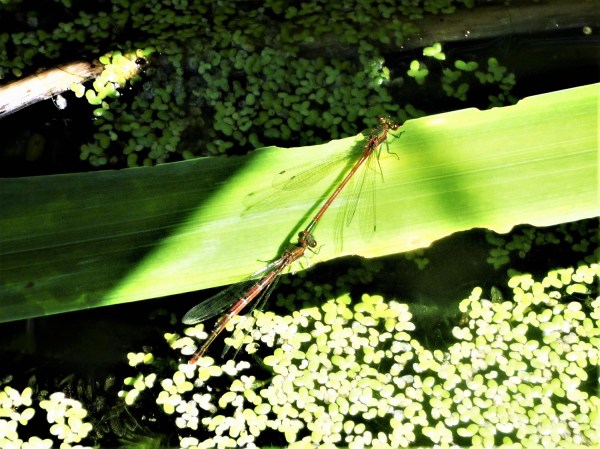
Continue reading “National Insect Week – Day 7”Ian Bushell has sent in a picture of a pair of large red damselflies photographed in the park today, the penultimate day of National Insect Week.
Day 6 of National Insect Week
This is a fig gall, found on an elm leaf in the hedge between Sleepers and Cornfield. It is caused by Tetraneura ulmi, an elm-grass root aphid with a very complicated life cycle.
Continue readingWhirligig beetles
National Insect Week – Day 5
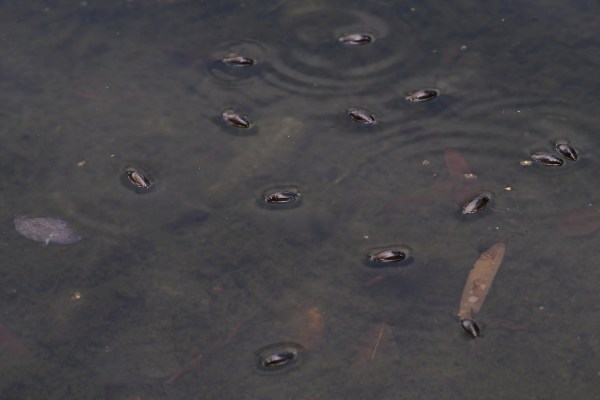
Whirligig beetles are actually a whole family (Gyrinidae) of water beetles: almost 700 different species globally, most of them very much alike and extremely difficult to tell apart. We have no idea what particular species live in the pond above the wooden bridge but all the Gyridinae share some fascinating features.
Read on for details and a short videoNational Insect Week – Day 4
Butterfly Transect
Mon 22/06/2020 13:05
Mail to Mike Fuller, County Butterfly Recorder, from Ian Bushell
Mike,
Attached is the latest transect at Southwick Country Park – the Meadow Brown numbers are if anything an underestimate. The warm May, lower footfall in the park, plus the fact that the hay/silage crop had not been taken could well have contributed to the general increased numbers.
Cheers
Ian
National Insect Week – Day 3
Scorpion fly
by Ian Bushell
This is a Scorpion Fly (Panorpa sp.), a strange-looking insect found all over the park particularly along the field and woodland margins among the Stinging Nettles and Brambles. This photo of a male shows the long beak-like projection from its head that it uses to feed, mostly scavenging dead insects and small invertebrates.
Continue reading “National Insect Week – Day 3”National Insect Week – Day 3
Five Fascinating Facts
ONE
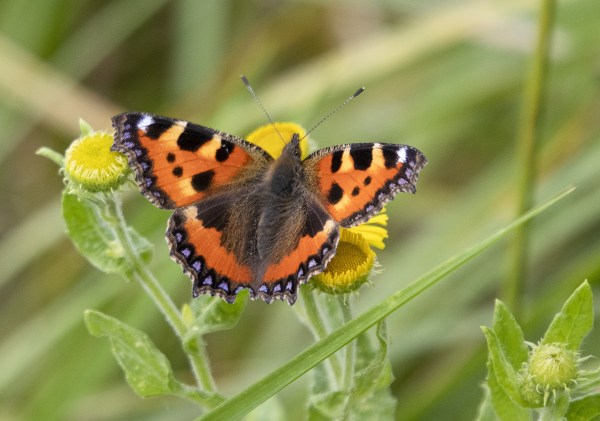
Butterflies taste with their feet. They have receptors on their legs and feet very similar to the taste buds we have in our mouths; these receptors are used to taste whether the plant they are standing on will be alright for their caterpillars to eat.