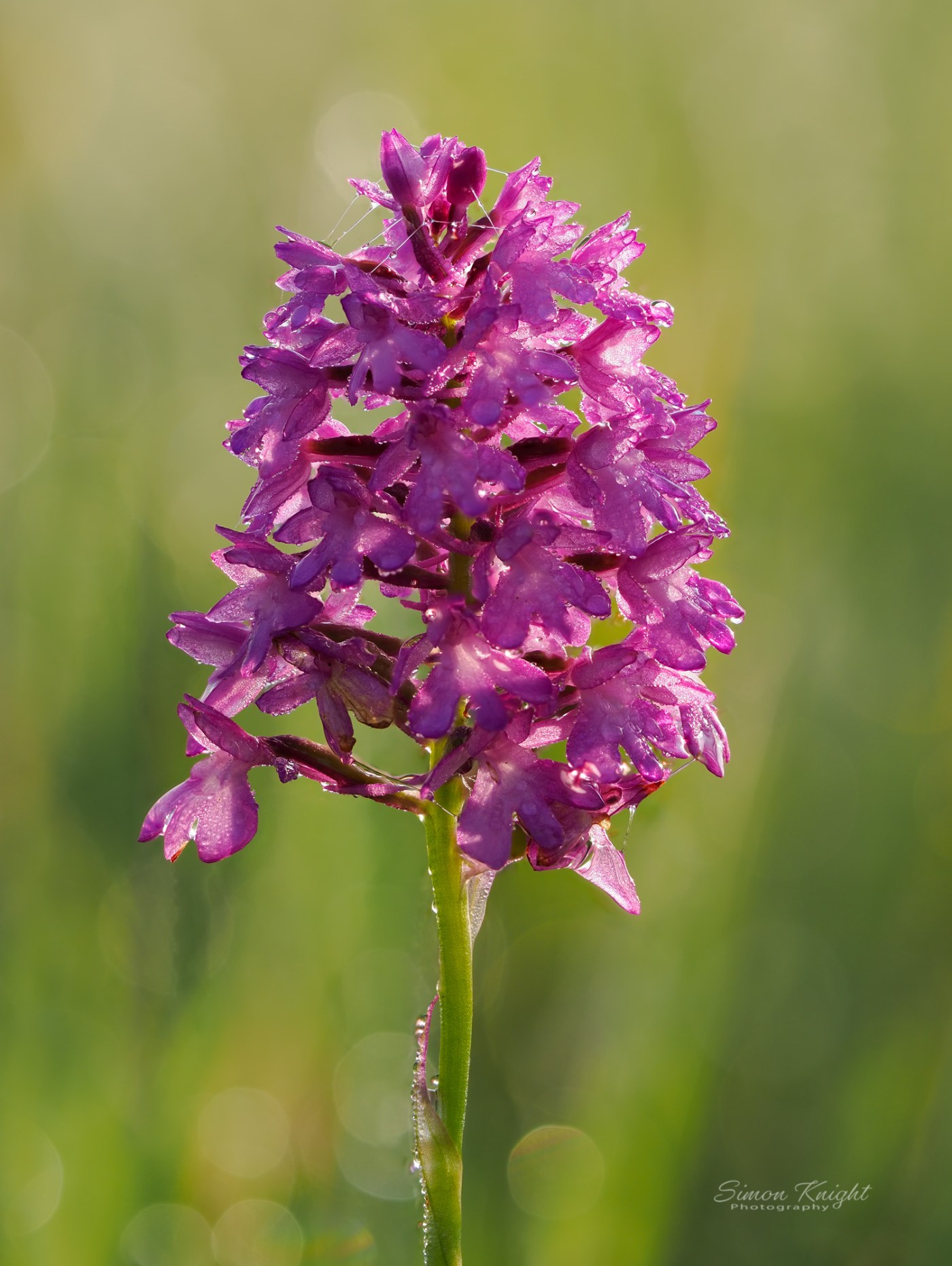
Pyramidal orchid
Beautiful pyramidal orchids (Anacamptis pyramidalis) from wildlife photographer Simon Knight.
Pyramidal orchids flower in June and July. Their pyramid-shaped flower spikes are made up of densely packed individual flowers, sometimes as many as a hundred on each spike. The flowers are a bright pink so vivid that it almost fluoresces. They are pollinated by insects that have probosces long enough to reach the nectaries hidden in the flower’s long basal spur: usually, but not always, butterflies and moths.
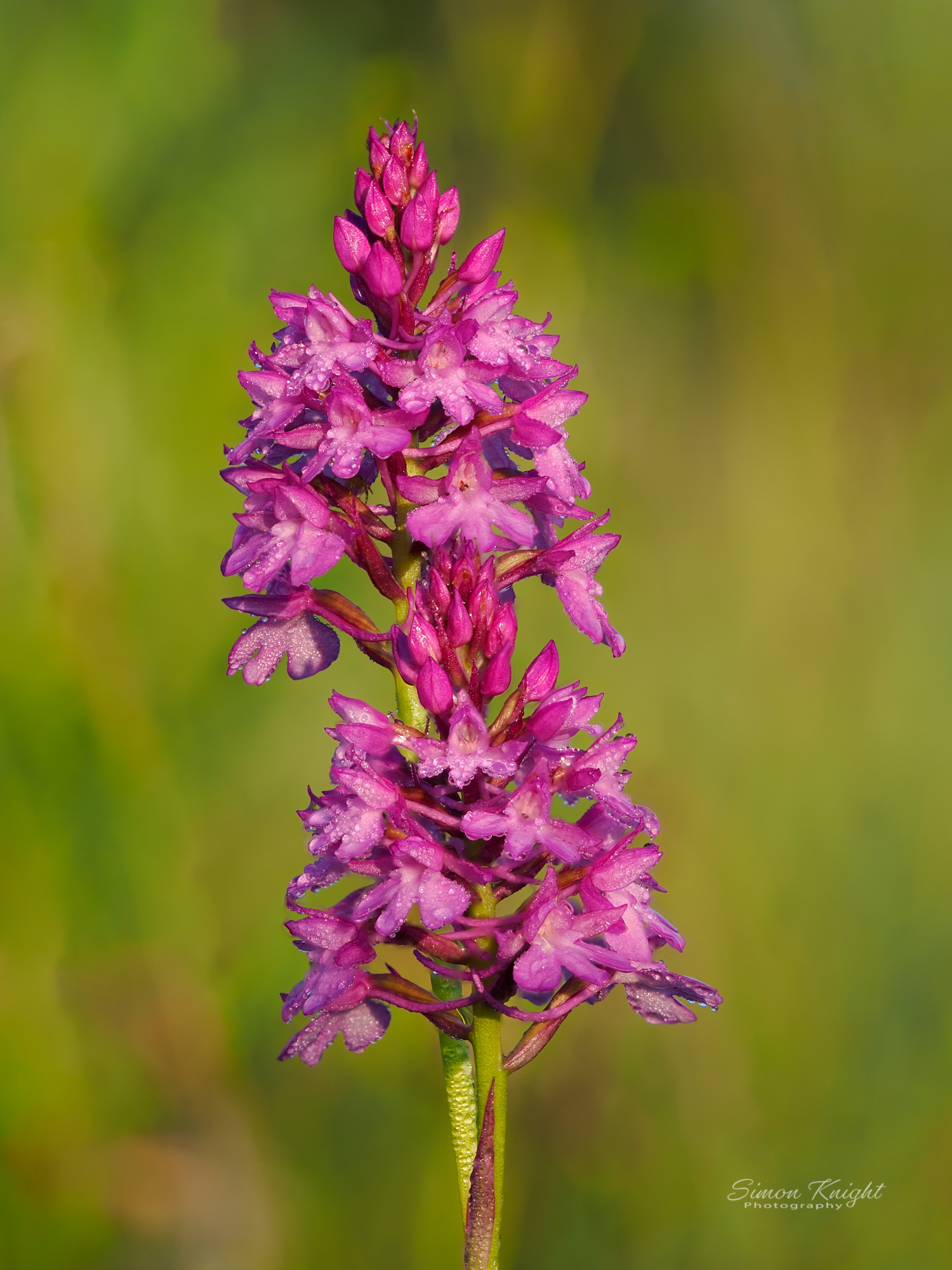

Orchid seeds are so tiny that they can’t store enough food to grow by themselves. They form symbiotic relationships with fungi in the soil: the fungus feeds the germinating seed and in exchange the adult plant provides the fungus with the products of photosynthesis.
Pyramidal orchids like undisturbed grassland on alkaline soils. Our meadows on clay soil suit them just fine but if you really want to see them out in force, try motorway embankments through chalk hills: the M4 through the Marlborough Hills or the M3 as it crosses Twyford Down near Winchester in Hampshire. Be quick though, their flowering season is short.
Conservation status: common and widespread in England and Wales; scarce in Scotland; protected under Section 13 of the Wildlife and Countryside Act (1981).


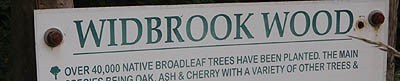
 Southwick Country Park Nature Reserve
Are the fungi farming the orchids? When the fungus and the seed first link up there can’t be much of a pay-off for the fungus. It’s like the fungus has to rear the orchid before getting anything back.
I like that thought. Now that we have the tech to look closely, we are finding that all sorts of creatures can do things we previously thought only us humans could do: make and use tools, empathise, develop language, wage war, farm other species.