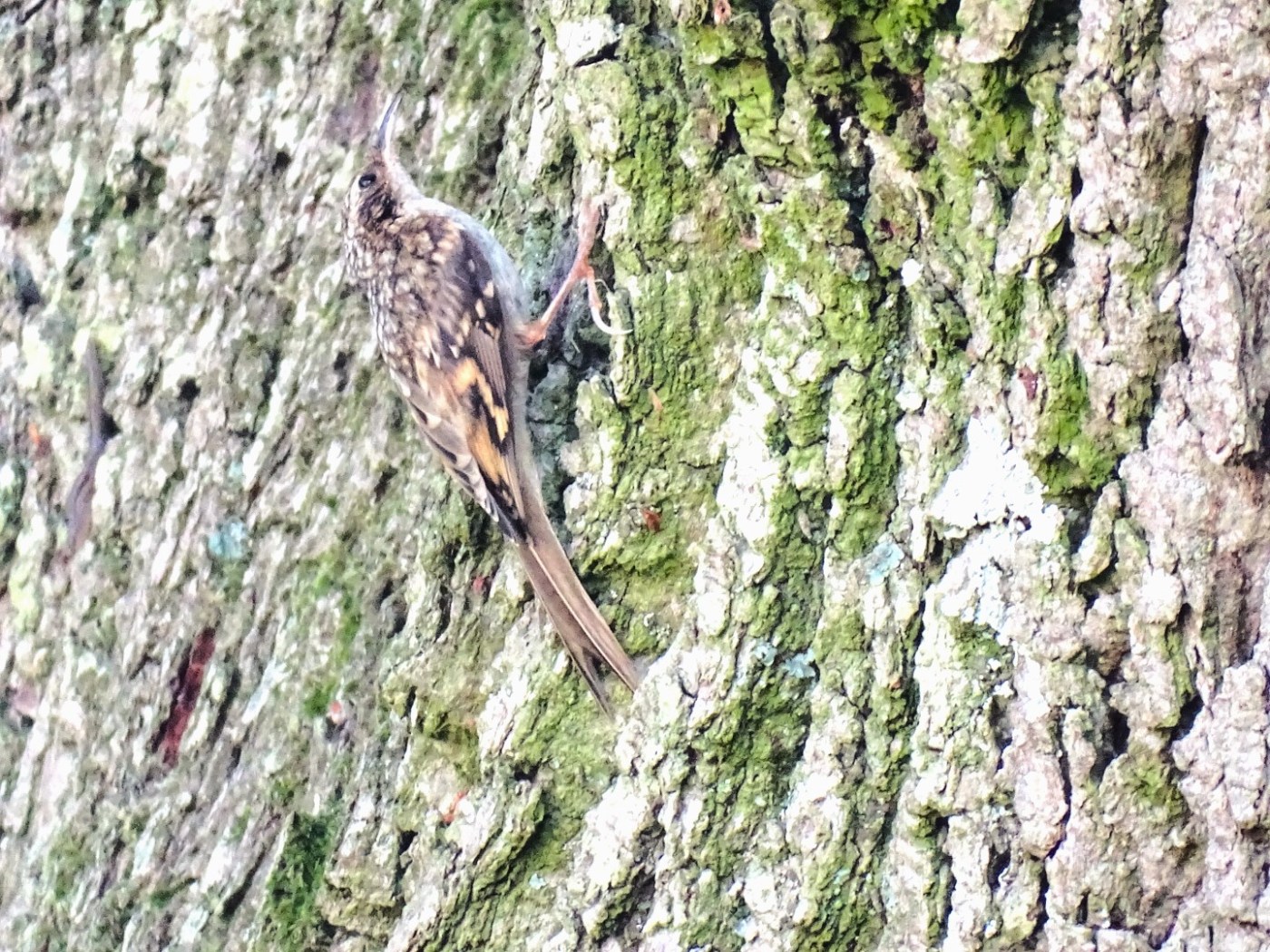
Treecreepers (Certhia familiaris) are shy, quiet, and rarely seen. We know they visit the reserve to feed and we hope they are long term residents that will nest here in the spring.
They are tiny insectivorous birds, which hunt invertebrates in the crevices and cracks of tree bark and among the ferns, mosses and lichens that grow there. They have white belly feathers but wear mottled camouflage on their backs, which makes them very difficult to see.
Beginning near the bottom of a tree trunk, they spiral their way up looking for insects; when they reach the top, they fly down to the bottom of another tree. Long, stiff tail feathers act as a prop against the tree and long toes with long claws find footholds. A treecreeper’s beak is a narrow downward pointing curve, a probe.
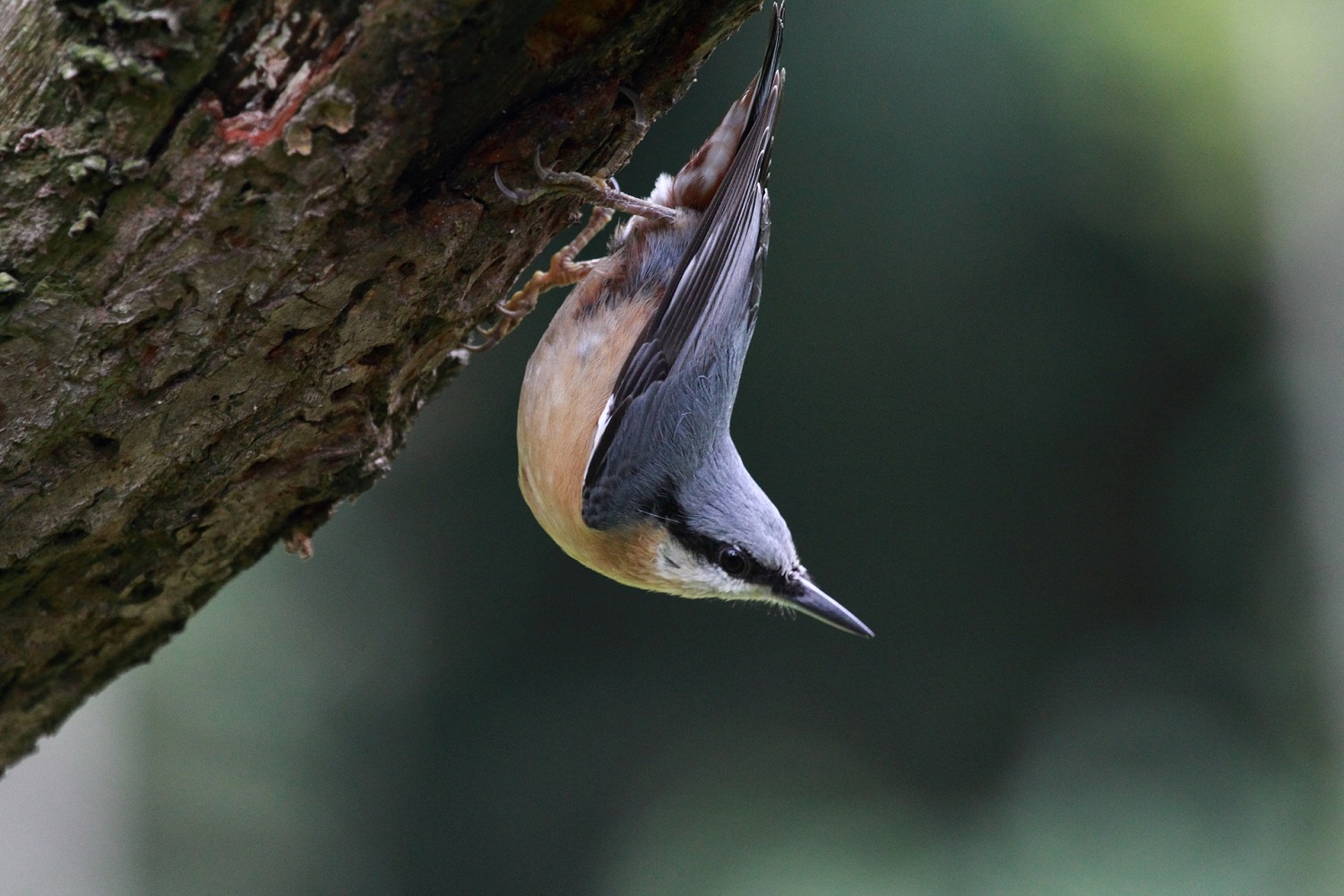
If you see a little bird fly to the top of a tree trunk and spiral its way down head first looking for insects, that’s not a treecreeper at all: it’s a nuthatch. We have both species in the reserve, attracted by our veteran trees and patches of old woodland.
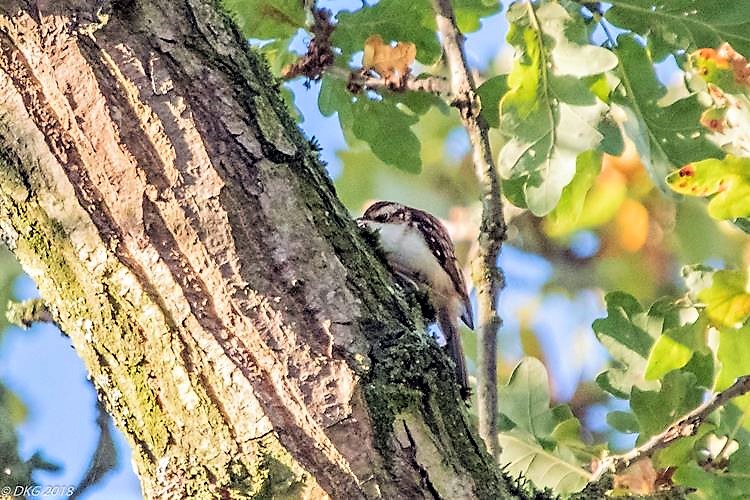

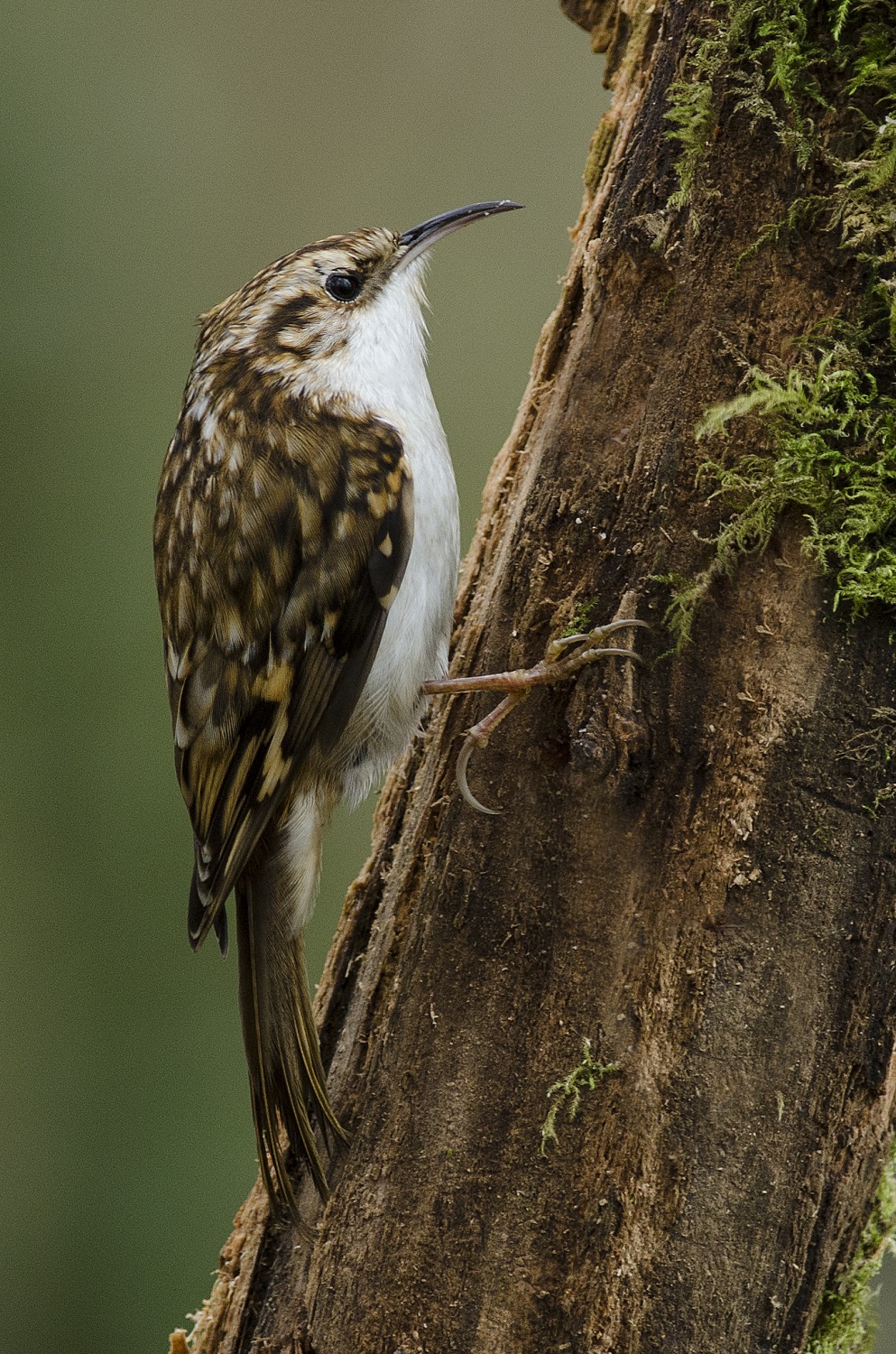
In the winter, tree creepers shelter at night in splits in and under the bark on a tree trunk; sometimes they use their beak to enlarge the space. They flatten themselves against the tree which is usually warmer than the air temperature outside. A tree creeper may have several shelters in the same tree and seems to use whichever one offers the most protection from that night’s wind.
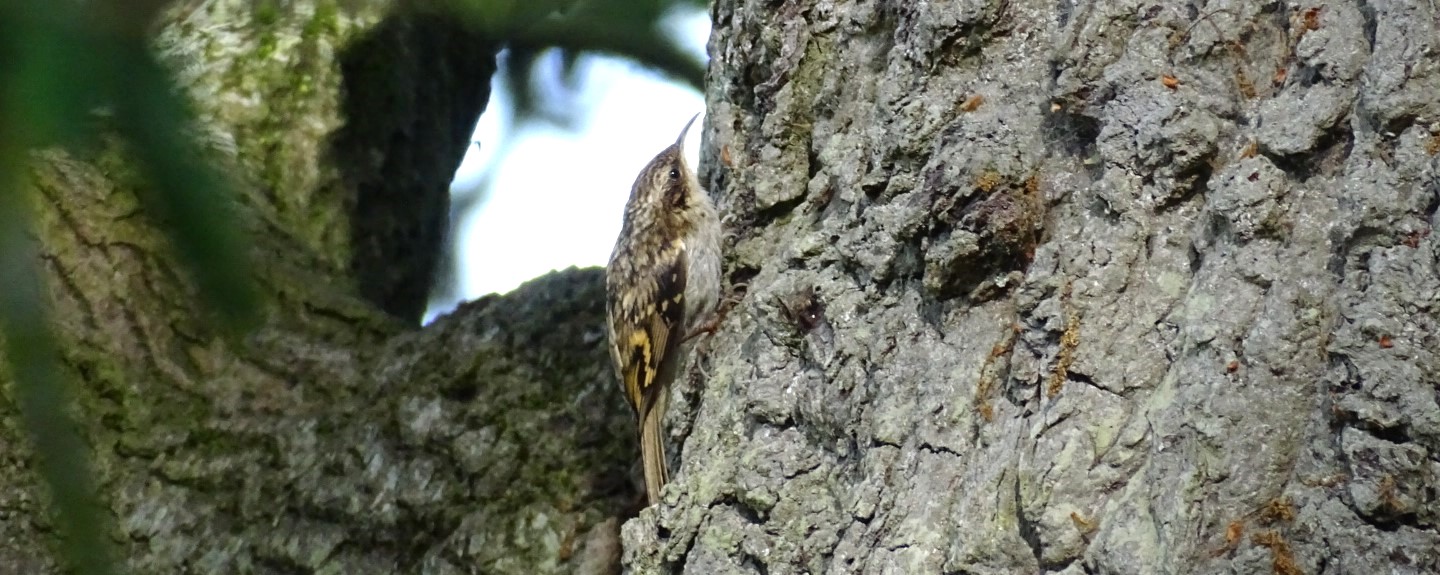
Conservation status: classified in the UK as Green under the Birds of Conservation Concern 5: the Red List for Birds.
Header Image: Treecreeper (SCPLNR 19.06.22) by Cheryl Cronnie