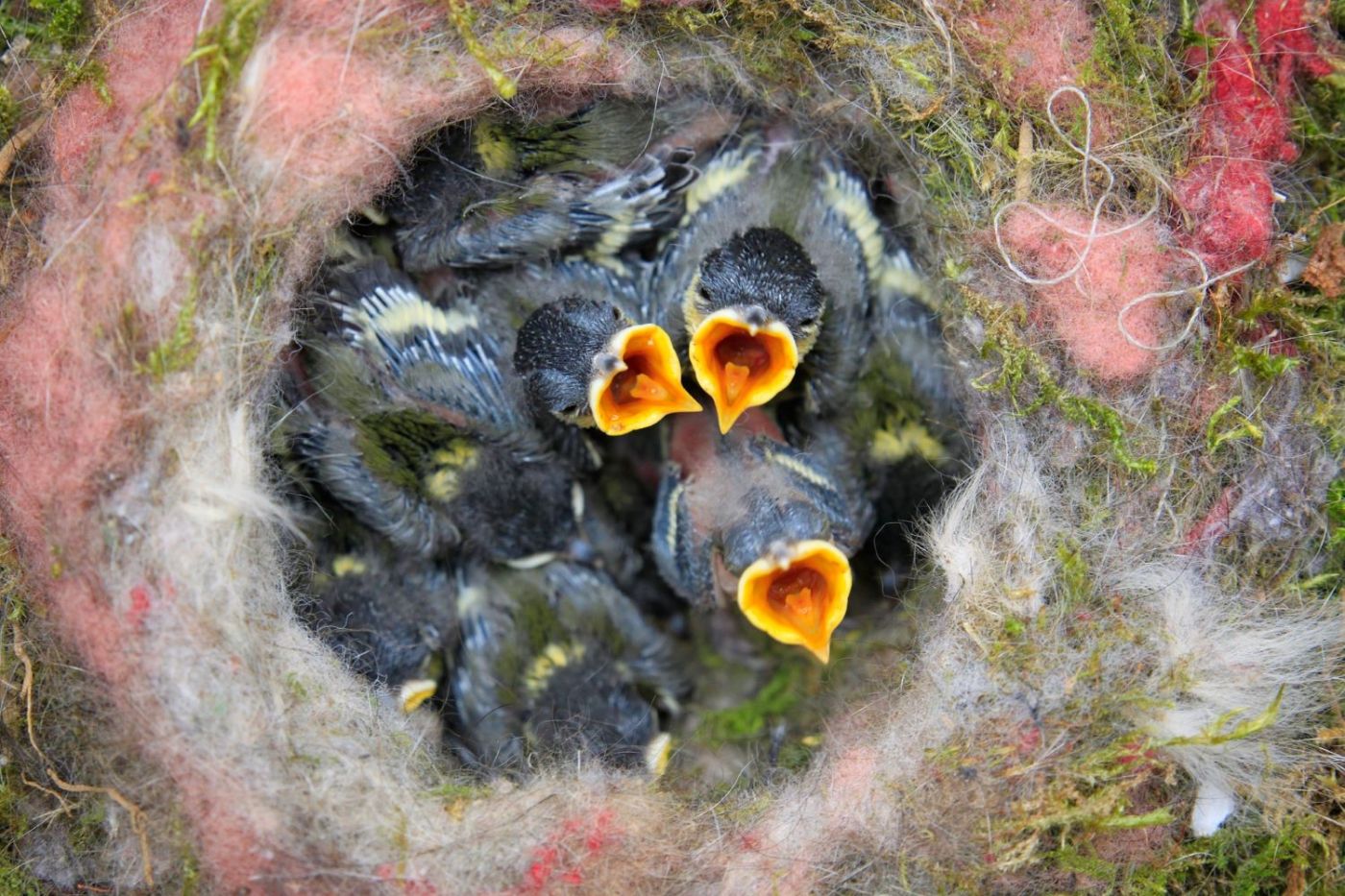
Blue tit nest part 2
After yesterday’s video post, a reader asked what triggered the blue tit female (it is always the female blue tit that builds the nest) to stop collecting moss and to begin collecting what he called fluffy stuff. While failing entirely to find an answer to his question, I found a treasure trove of research into blue tit nests and the materials they use to build them.
Blue tits rarely move far from their birthplace and as adults return year after year to the same nest sites. This makes them ideal subjects for long term studies, particularly into breeding behaviour such as nestbuilding.

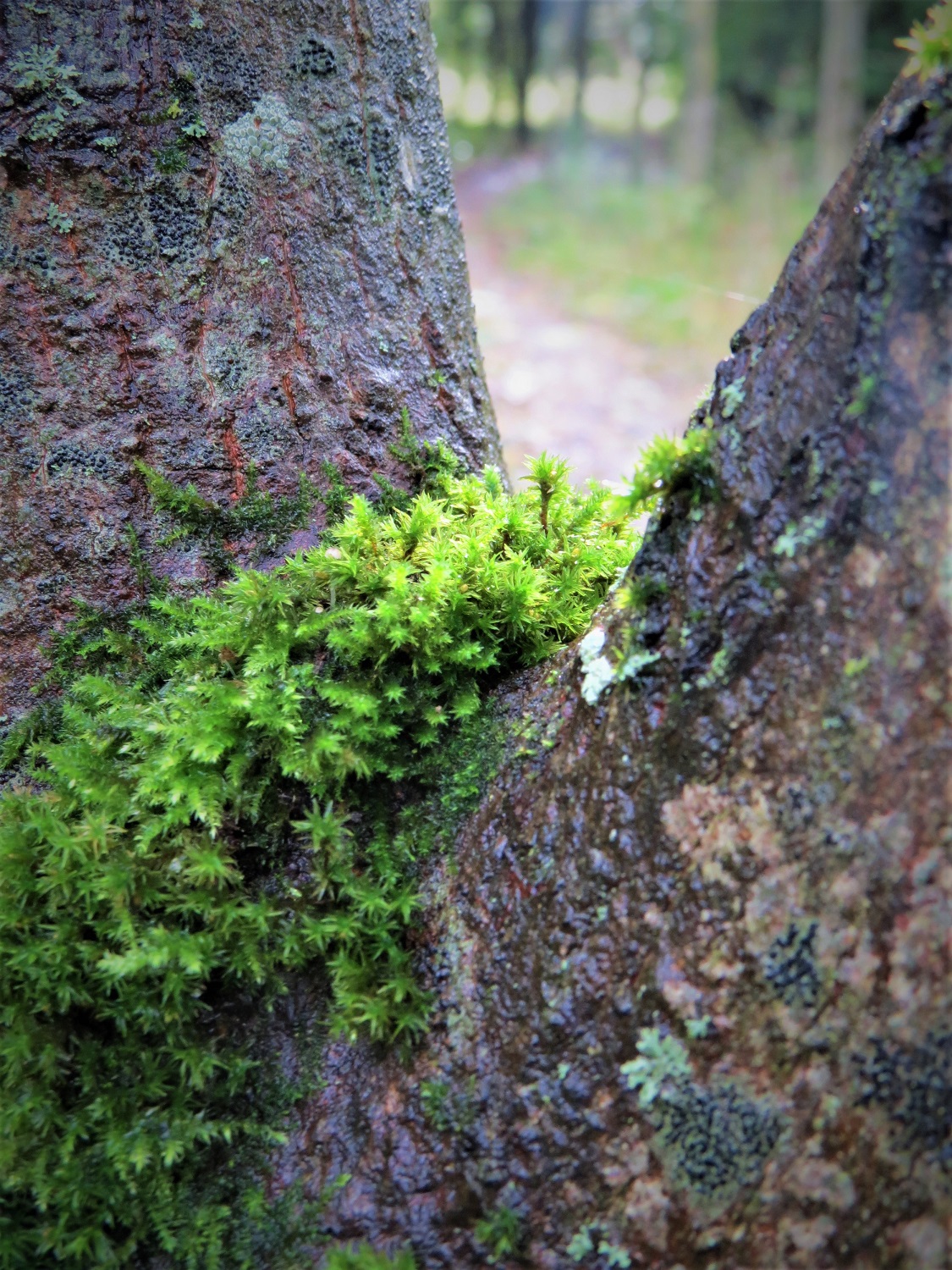
The first layer of the nest is a substantial amount of moss. Moss has antimicrobial and antifungal properties which have been shown to reduce the incidence of disease in a nest. At this stage, the female blue tit also brings in fresh green leaves, often of aromatic plants, that she replenishes throughout the period that the nest is in use.
Not a lot is known about how this fresh greenery influences the success of the nest but what research there is seems to suggest that aromatic plants have biocidal effects on both parasites and pathogens. The introduction of aromatic plants into the nest has been shown to be associated with higher weight gain, increased blood sugar and more rapid feather development in chicks – but not necessarily with an increased success in their subsequent adult breeding behaviour.
Correlation is not the same thing as causation. The introduction of aromatic nest material might just be one of a pattern of maternal behaviours that do directly affect the success of the nest. In fact, the latest research calls the nest a phenotype: an expression of the female’s genetic code under the influence of her environment.
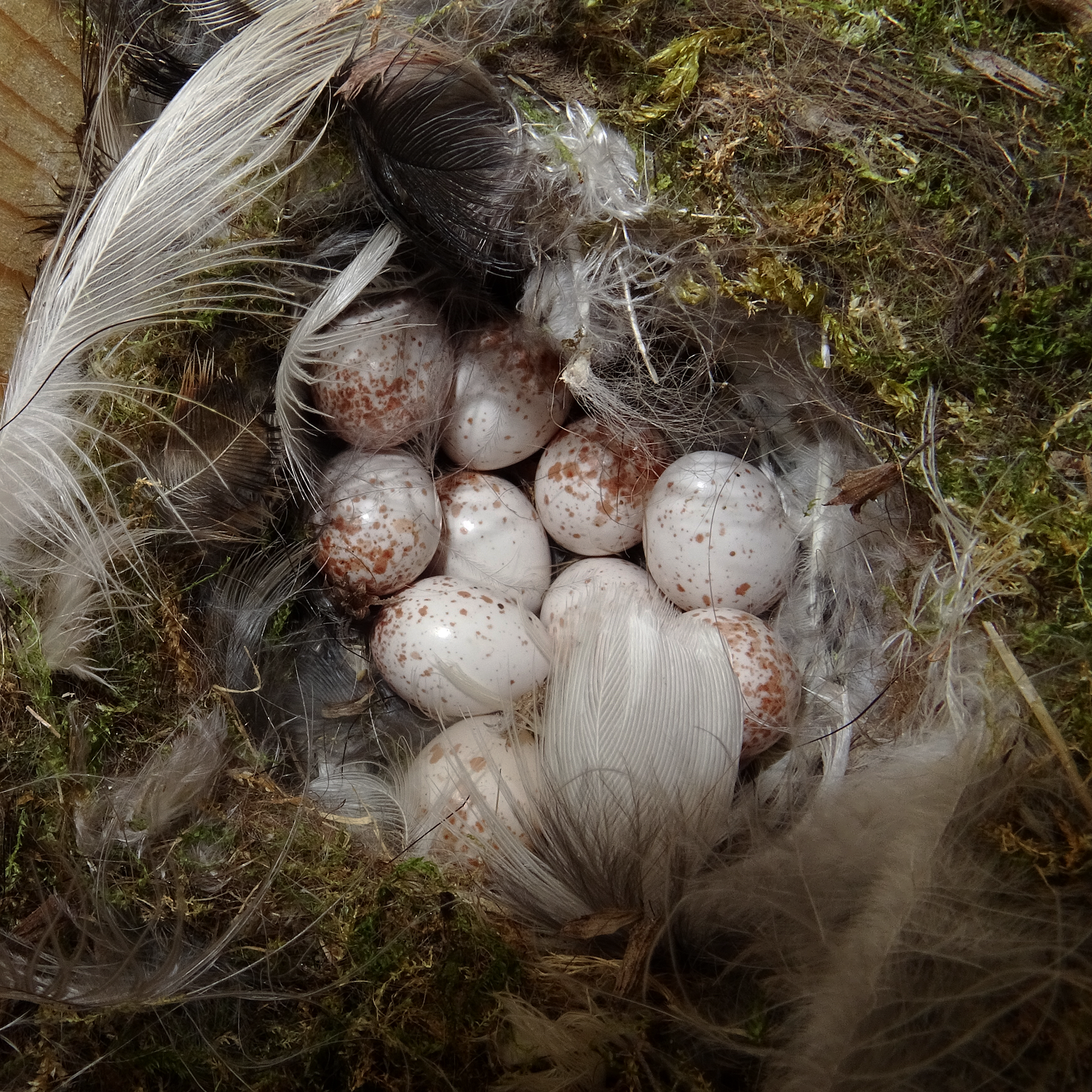

There are several ways to judge the success of a nest: the size of the clutch of eggs, the number that hatch and their health, how many of the chicks fledge and reach adulthood, and finally how many of those chicks breed successfully the following year. That last category of success seems to be influenced by the number of feathers the female uses to line the nest. Feathers harbour bacteria that are known to produce antibiotic substances that discourage pathogens that might cause disease – however the number of feathers in the nest doesn’t correlate with health, size or survival rate of the nestlings, only with their later success in the breeding population.
Nest building is a much more complex thing than I had imagined. Each piece of research that I read ended with a question for the next set of researchers. It is essential that we learn as much as we can, while we can, if the reserve’s wildlife is to survive the crisis on the horizon.







Thanks.
Our pleasure – and there’s more to come!
there’s so much to learn about nesting birds, thank you. Barbara Johnson