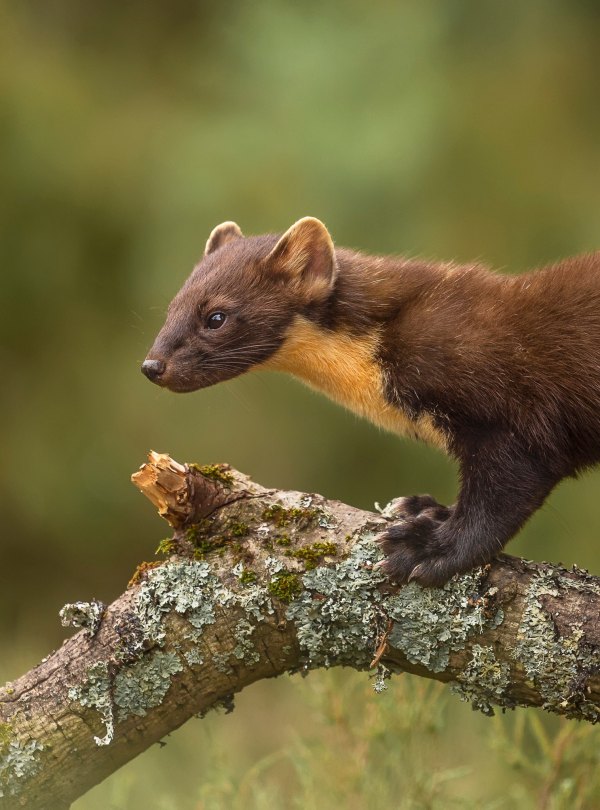
Hoping for a pine marten, a top predator, to move into the reserve might seem a strange idea but predation is an important factor in ecological dynamics. The lack of predators is one of the reasons the UK’s biosphere is so unbalanced and in such danger.
Continue reading “Predation”Lambrok wetland areas
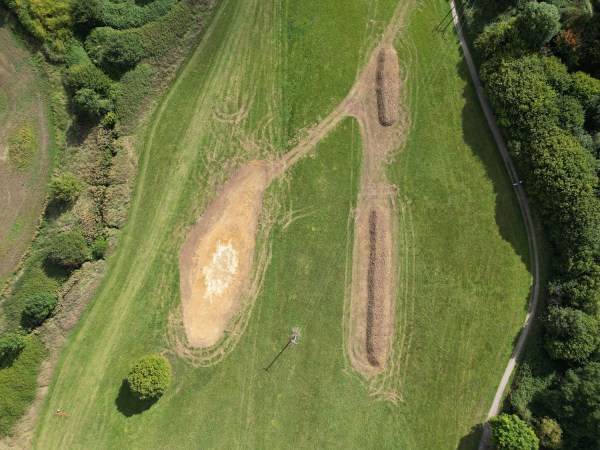
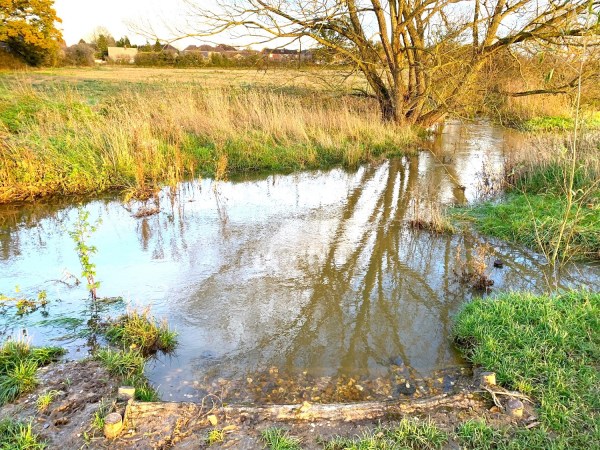
Clive Knight has sent in pictures of the wetland scrapes in Lambrok Meadow. Now that the rain has refilled Lambrok Stream and spilled into the scrapes, we can see how they are intended to develop.
Continue readingWinter moths
The Winter moth (Operophtera brumata) is one of the few Lepidopterans that can cope with winter’s freezing temperatures in its adult stage. They are endothermic which means that they can produce heat internally by biochemical processes, just as warm-blooded creatures do.
Continue reading “Winter moths”World population
The United Nations Department of Economic and Social Affairs tells us that some time today the world’s human population will reach 8 billion, double that of 1970.
Continue reading “World population”COP27
The 2022 United Nations Climate Change Conference, more commonly referred to as COP27, begins today in Sharm El Sheikh, Egypt.
Continue reading “COP27”International cooperation 2
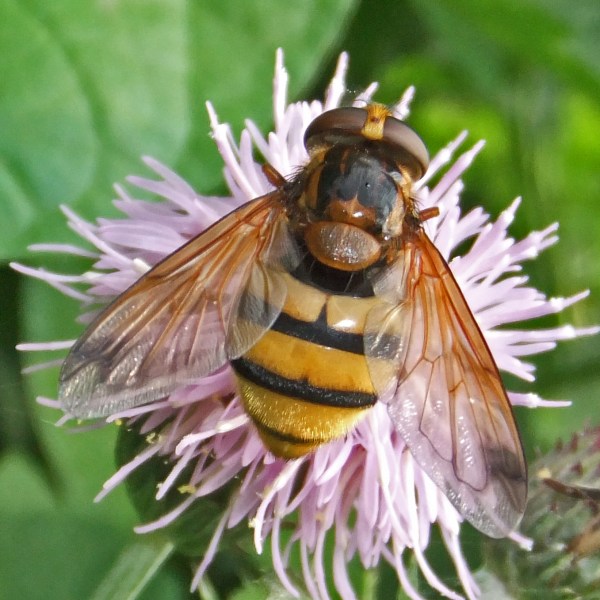
Volucella inanis
by Ian Bushell
Email from Dr R.L.Brown, of Manaaki Whenua Landcare Research, NZ:
Continue reading “International cooperation 2”International cooperation!
by Ian Bushell
At the beginning of October, at the Amateur Entomological Exhibition at Kempton Park, I was introduced to Dr R.L.Brown from New Zealand, who was doing research into potential biological control of wasps.
Continue reading “International cooperation!”Habitat fragmentation
Conservation is full of jargon, full of buzzwords and phrases that sound good. We all use them and we do it to save ourselves the trouble of proper research. We are trying to demystify some of these terms.
Continue reading “Habitat fragmentation”Habitat loss
People think of an uprooted forest when they think of habitat loss: orang utans starving in a palm oil plantation, the rabbits running from the machinery at the beginning of Watership Down, or the man-made desert of a dust-bowl. But habitat loss is, in the majority of cases, a lot less dramatic and much more ordinary than that, and often a great deal closer to home.
Continue reading “Habitat loss”Insect losses
In the UK the populations of our more common butterflies have fallen by 46% in the last 50 years while the rarer species have declined by 77%. We have lost 60% of our flying insects in just 20 years. We have entirely lost 13 species of our native bees since the 1970s and fully expect more to follow.
Continue readingThe results are in
This year’s Big Butterfly Count recorded fewer butterflies than in any previous year.
Continue reading “The results are in”Willow warbler migration
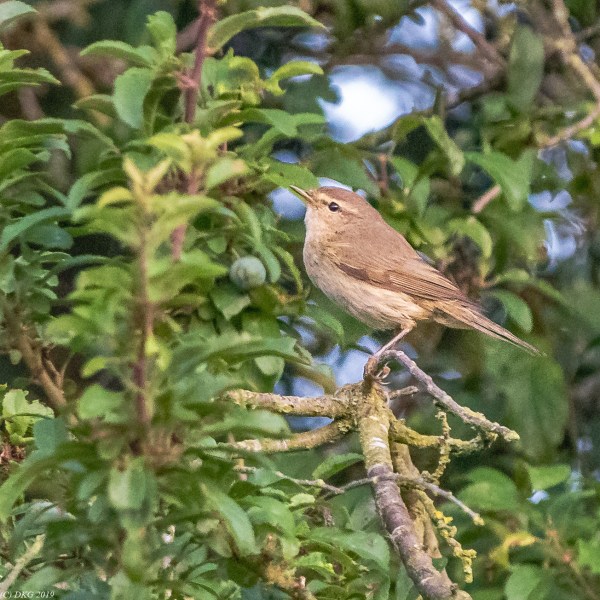
Most of our willow warblers will have left by now; they will be on their way to sub-Saharan Africa where they will spend their winter. Theirs is the longest journey undertaken by any of the park’s migratory birds. Why do such tiny birds fly so far and take such risks to do it?
Continue reading “Willow warbler migration”A new pool
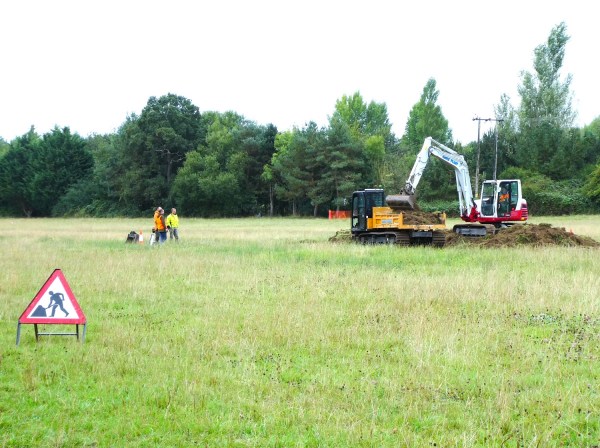
Wiltshire Wildlife Trust’s ABBA project is creating three wetland scrapes in Lambrok Meadow.
Continue reading “A new pool”ABBA
Wiltshire Wildlife Trust is undertaking a 5 year project of “practical action, innovative community and business engagement and high-level strategic planning across the River Biss and its tributaries”. The project is called ABBA: A Better Biss Approach.
Continue reading “ABBA”RSPB Visit
Thursday September 15th, the RSPB will be visiting the reserve. There will be a stand next to the path, somewhere near the main car park, manned by an RSPB representative, there to answer questions, discuss the organisation’s work and recruit members.

The RSPB stand set up somewhere near the sea.
The RSPB is leading a nation-wide effort to monitor and protect our birds in the face of the present climate emergency. Drop in for a chat, consider joining them: our birdlife needs all the help it can get.
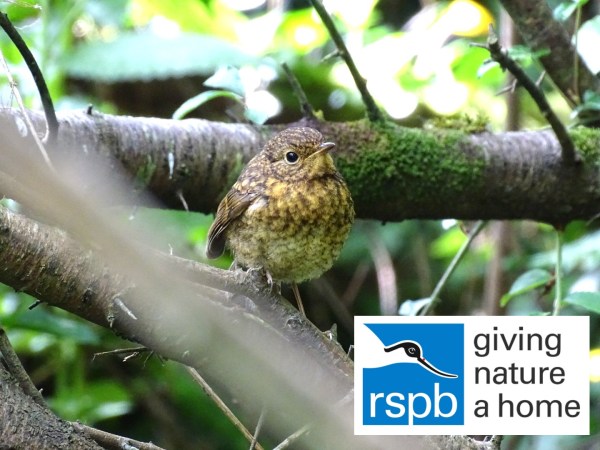
Header image: immature robin photographed in the reserve by Cheryl Cronnie
Nature reserve problems
We are not the only nature reserve struggling with increased visitor numbers. Here, David Attenborough presents a twenty minute documentary about Richmond Park, showing us a biodiversity not dissimilar to Southwick Country Park’s own, and wrestling with very similar difficulties.
Please comment below. The problems of sharing our few public green spaces with our threatened wildlife in a damaged biosphere grow as our population grows, and we all need to find solutions.

Winter Garden: 1
It’s September: time to think about helping your garden’s wildlife through the rigours of the coming winter. This is the first in a series of posts that we hope might help.
Continue reading “Winter Garden: 1”Killers
Yesterday morning, two dogs described as brown greyhound types caught and killed a tabby and white cat in the ditch that runs along between Lambrok Meadow and the blackthorn tunnel. If your dog is a hunter with a highly developed prey drive, please, please don’t let it run off-lead in our nature reserve, to hunt and kill our wildlife and the neighbourhood’s cats.
Continue readingGrass fire
Email from Ian Bushell:
Phil R reported that there was a small fire that affected part of the heritage orchard late Saturday afternoon. The Fire Services attended. Some trees singed but they should be recover. The fire appeared to start near the bench and then spread into the orchard.
Continue reading “Grass fire”Re-wilding
Re-wilding projects, as a method of restoring Britain’s depleted biodiversity, are gaining support.

Six spot burnet moth
This is a six spot burnet moth (Zygaena filipendulae), a dayflying nectar feeder, photographed on the reserve’s plentiful, nectar-rich, tufted vetch.
Continue readingRSPB Visit
On Wednesday August 10th, and on Wednesday September 14th, the RSPB will be in the reserve. There will be a stand next to the path, somewhere near the main car park, manned by an RSPB representative, there to answer questions, discuss the organisation’s work and recruit members.

The RSPB stand set up somewhere near the sea.
The RSPB is leading a nation-wide effort to monitor and protect our birds in the face of the present climate emergency. Drop in for a chat, consider joining them: our birdlife needs all the help it can get.
Header image: immature robin photographed in the reserve by Cheryl Cronnie

Drought
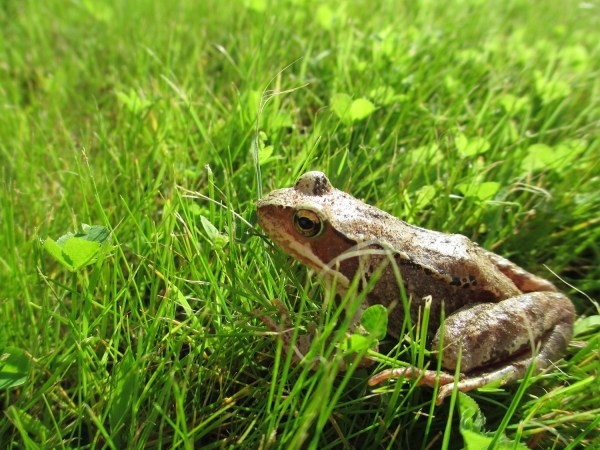
How do our frogs survive as the reserve’s ponds and streams dry up in the drought?
Continue readingS41 mammals
While we are on the subject of protected species…
Continue reading “S41 mammals”Water vole protection
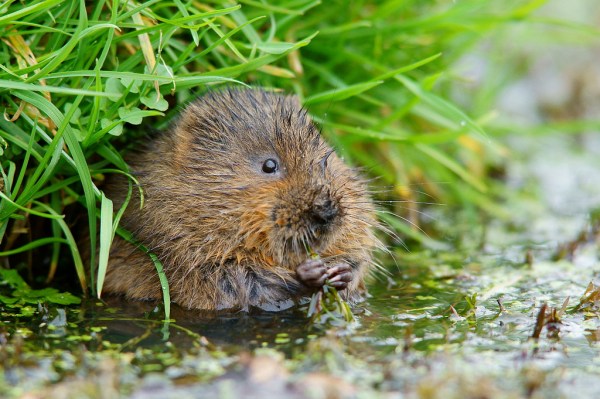
Water voles are protected under the Wildlife and Countryside Act 1981. Are we doing enough to ensure the protection of the reserve’s water voles?
Continue reading