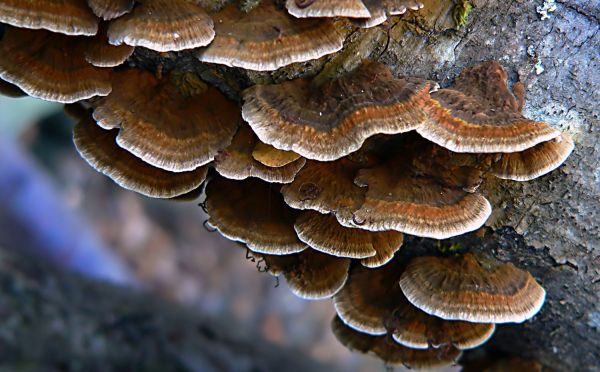
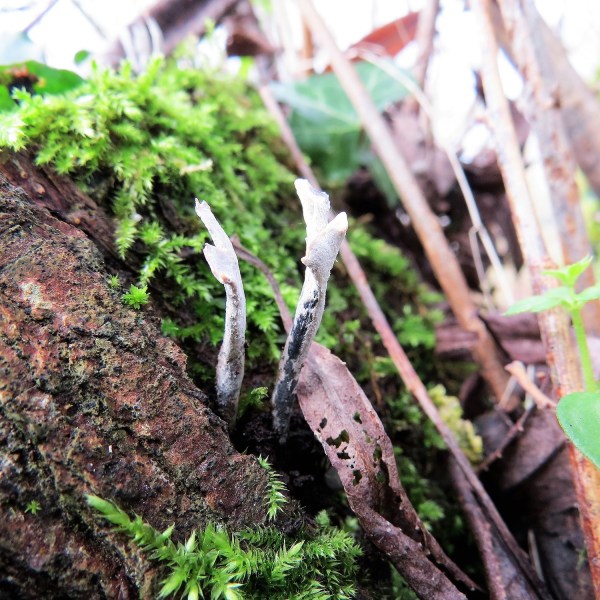
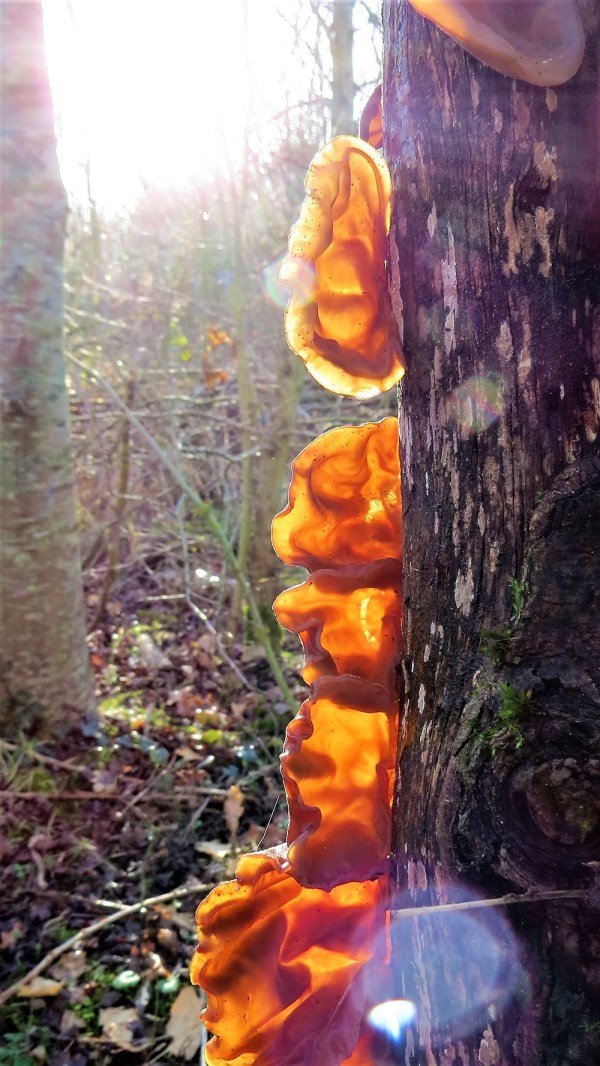
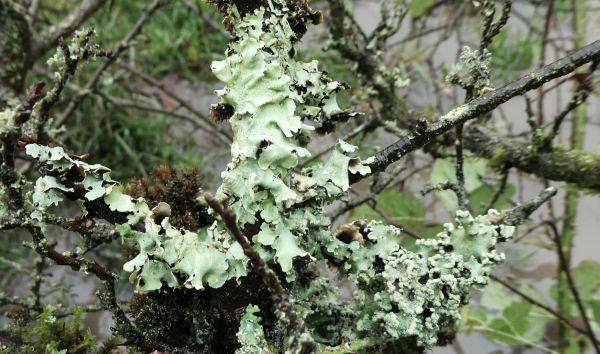
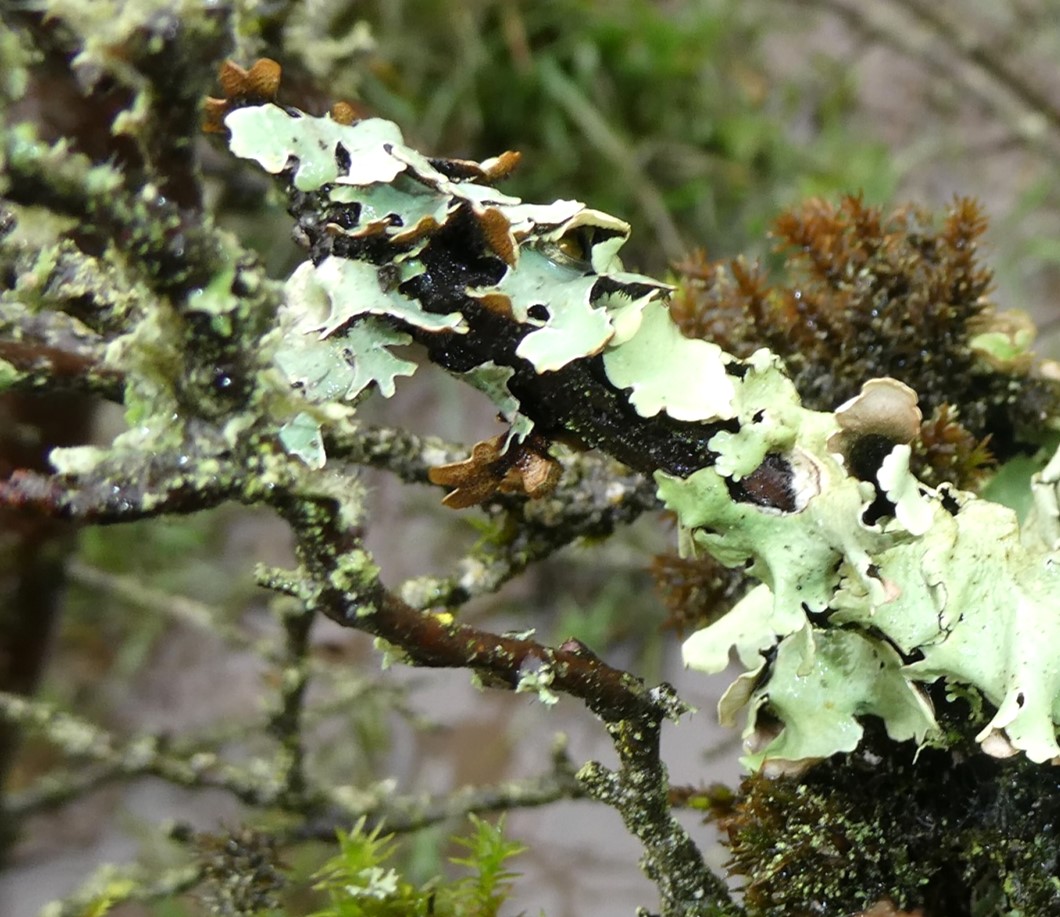
These are a species of bracket fungus common in the reserve: turkey tail (Trametes versicolor). The main part of the fungus, the mycelium, is growing invisibly inside the tree. These beautiful outgrowths are the fruiting bodies, part of the fungus’s reproductive system.
Read on:Leaf fall
What happens to all those leaves?
Continue reading “Leaf fall”Fungi
Symbiotic fungi explained by David Attenborough.
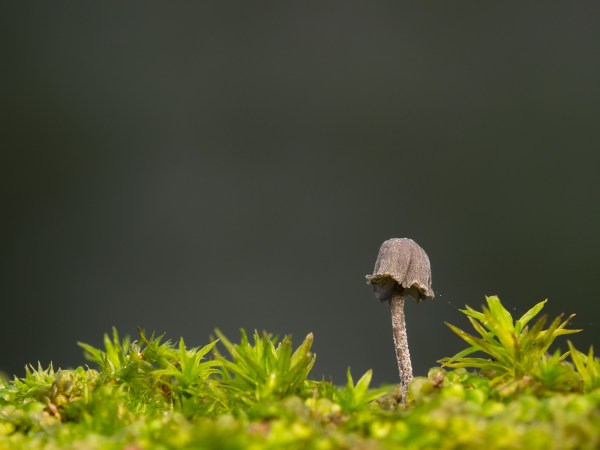
Header image: Mycena pseudocorticola © Simon Knight
The naming of fungi
This is winter fungus growing on (and in) one of the reserve’s oak trees. It is sometimes called velvet shanks or wild enoki but its scientific name is always Flammulina velutipes.
Continue readingCandlesnuff fungus
A tiny candlesnuff fungus, Xylaria hypoxylon, growing in the rotting wood and moss of one of the old willow trees by the footpath alongside the Lambrok Tributary.
Continue reading “Candlesnuff fungus”Magic mushrooms
Mycologists have discovered fungi that can break down polyethylene, the sort of plastic typically used in shopping bags, food wraps and bottles.
Continue readingWood ear
Wood ear is one of the few fungi that produce fruiting bodies all year round.
Continue readingAmethyst deceiver
A message with beautiful pictures from photographer Simon Knight:
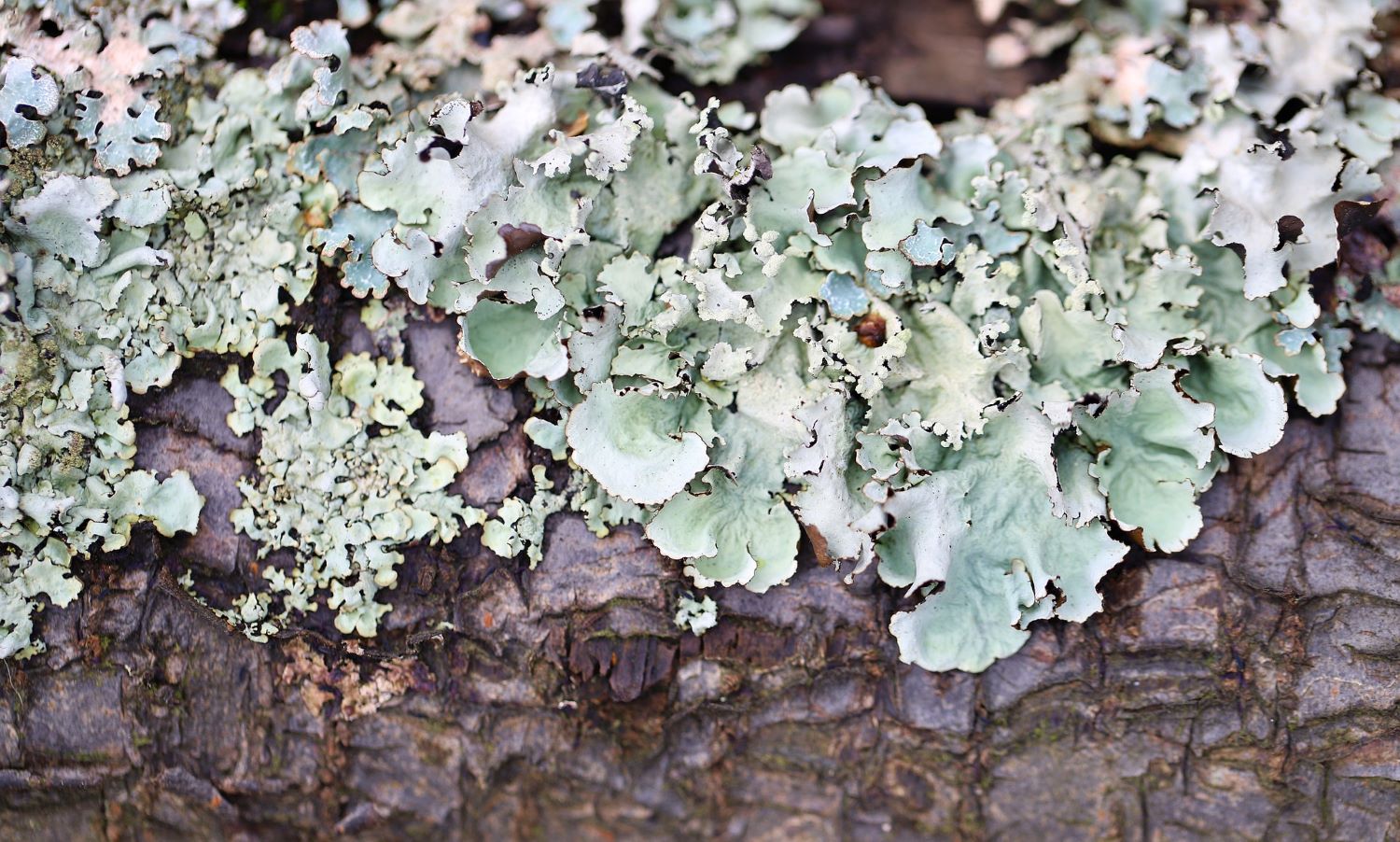
Continue reading “Amethyst deceiver”Common greenshield lichen (Flavoparmelia caperata) on deadwood in the thicket beside the hard path in Lambrok Meadow.


Header image: common greenshield lichen by Ian Bushell (SCPLNR 08.11.23)

King Alfred’s cakes
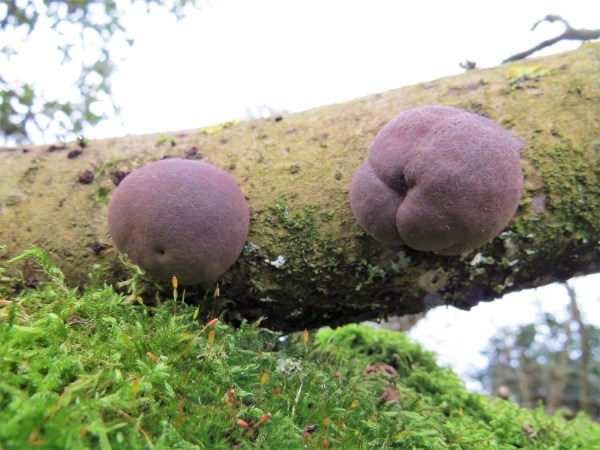
Daldinia concentrica: known as King Alfred’s cakes or coal fungus growing on one of the reserve’s dead ash trees.
Read moreLast week, Chris Seymour was mushroom hunting in the reserve: fly agaric and some kind of a boletus. Thanks for the pictures Chris.


Dead man’s fingers
More spooky stuff for Hallowe’en.
Continue reading “Dead man’s fingers”The naming of things
This is winter fungus, sometimes called velvet shanks or wild enoki. Its scientific name is (always) Flammulina velutipes.
Continue readingTurkey tail
This is the right time of year for turkey tail fungi, Trametes versicolor.
Continue readingBioturbation
Wikipedia defines bioturbation as the reworking of soils and sediments by animals or plants. Here is a video of a system with and without soil fauna such as earthworms, mites and isopods over a 15 week period: this is what is happening to the fallen leaves all over the reserve.

The ground beneath our feet
We rattle on about the reserve’s biodiversity, its species-rich hayfields, the insect life buzzing through the hedges and our woods filled with birdsong but we pay scant attention to its most biodiverse habitat, the soil.
Continue readingLichens


These are densely packed crustose lichens, on the bark of a young birch tree in Sheepfield Copse. Groups of lichen species are often consistently associated together, forming recognisable communities. It is probable this is a community, containing several species of Arthonia, that grows on smooth barked trees.
Next time you walk through the copse, pause for a closer look at the trunks of the birch trees there.

Flammulina velutipes
The winter mushroom or velvet shank, has recently (2019) been reclassified as Flammulina velutipes. In the past, classification of fungi was based on morphology alone, but newly available DNA analysis techniques have resulted in the reclassification of many species.
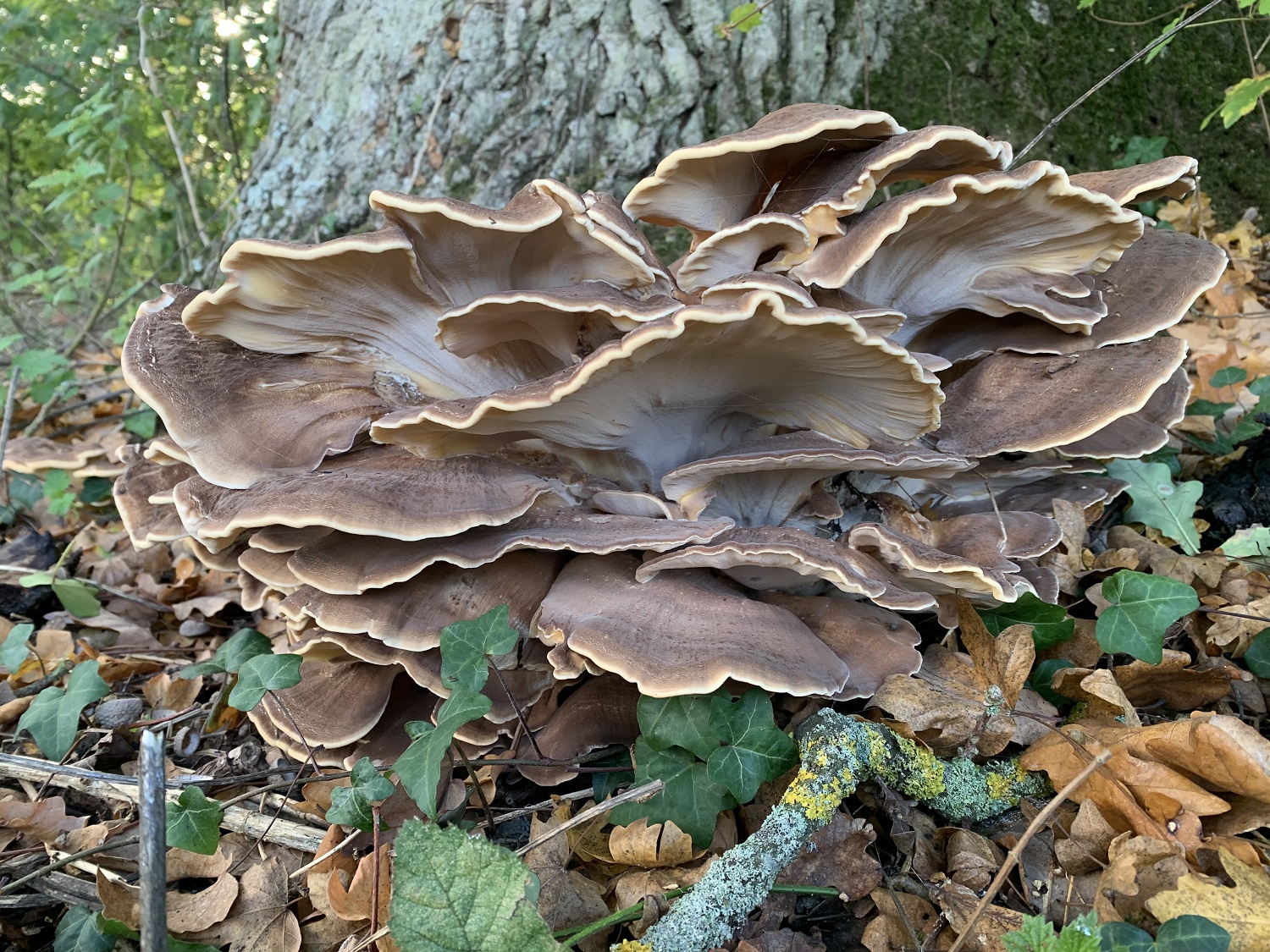
Continue reading “Flammulina velutipes”MERIPILUS giganteus (Giant Polypore)
by Clive Knight
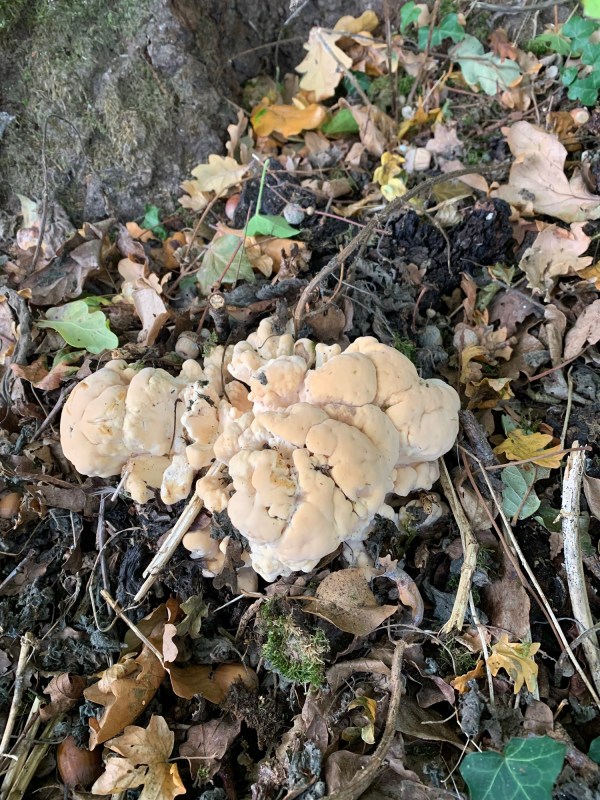
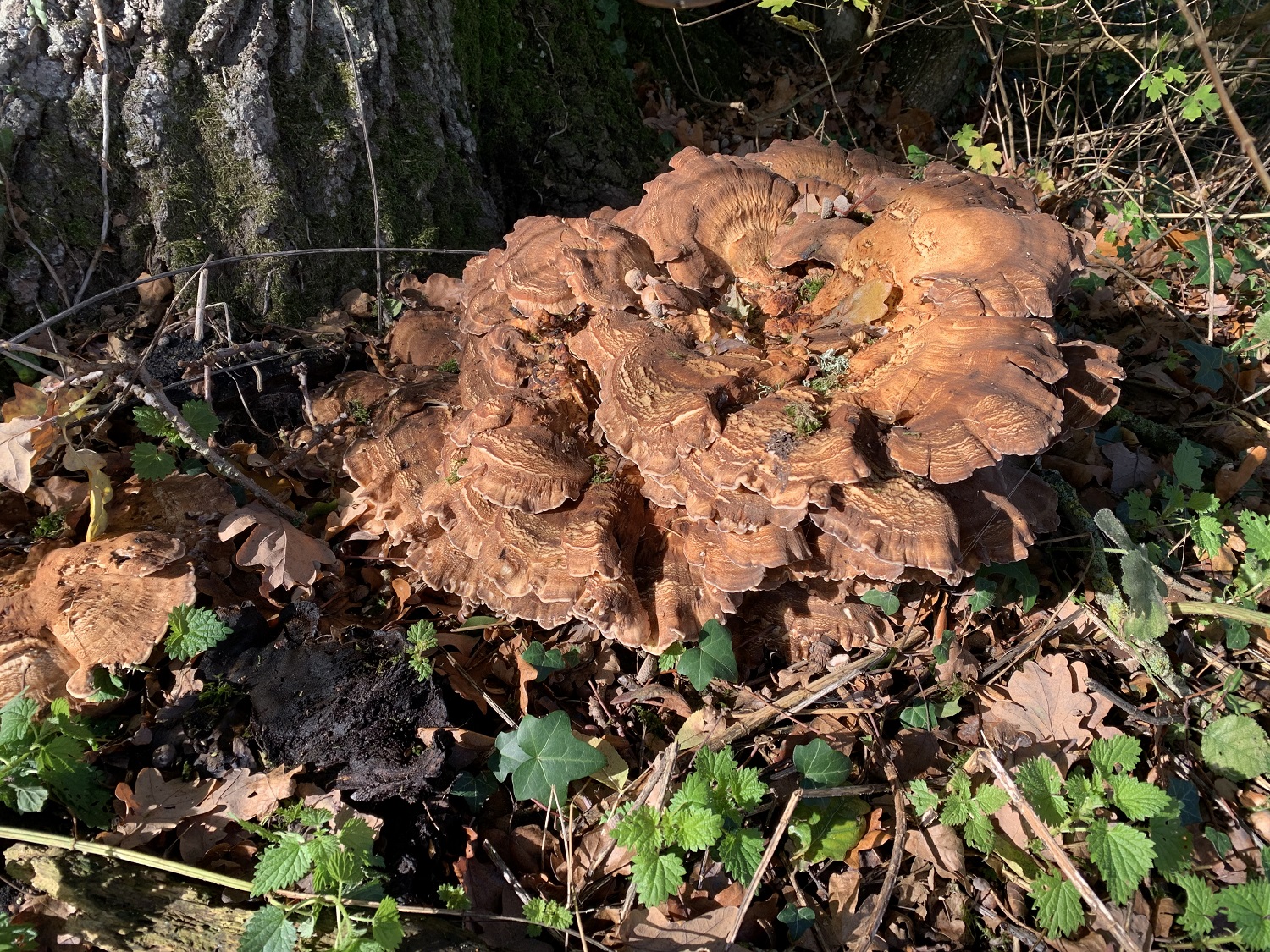
This is the fungus I found at the base of an oak tree in the reserve at the beginning of October. Rich Murphy identified it as a Giant Polypore (Meripilus giganteus). I took the first picture (see above) on October 15th when the fungus was about 10cm across.
Rich and I have followed its progress and photographed it regularly through October, November and up to the 3rd December when it had started to decline. At its fullest it was approx 55cm across by 25cm height.


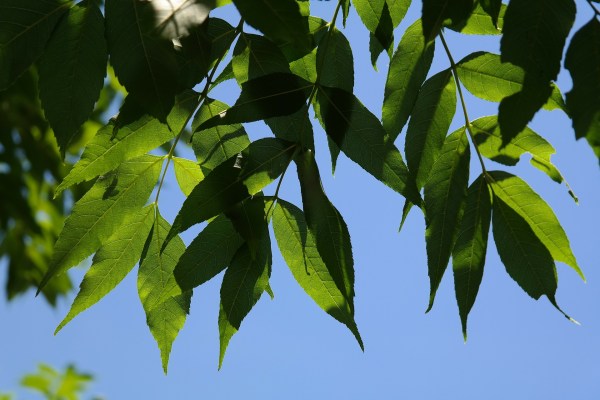
Ash dieback
It has been estimated that ash dieback will kill approximately 80% of the UK’s ash trees.
Continue readingFly agaric again
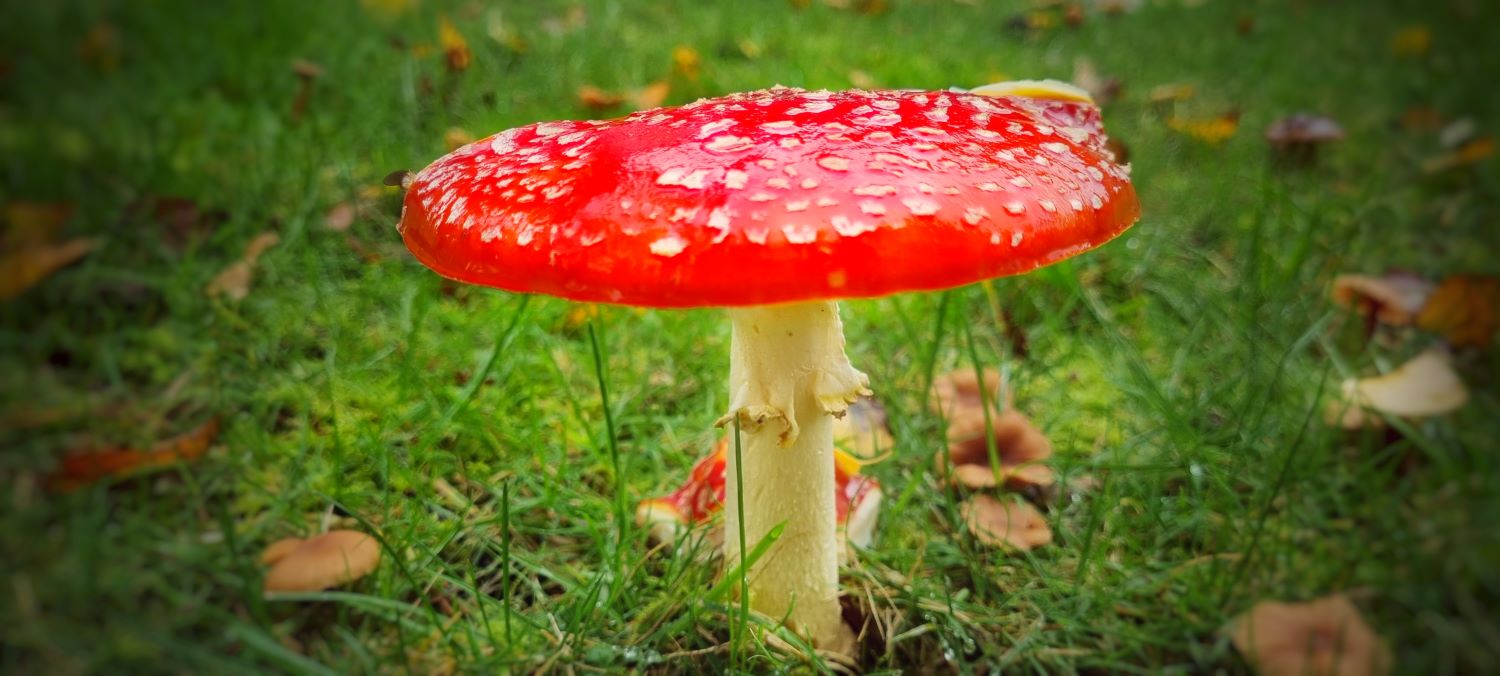
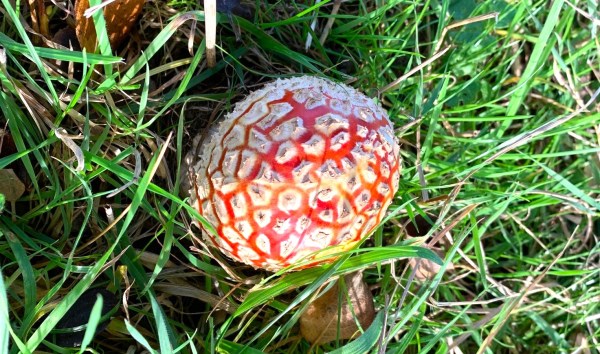
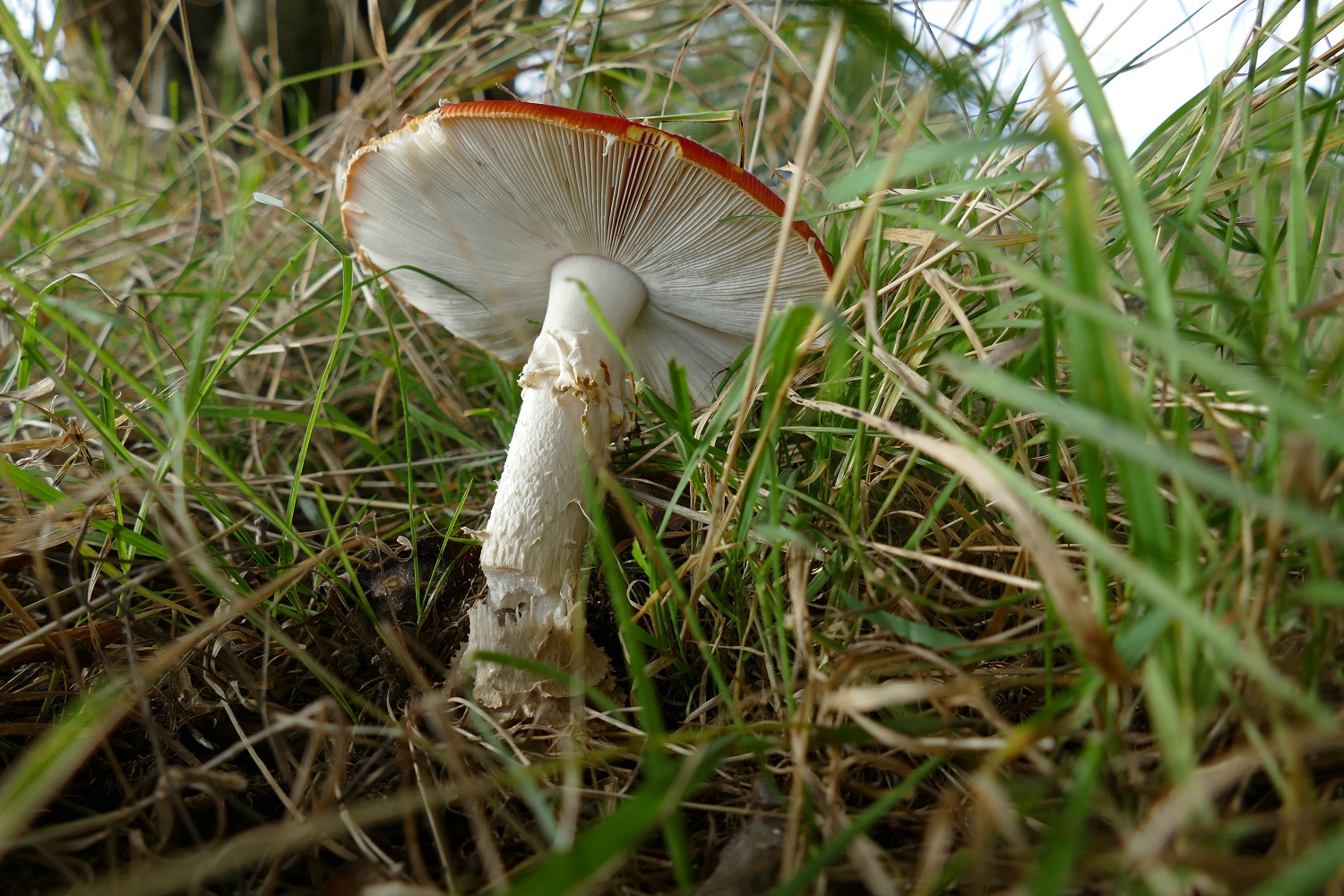
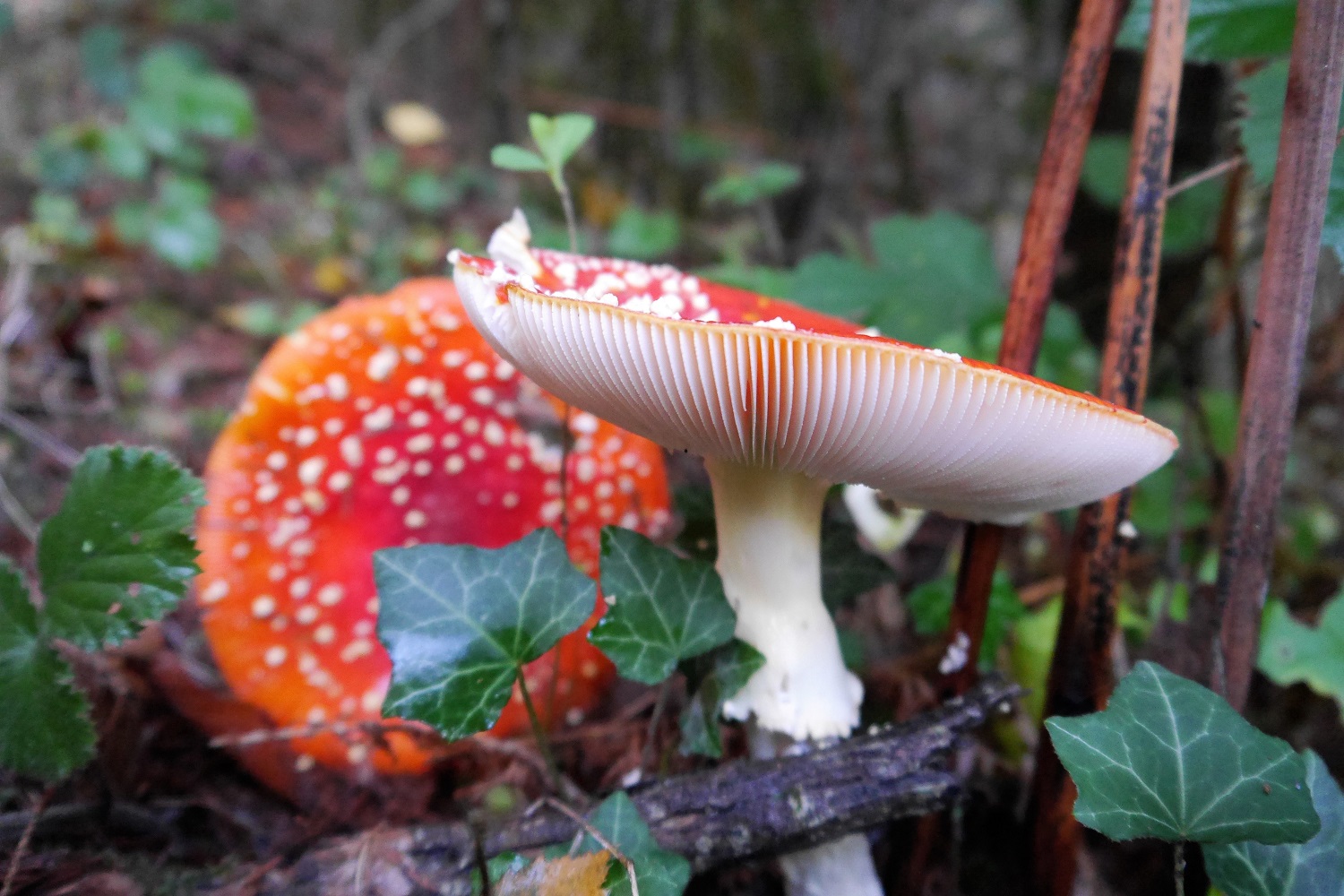
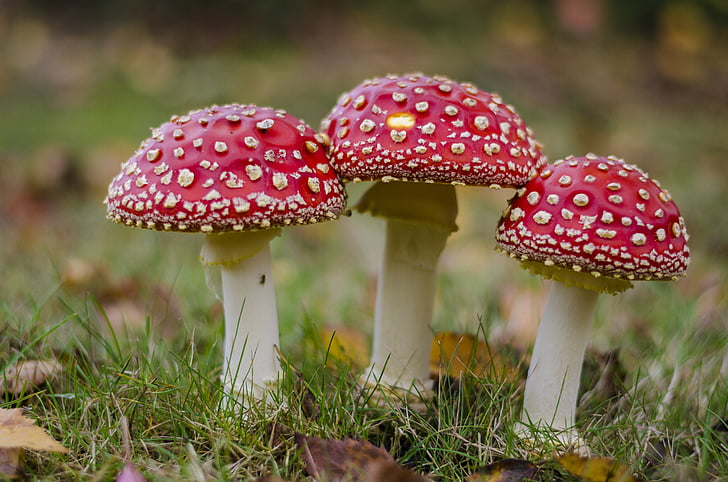
This is fly agaric, a mycorrhizal fungus, Amanita muscaria, which is found in the reserve every year despite our lack of its preferred partners: birch and pine trees. In classic pictures of this red and white fungus, those that don’t have an elf sitting on top are usually growing picturesquely in the moss under a birch tree.
Read on:Fly agaric
Clive Knight’s yearly search among the reserve’s fungi has turned up fly agaric, the classic spotted toadstool from our fairy tales. Here is a gallery of some of the pictures of Amanita muscaria we have been sent over the years.


Header image by Clive Knight
Turkey tail
Clive Knight has sent us pictures of turkey tail fungi (Trametes versicolor) growing in the reserve on fallen oak.
Continue reading