At this time of year, the reserve’s blue tits are pairing up and scouting for nest sites.
Continue reading “Preparing for spring”Preparing for spring
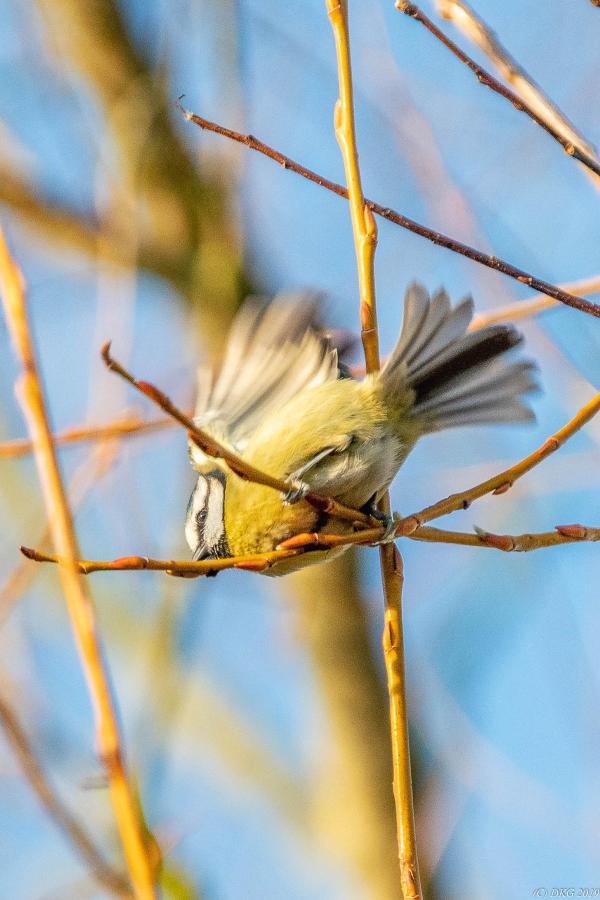
At this time of year, the reserve’s blue tits are pairing up and scouting for nest sites.
Continue reading “Preparing for spring”
Coal tits (Periparus ater) are shy, fast-moving, acrobatic little birds that weigh hardly more than a 50p piece. They don’t sit still for long, which makes them hard to identify among the reserve’s busy population of similar Paridae.
Continue reading “Coal tit”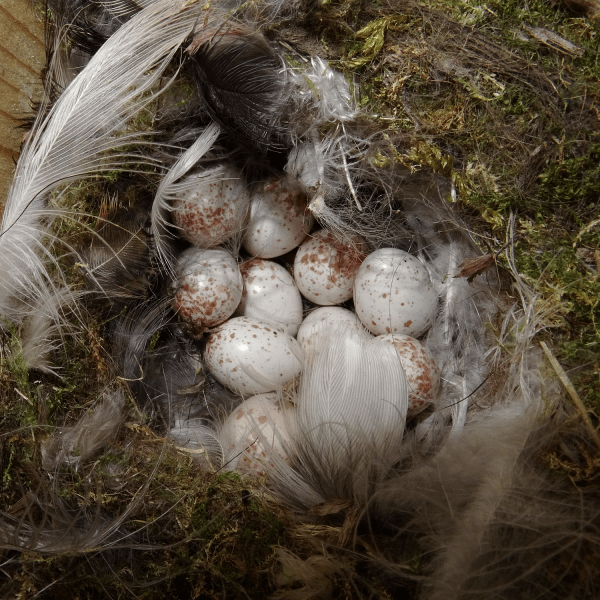
In the header photograph, the blue tit’s eggs are lying in a cup shaped nest lined with soft feathers that are obviously intended to keep the eggs warm. But around the edge of the cup there are larger feathers; their purpose is not so clear.
Continue reading
After yesterday’s video post, a reader asked what triggered the blue tit female (it is always the female blue tit that builds the nest) to stop collecting moss and to begin collecting what he called fluffy stuff. While failing entirely to find an answer to his question, I found a treasure trove of research into blue tit nests and the materials they use to build them.
Continue reading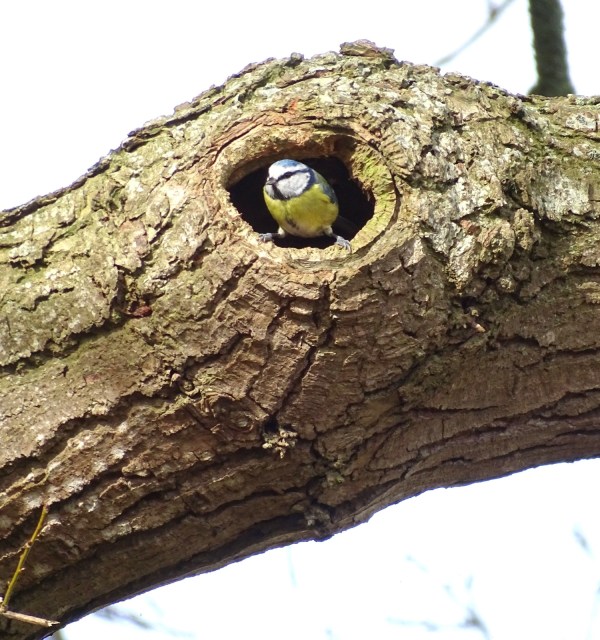
Anybody want to guess how many blue tits are building nests in the reserve today? Here’s how it’s done.
Header image taken in the reserve by Cheryl Cronnie


Blue tit colours
The blue tit (Parus caeruleus) has been classified as sexually monochromatic, which means that male and female are the same colour. This classification is based, though, on human colour perception, not on blue tit colour perception.
Continue reading
Regular contributor Cheryl Cronnie sent in two lovely pictures of a pair of house hunting blue tits looking around a nest hole in one of our veteran oak trees.
Continue reading “Des res”
Blue tit colours
The blue tit (Parus caeruleus) has been classified as sexually monochromatic, which means that male and female are the same colour. This classification is based, though, on human colour perception, not on blue tit colour perception.
Continue reading


 Southwick Country Park Nature Reserve