This is one of the UK’s largest flies: a great pied hoverfly, so named for its black and white colouring. Ian photographed it at the bottom of The Race, near the Wildlife Wheel, feeding on the flowers of cow parsley. It is also called the pellucid hoverfly because, in certain lights, the pale patches on its sides are translucent: a see-through hoverfly!
Continue reading “Great Pied Hoverfly”Two new species
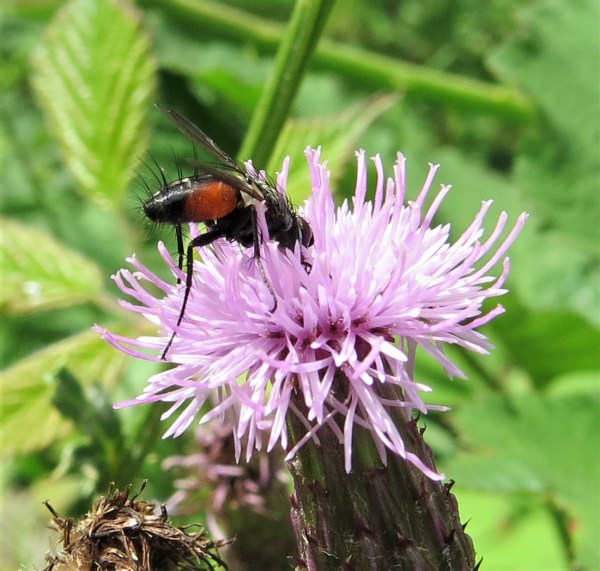
Two new insect species from Clive Knight: a flesh fly identified by Ian Bushell, our entomologist, as Sarcophaga carnaria, and a day-flying moth, Camptogramma bilineata, called yellow shell for the beautful striped pattern on its wings.
Continue reading “Two new species”Another new species
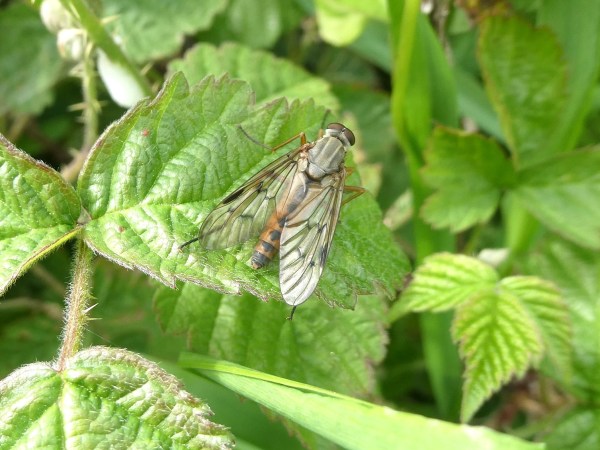
A marsh snipefly (Rhagio tringarius), a new species for our lists, spotted in the reserve on Wednesday by Ian Bushell.
Continue reading “Another new species”Canada Thistle Gall Fly
by Ian Bushell
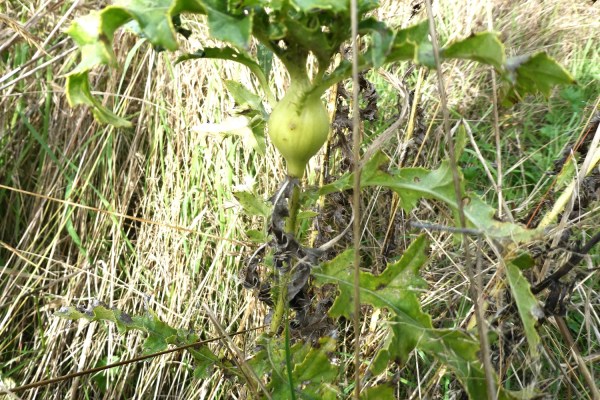
This afternoon, I found these galls on the Creeping Thistle in the second set-aside in Village Green. They are caused by Canada Thistle Gall Fly, Urophora cardui. This is a very distinctive fruit fly which, despite its name, is indigenous to the UK and Europe.
Continue readingCommon drone fly
This is a common drone fly (Eristalis tenax), named for its mimicry of a male honeybee. It was first identified in the reserve in 2019.
Continue reading “Common drone fly”New species
Clive Knight has discovered and photographed a new species of fly in the reserve. He writes:
Continue reading “New species”Dagger Fly
by Ian Bushell
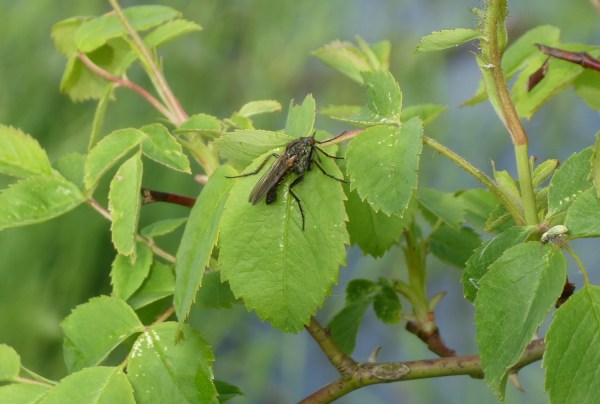
I photographed this fly by the pond on Saturday. It’s Empis tessellata, one of the larger species of Dance or Dagger Flies. It can be seen from April to August.
Continue reading “Dagger Fly”Great Pied Hoverfly
By Ian Bushell
This is a Great Pied Hoverfly (Volucella pellucens) so named for its black and white colouring. It is a new species for our lists, seen and photographed in the reserve on Tuesday, July 13th.
Continue reading “Great Pied Hoverfly”Identification
Message to Ian:
Another unidentified insect inadvertently included in a botanical picture. Any idea what it is?
A marmalade hoverfly (Episyrphus balteatus) feeding on the nectar of a bramble flower. This is a new species for our lists, despite its ubiquity.
The marmalade fly gets its name from its colour, and its thin cut/thick cut dark stripes, just like marmalade.

This is a drone fly (Eristalis tenax), named for its mimicry of a male honeybee.
Continue reading