There are two species of thrush resident in the reserve: song thrush (Turdus philomelos) and mistle thrush (Turdus viscivorus). Here is how to tell them apart:

There are two species of thrush resident in the reserve: song thrush (Turdus philomelos) and mistle thrush (Turdus viscivorus). Here is how to tell them apart:

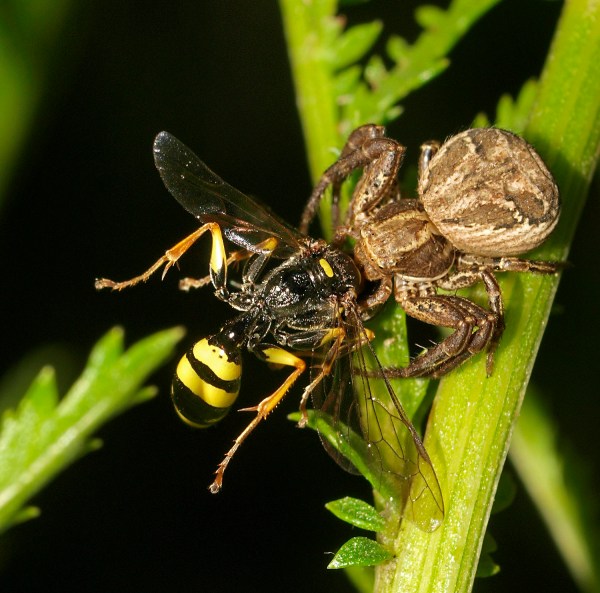
The whole of the reserve’s invertebrate population falls into one or more of four categories: predators, parasitoids, parasites or prey.
Continue reading “Red in tooth and claw”
Every year we find nests of peacock (Aglais io) caterpillars among the reserve’s nettle beds. Those caterpillars will be pupating soon and we will begin to see the new adults this month.
Continue reading “Peacock butterflies”
Rambling in the reserve
by Ian Bushell
A funny start to the day with weather totally uncertain if it wanted to rain or be bright. While it had been raining in town, in the reserve the paths and grass were quite dry.
Continue reading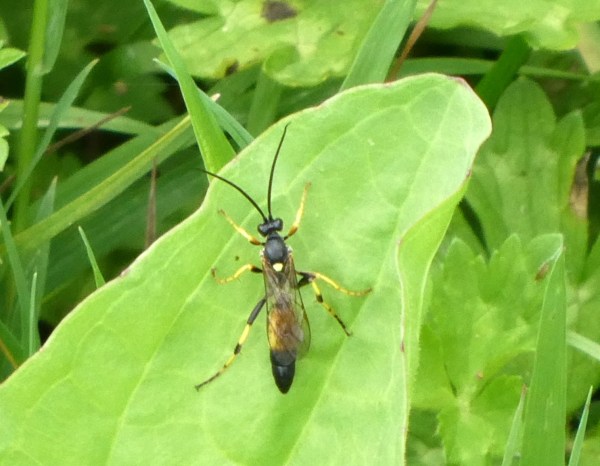
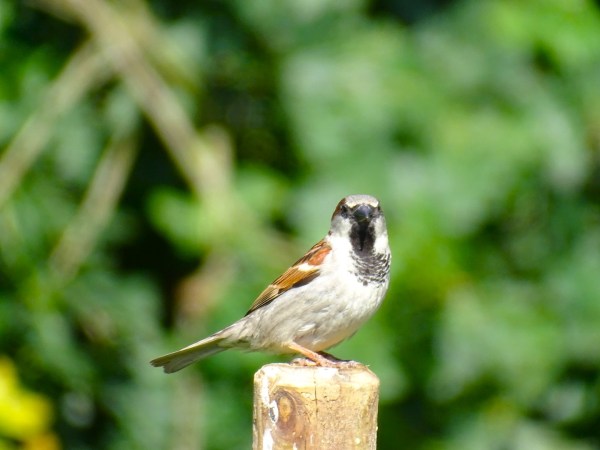
Cheryl Cronnie asks if this is a house sparrow (Passer domesticus) or a tree sparrow (Passer montanus) that she has photographed in the reserve.
Read on to find out
The peacock caterpillars will be growing fast at this time of year.
Continue reading “Peacock caterpillars”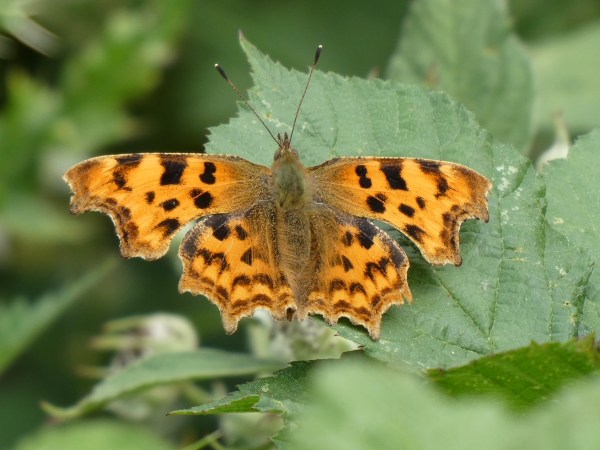
A comma butterfly (Polygonia c-album), so-called for the small white comma-shaped mark on underside of its hind wing.
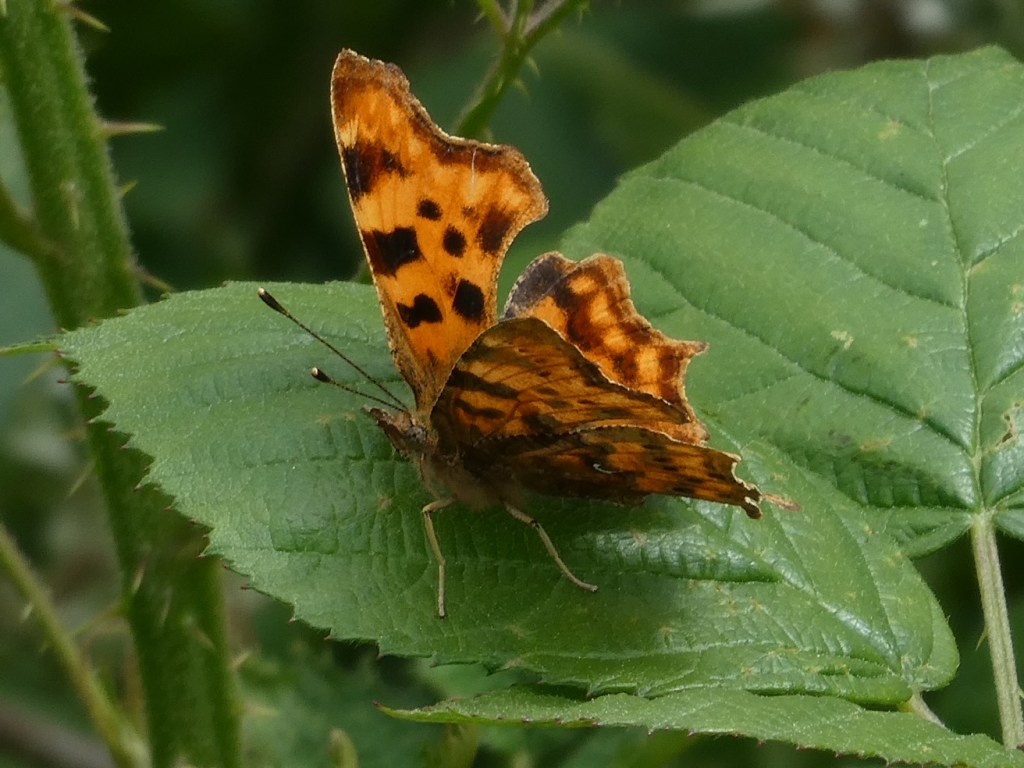

All images take in the reserve by Clive Knight

This is an ichneumon wasp feeding on hogweed near Lambrok Stream.
Continue reading “Ichneumon wasp”
There are funnel shaped webs low down in the dense vegetation of the park’s hedges and edges; what lives in them?
Continue reading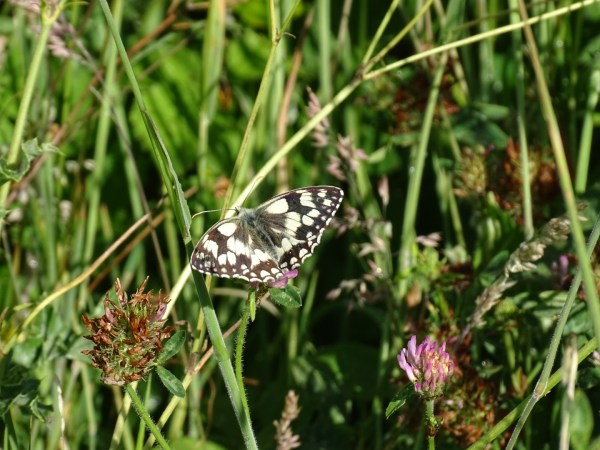
The distinctive marbled white (Melanargia galathea) is common and widespread in southern England. At this time of year it chooses unimproved meadow grassland, showing a preference for purple flowers such as wild marjoram, thistles, knapweeds and red clover. The caterpillars feed on grasses particularly red fescue.


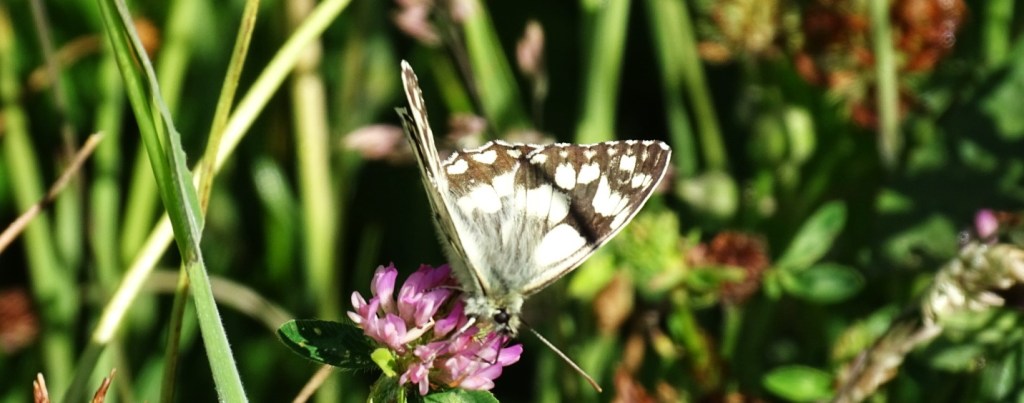
All images taken in the reserve
[1] Mating marbled whites by Ian Bushell) [2] Marbled white male by Ian Bushell [3]Marbled white feeding on red clover by Cheryl Cronnie
Header Image by Cheryl Cronnie
Conservation Status
Butterfly Conservation priority: Low
European status: Not threatened


A tree creeper (Certhia familiaris), beautifully camouflaged against the bark and moss of an oak.
Continue reading
I have had a few early mornings in the reserve in an effort to photograph butterflies before they get too active. It has often been quite breezy, which has made it challenging to get some good images. But one morning I was fortunate to find this common blue that I was able to get reasonably close to, and during the periods when the wind briefly dropped, I was able to fire off a few shots.
Continue reading “Chasing butterflies”
A dandelion crammed with tiny bronze-black beetles. Our favourite entomologist emailed us:
They’re pollen beetles. Getting a positive ID is going to be impossible without sending me a specimen (and they’re too small!) but this time of year the most common species is the Common Pollen Beetle Meligethes aeneus.
Continue reading “Common pollen beetle”
This post was first published in July 2018
This is a garden bumble bee (Bombus hortorum) collecting nectar in a spear thistle flower at the edge of the large pond.


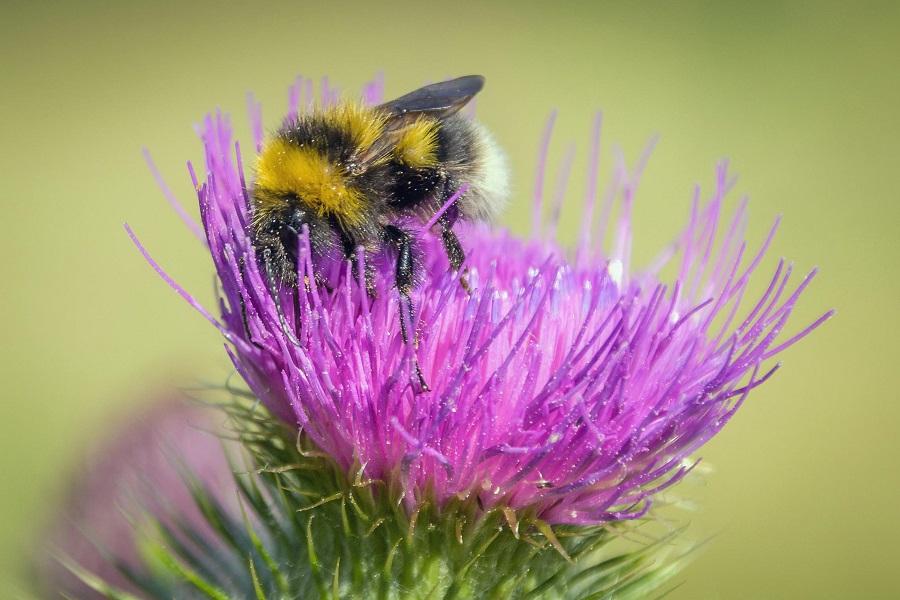

These photographs were taken by the late DKG in July of 2018
Continue reading “Garden Bumblebee”
In response to yesterday’s fledglings, somebody sent me a link to a YouTube video of great tits leaving their nest. The screen is split so that you can see the inside and the outside of the nest box at the same time.
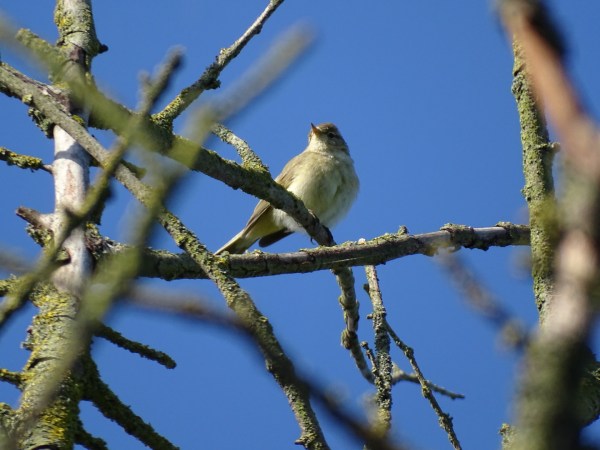
The reserve is full of little brown birds. Small and brown seems to be some kind of default programme for birds and accurate identification can depend on an extra millimetre in a brown tail feather or the exact shade of a brown eye-stripe. Until they are otherwise identified, the RSPB calls them all LBJs: Little Brown Jobs.
Continue reading “LBJ”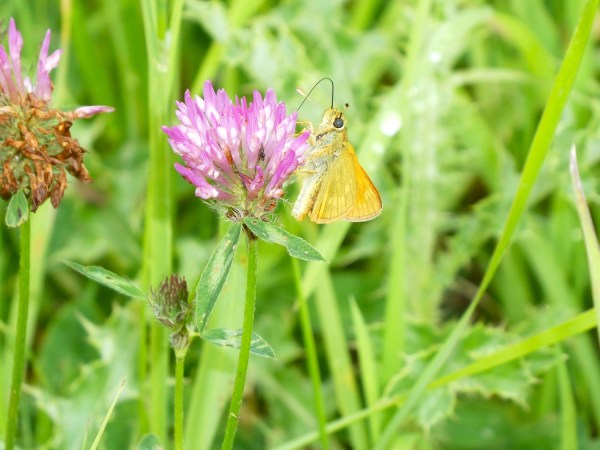
A small skipper (Thymelicus sylvestris) feeding on red clover, photographed in the reserve by Ian Bushell.
Conservation priority: low.
Distribution: common and widespread.
Population trend since 1970’s – down by 7%
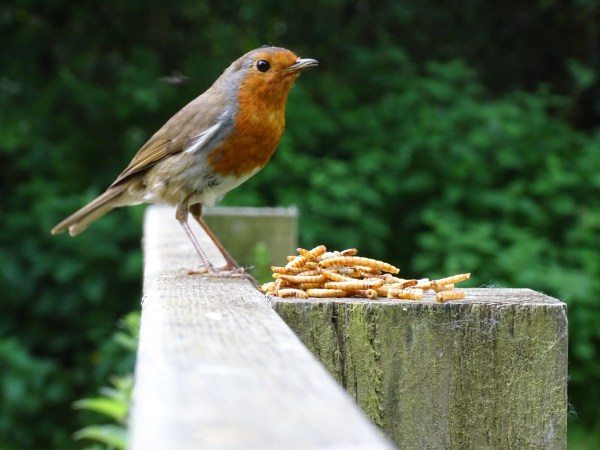
by Cheryl Cronnie
There’s a little story behind the robin in this picture, whom I’ve called Rocky Robin. I’ve been feeding him since the end of August 2021.
Continue reading
According the the Countryside Charity CPRE, light pollution is falling, dropping sharply during the pandemic lockdowns and continuing to fall as the cost of electricity soars. This is good news!
Continue reading “Light pollution”
A beautiful photograph of a speckled wood (Pararge aegeria) against a backdrop of buttercups, taken in the reserve by Cheryl Cronnie.
Continue reading
This post was first published in June 2019
A queen wasp (Vespula vulgaris) in the hedge in Sleepers Field.
Continue reading “Queen wasp”
by Simon Knight
At this time of year I can begin to indulge in one of my favourite areas of wildlife photography – macro photography. Viewing the world through a macro lens reveals a whole new environment and details that would otherwise be missed.
Continue reading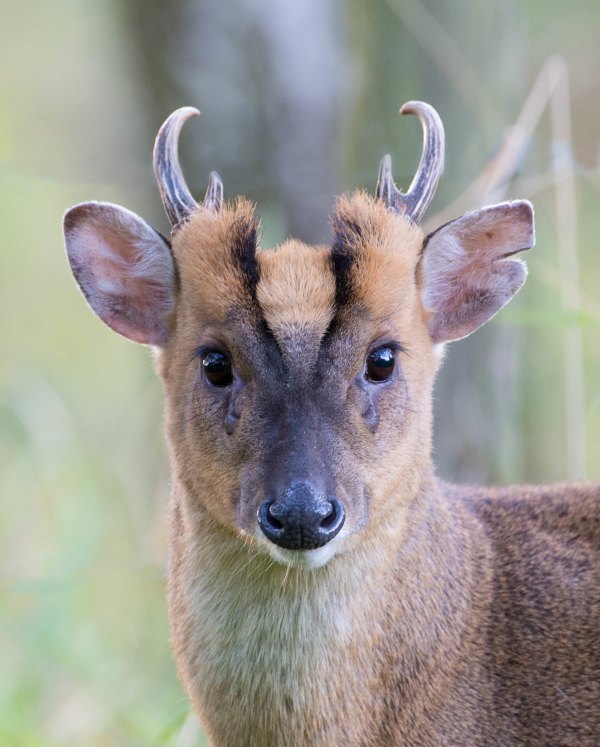
A message this week from Julie Newblé:
I didn’t get pictures but I spotted a muntjac this morning at Fiveways, by the picnic area. It went across the crossroads, from Brunts to the small triangular field with the oak tree swing.
Continue reading “Muntjac”


 Southwick Country Park Nature Reserve