Beautiful demoiselle
This is a damsel fly: a beautiful demoiselle, Calopteryx virgo.
Read on…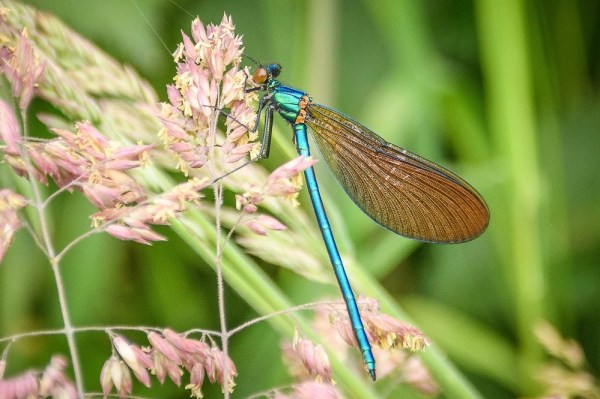

Clive Knight has finally found the European hornets’ nest we always knew was somewhere in the reserve and sent us this charming picture.

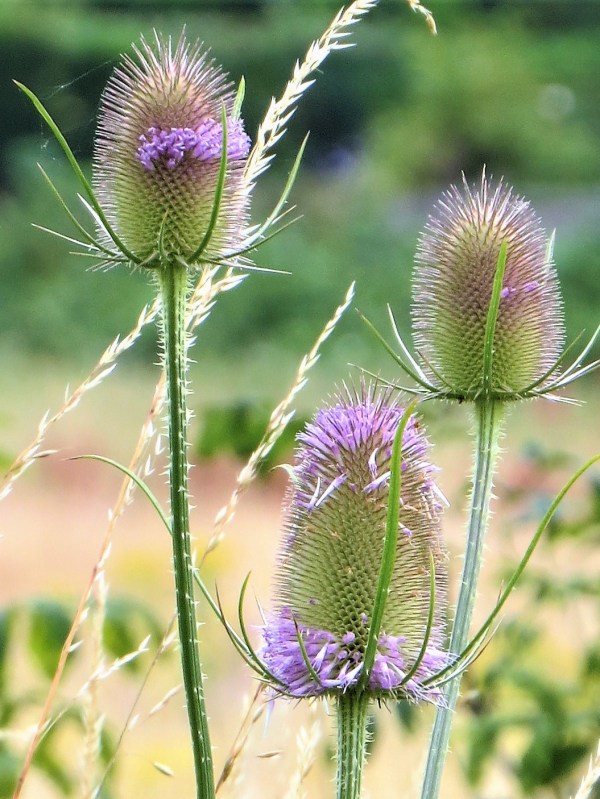
This is wild teasel (Dipsacus fullonum), sometimes called the common teasel, photographed in Lambrok Meadow next to Lambrok Stream.
Continue reading “Teasel”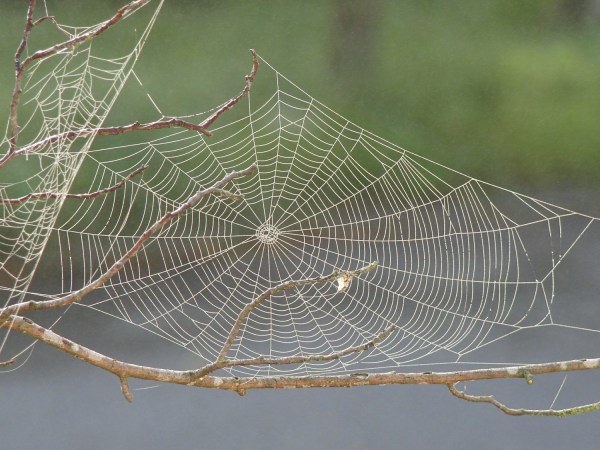
The reserve’s fields are full of spiders’ webs.
Continue reading “spider silk”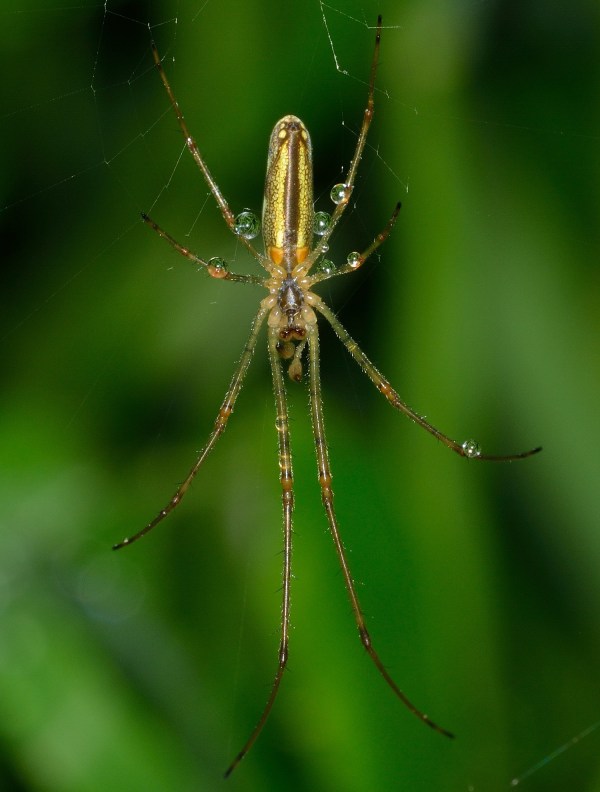
Another trawl through the depths of our species lists has snagged a long jawed spider, Tetragnatha extensa.
Continue reading “Tetragnatha extensa“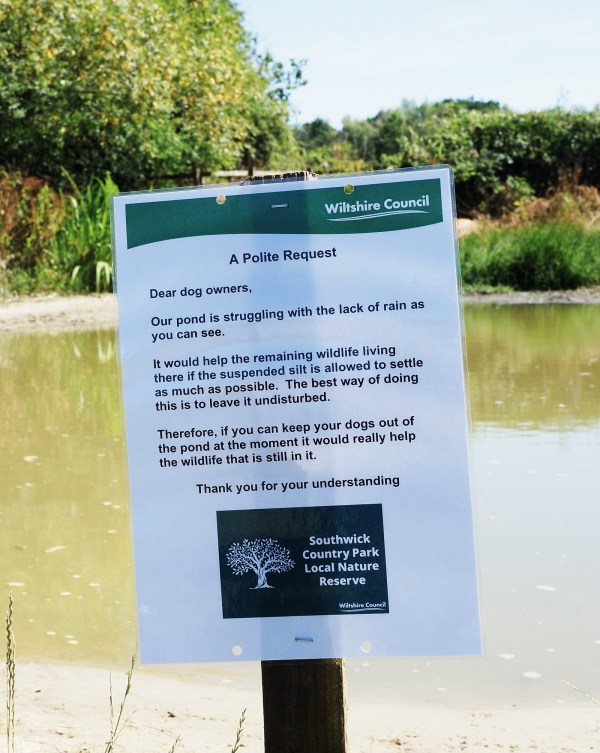
This record-breaking drought is drying up the reserve’s ponds and streams. Please help us maintain the quality of what little water is left by keeping your dogs out of the pond for the time being. Thank you
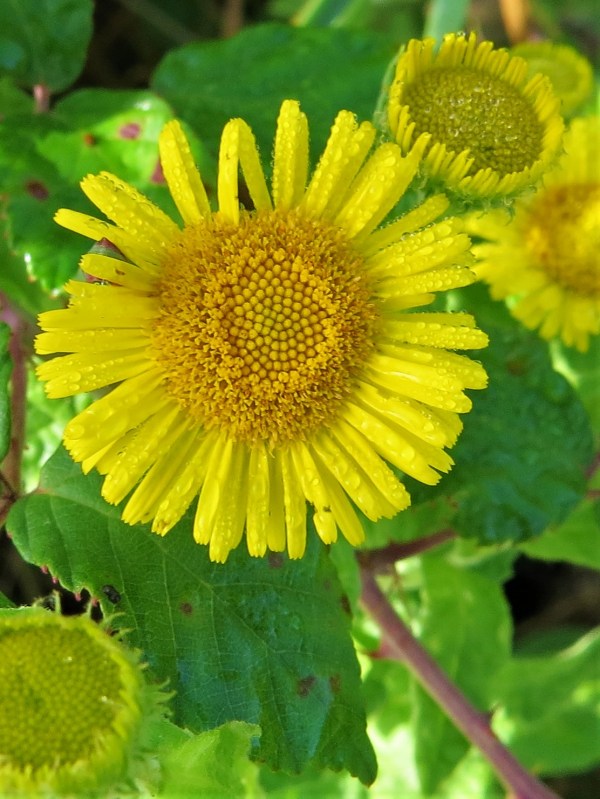
This is common fleabane (Pulicaria dysenterica); it is a plant that grows all over the place but nobody ever seems to know its name. As the reserve’s wildflowers go to seed at the end of the summer, the fleabane is a welcome splash of colour beside the paths.
Continue reading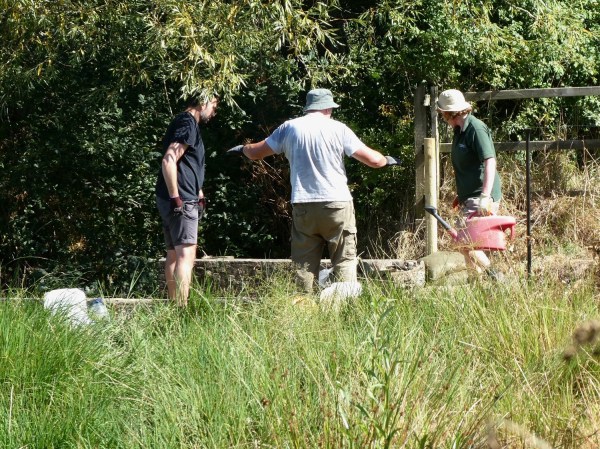
by Ian Bushell
After the Wednesday Work Party had cleared away the vegetation from both sides of the dam, the contractor soon set to work.
Continue reading “Fixing the dam: part 2”
A common whitethroat (Sylvia communis), photographed in the park by DKG in the summer of 2019. It is probably either a female or a juvenile; the male is more distinctively coloured.
Continue reading “Whitethroat”
Re-wilding projects, as a method of restoring Britain’s depleted biodiversity, are gaining support.
by Simon Knight
During this extreme hot spell we are all currently enduring, there is no doubt that the best time to be in the reserve is first thing in the morning.
Continue reading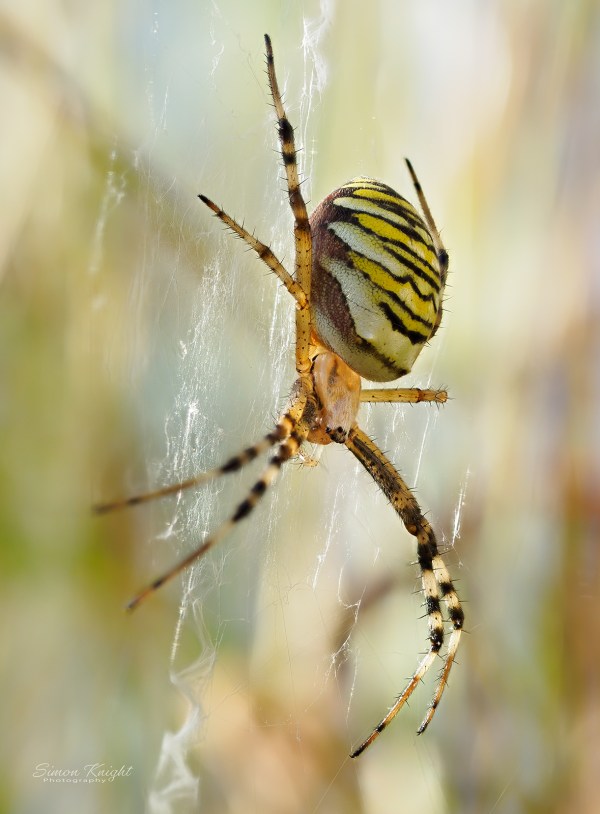
By Simon Knight
After the water voles, my second favourite residents of the reserve are the wasp spiders. When July rolls around, I make it my mission to find my first wasp spider and this happened on 3rd July. She was in Village Green and very small, the youngest I had ever seen. I used what3words to record the location as my plan was to come back over the coming days to see how she progressed. I was hoping the long grass in Village Green would remain as the rest of the reserve had already been cut, but sadly the next day Village Green was also cut. No more wasp spider.
Continue reading “Wasp Spiders”
This is a six spot burnet moth (Zygaena filipendulae), a dayflying nectar feeder, photographed on the reserve’s plentiful, nectar-rich, tufted vetch.
Continue reading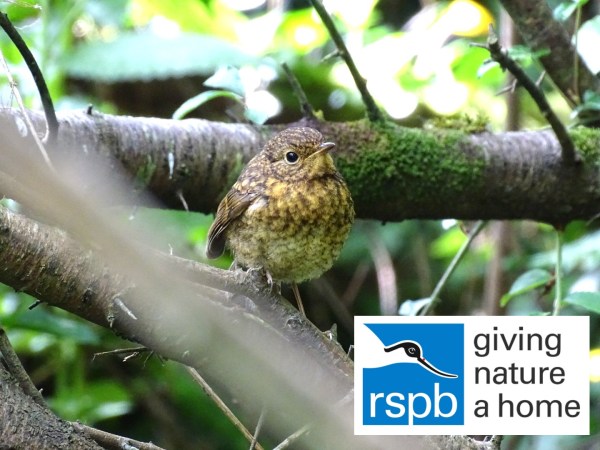
On Wednesday August 10th, and on Wednesday September 14th, the RSPB will be in the reserve. There will be a stand next to the path, somewhere near the main car park, manned by an RSPB representative, there to answer questions, discuss the organisation’s work and recruit members.

The RSPB stand set up somewhere near the sea.
The RSPB is leading a nation-wide effort to monitor and protect our birds in the face of the present climate emergency. Drop in for a chat, consider joining them: our birdlife needs all the help it can get.
Header image: immature robin photographed in the reserve by Cheryl Cronnie

Although we haven’t yet found a nest, there are always European hornets working somewhere in the reserve. Here is an astonishing video of hornets in flight.
Video by nature photographer, Lothar Lenz, published by Caters Clips.
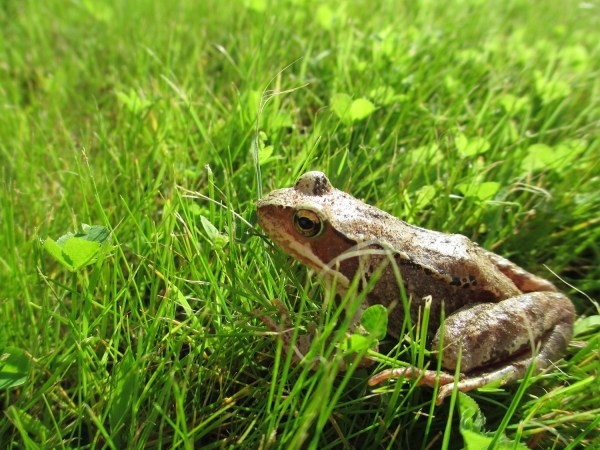
How do our frogs survive as the reserve’s ponds and streams dry up in the drought?
Continue reading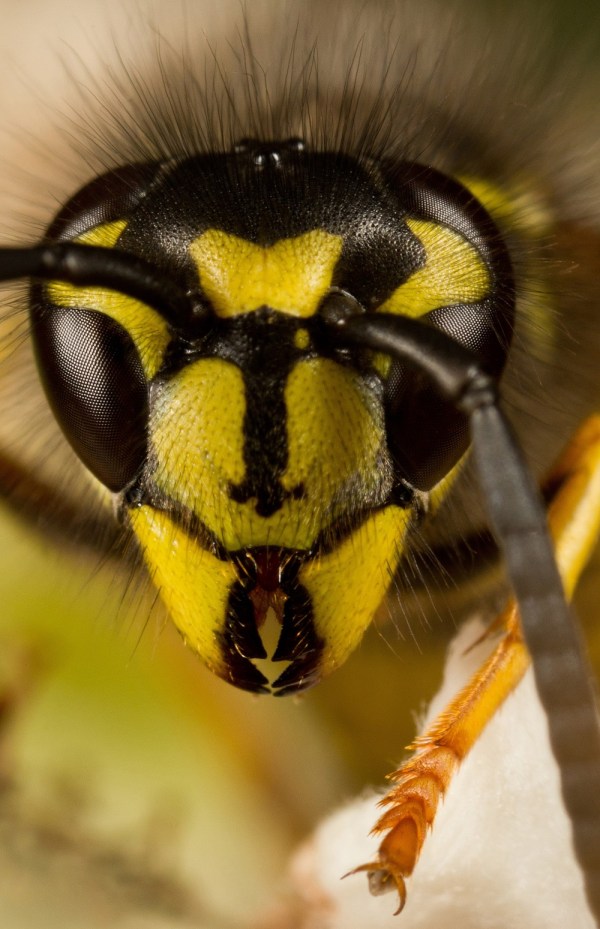
There are six species of social wasp that are native to Britain and this is a good time of year to identify them.
Continue reading “Wasp time”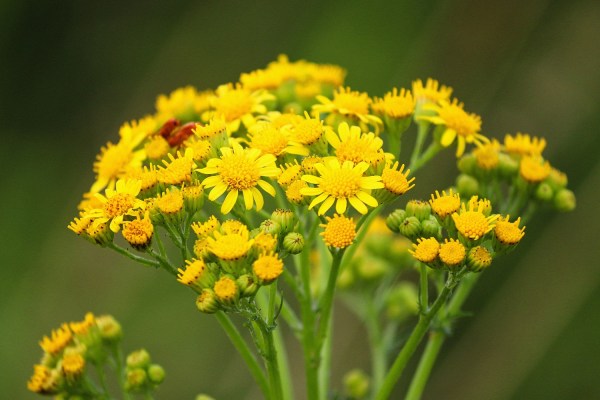
When the County Recorder for Flowering Plants, Richard Aisbitt, visited the reserve in May, he found two different species of ragwort: common ragwort (Jacobaea vulgaris) and hoary ragwort (Jacobaea erucifolia).
Continue reading “Extra ragwort”

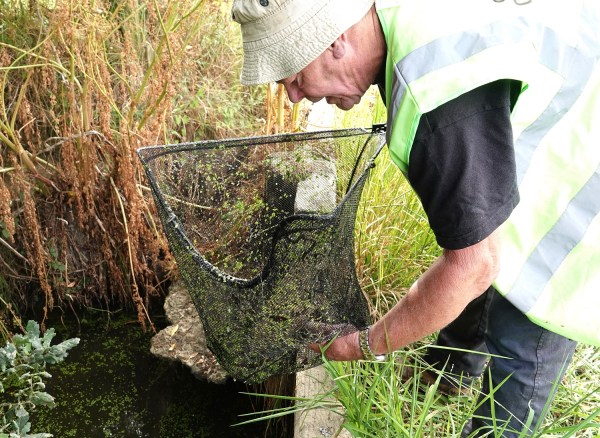
with Ian Bushell
While we were getting the dam ready for the contractor and in between digging holes, clearing vegetation and trimming hedges, I had a bit of pond dip in the pool below the dam.
Continue reading
The dam at the downstream end of the big pond has been leaking.
Continue reading “Fixing the dam”Our apologies: there is a technical problem and we will be unable to post today.
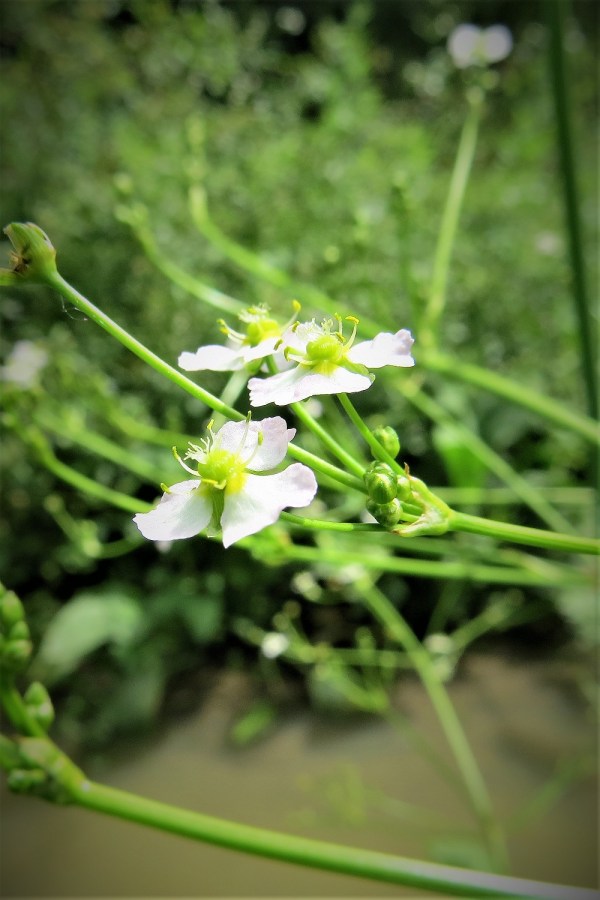
Water plantain ( Alisma plantago-aquatica) thrives in the Lambrok’s tributary stream, even in conditions as dry as these.
Continue reading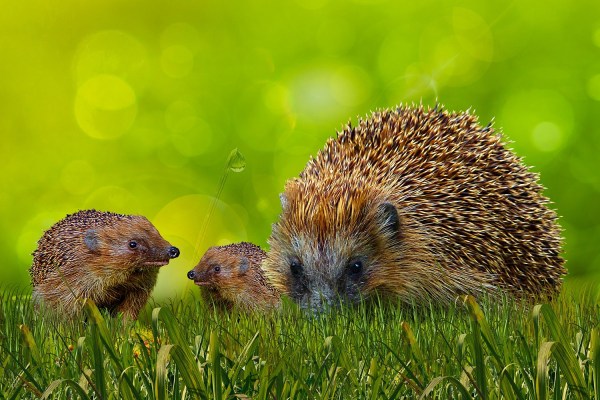
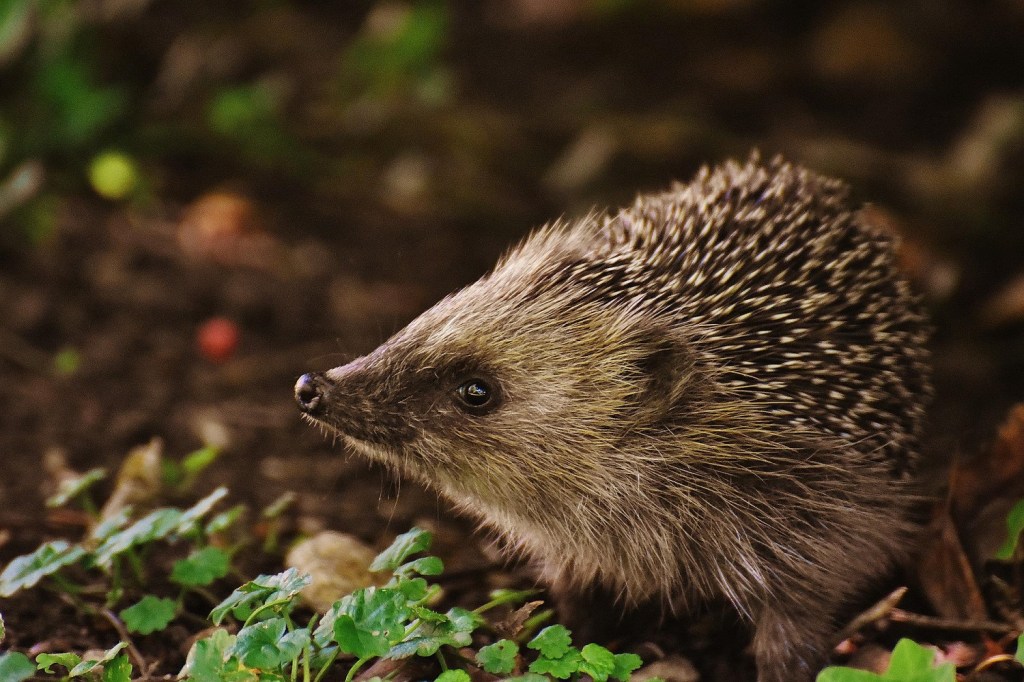
Hedgehogs were named for their noisy foraging. They root through hedges and undergrowth with their snouts, turning over the soil, looking for insects, worms, centipedes, bird eggs, snails, baby mice, frogs, all the while making loud piggy noises: snorts, squeals, and grunts.


All images: (CC0) from pixabay.com

Another new identification for the reserve; a green nettle weevil (Phyllobius pomaceus) reported in May this year by Charles Land.
Continue reading


 Southwick Country Park Nature Reserve