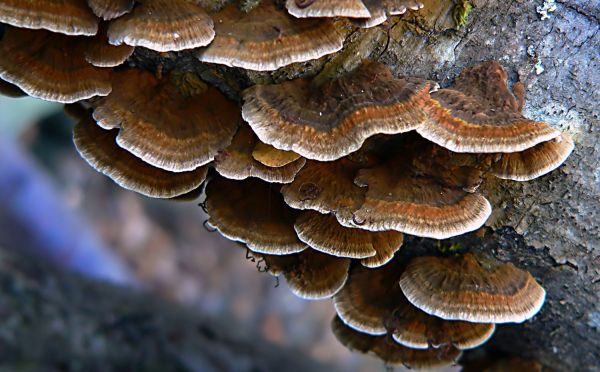
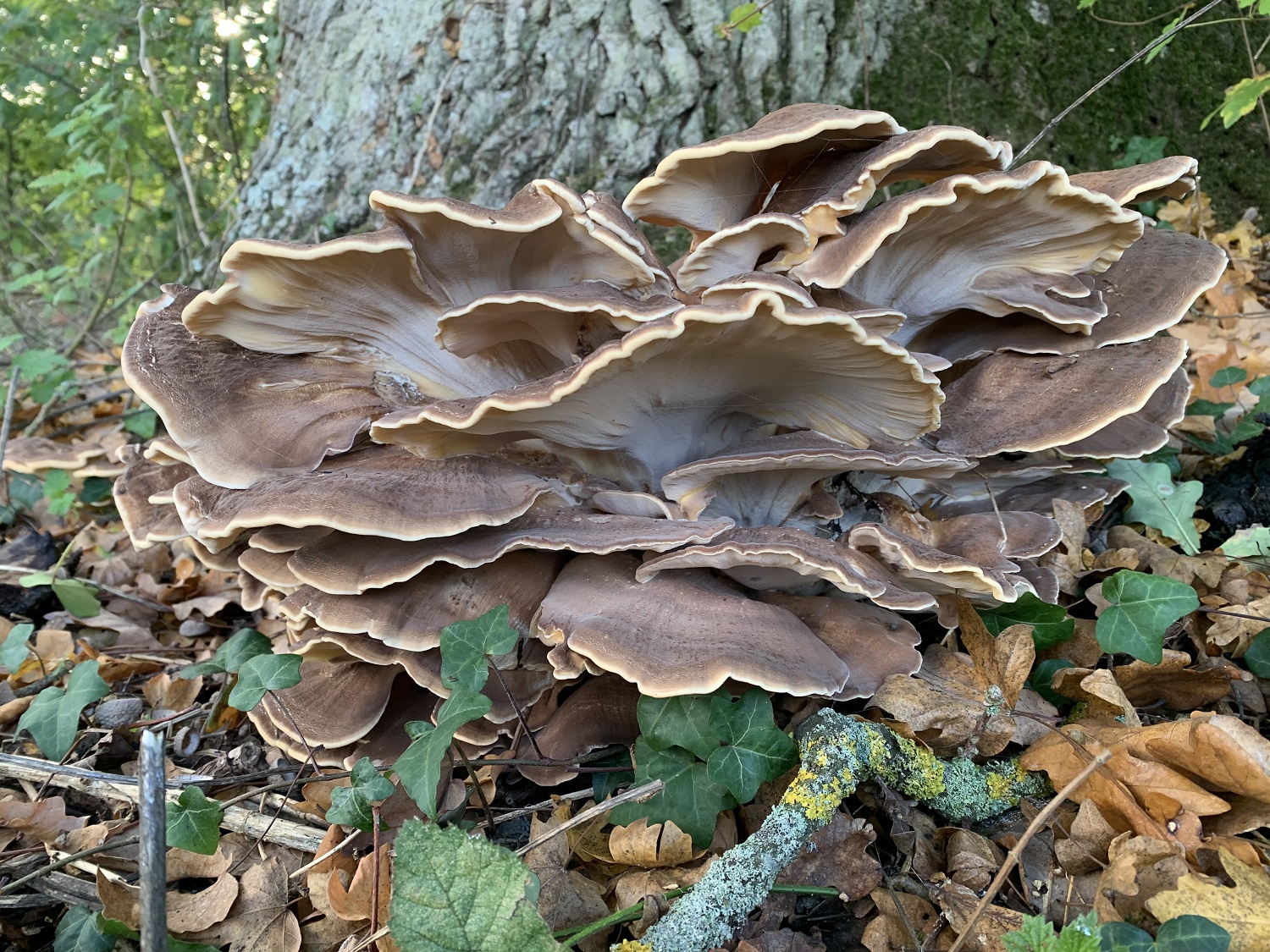
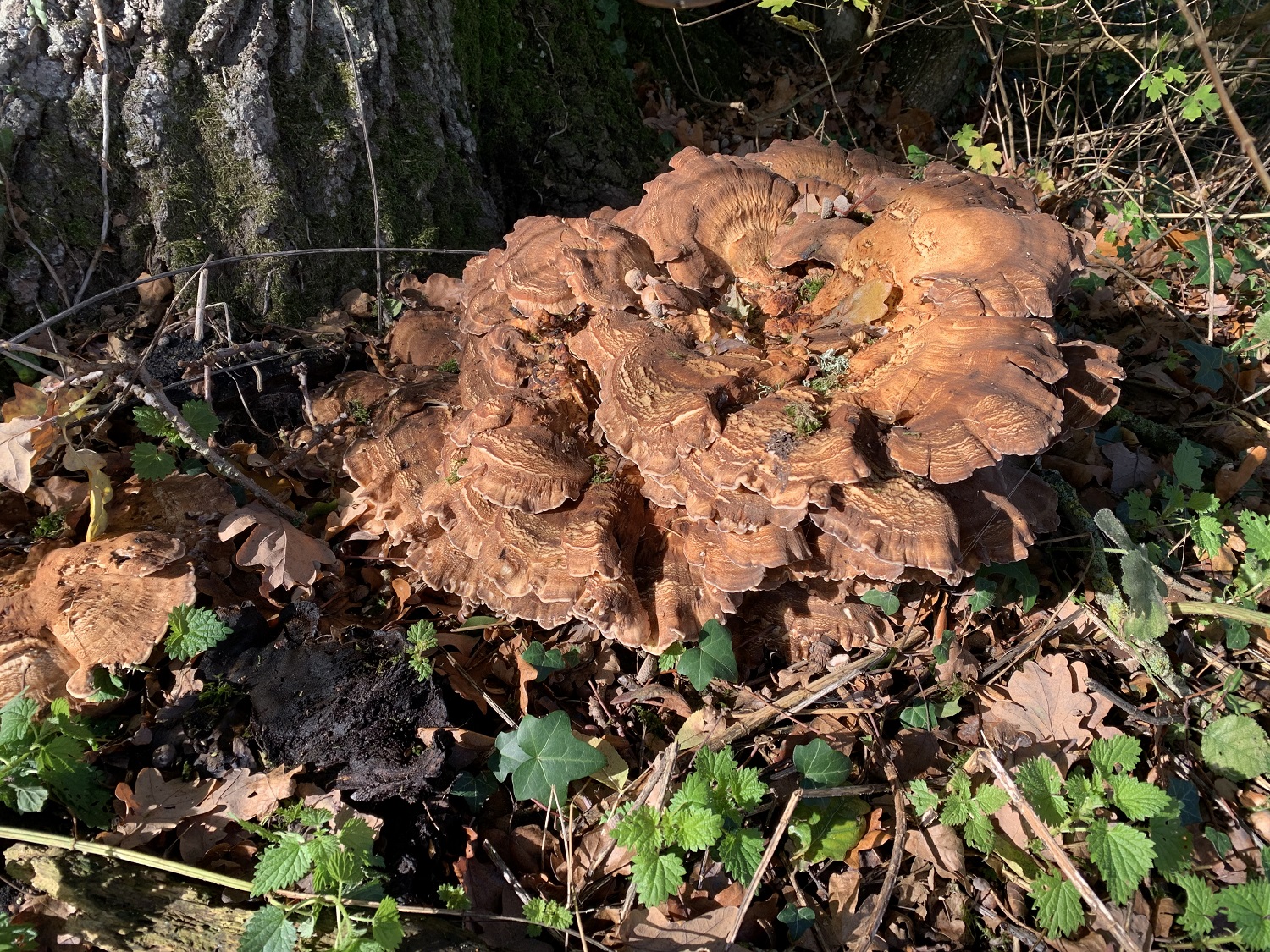
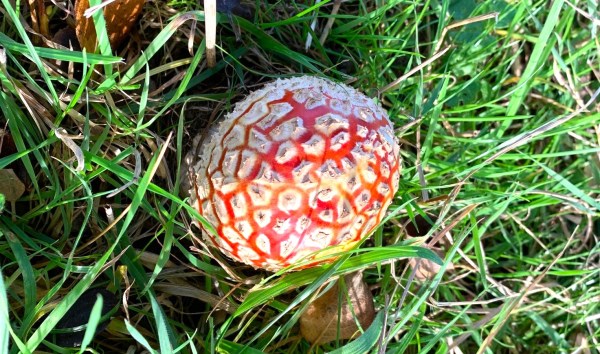
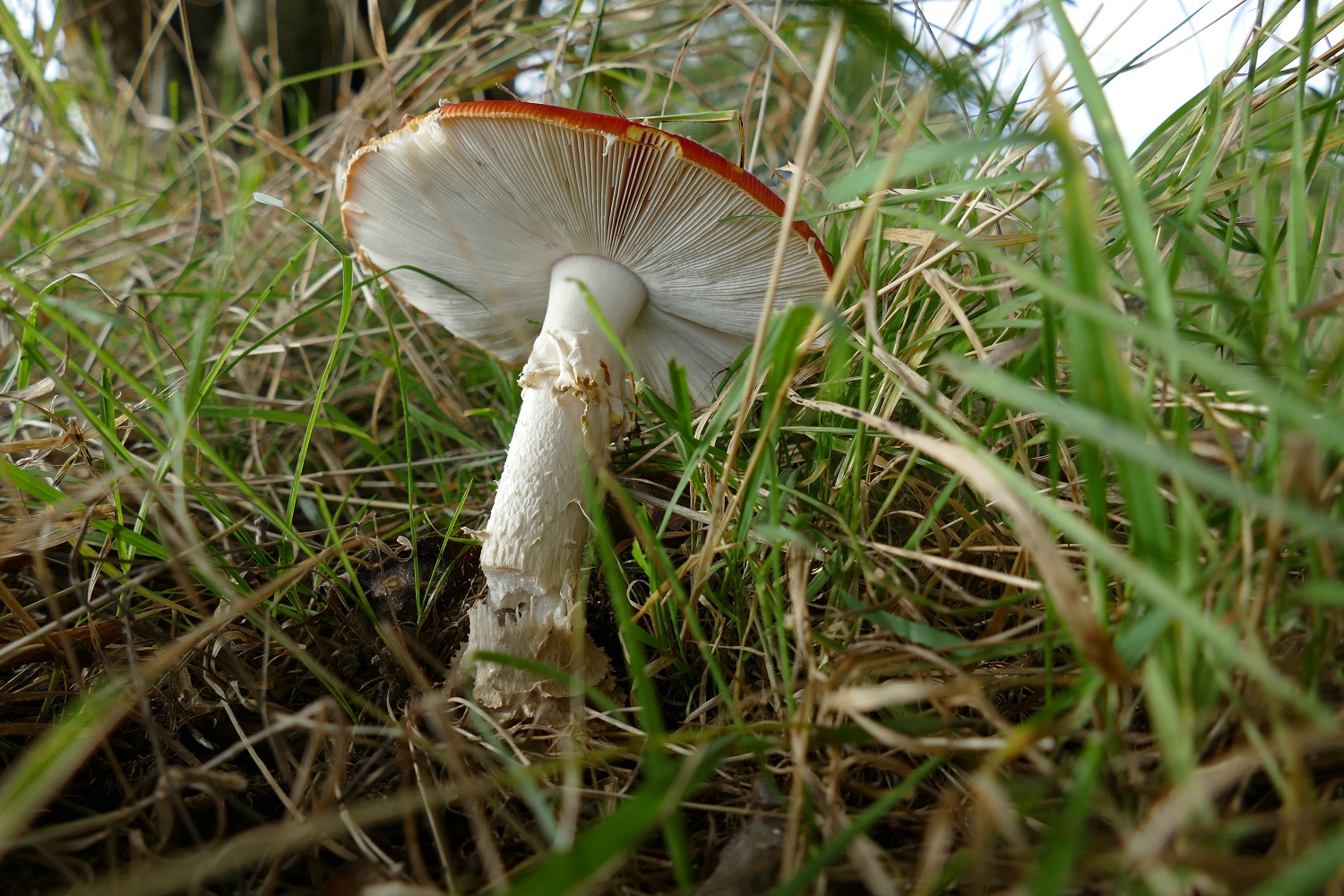
These are a species of bracket fungus common in the reserve: turkey tail (Trametes versicolor). The main part of the fungus, the mycelium, is growing invisibly inside the tree. These beautiful outgrowths are the fruiting bodies, part of the fungus’s reproductive system.
Read on:Leaf fall
What happens to all those leaves?
Continue reading “Leaf fall”Fungi
Symbiotic fungi explained by David Attenborough.
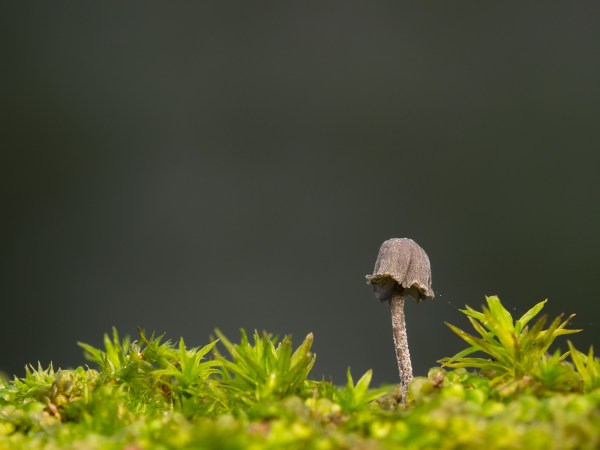
Header image: Mycena pseudocorticola © Simon Knight
The naming of fungi
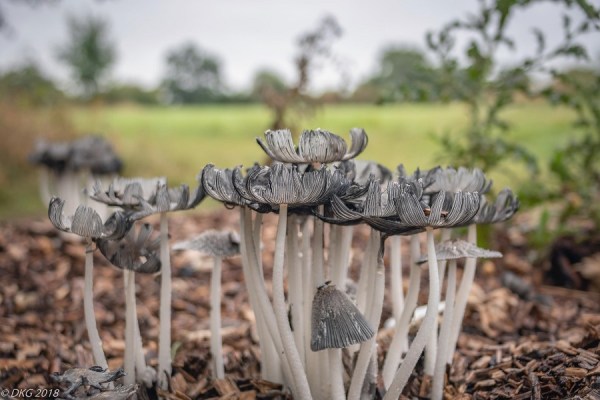
This is winter fungus growing on (and in) one of the reserve’s oak trees. It is sometimes called velvet shanks or wild enoki but its scientific name is always Flammulina velutipes.
Continue readingCandlesnuff fungus
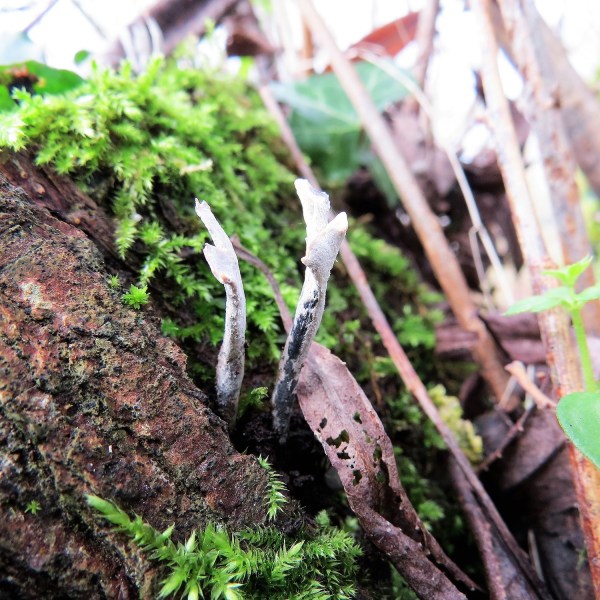
A tiny candlesnuff fungus, Xylaria hypoxylon, growing in the rotting wood and moss of one of the old willow trees by the footpath alongside the Lambrok Tributary.
Continue reading “Candlesnuff fungus”Magic mushrooms
Mycologists have discovered fungi that can break down polyethylene, the sort of plastic typically used in shopping bags, food wraps and bottles.
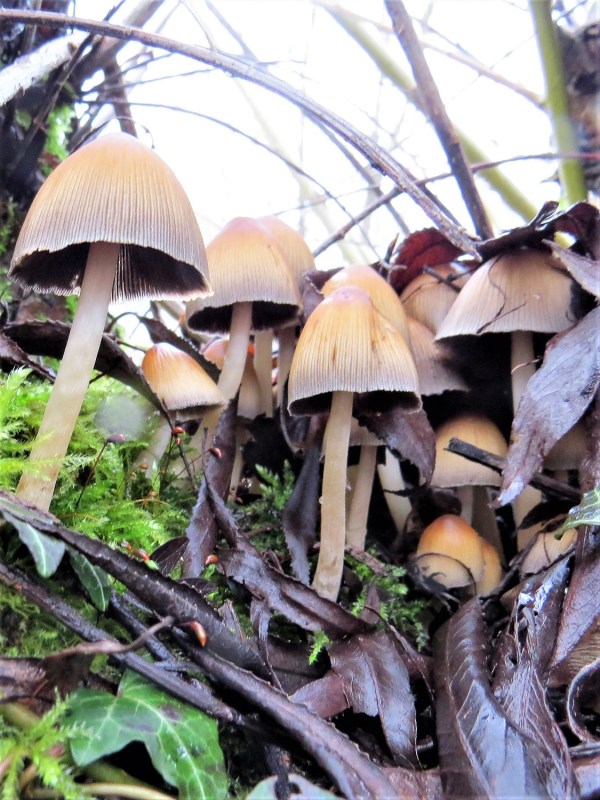
Continue readingWood ear
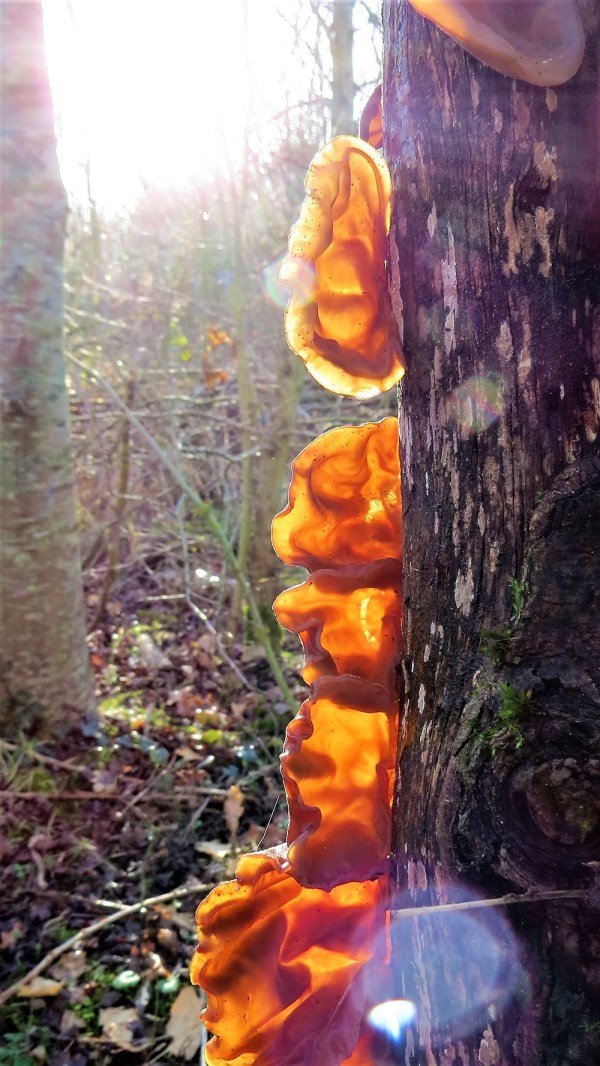
Wood ear is one of the few fungi that produce fruiting bodies all year round.
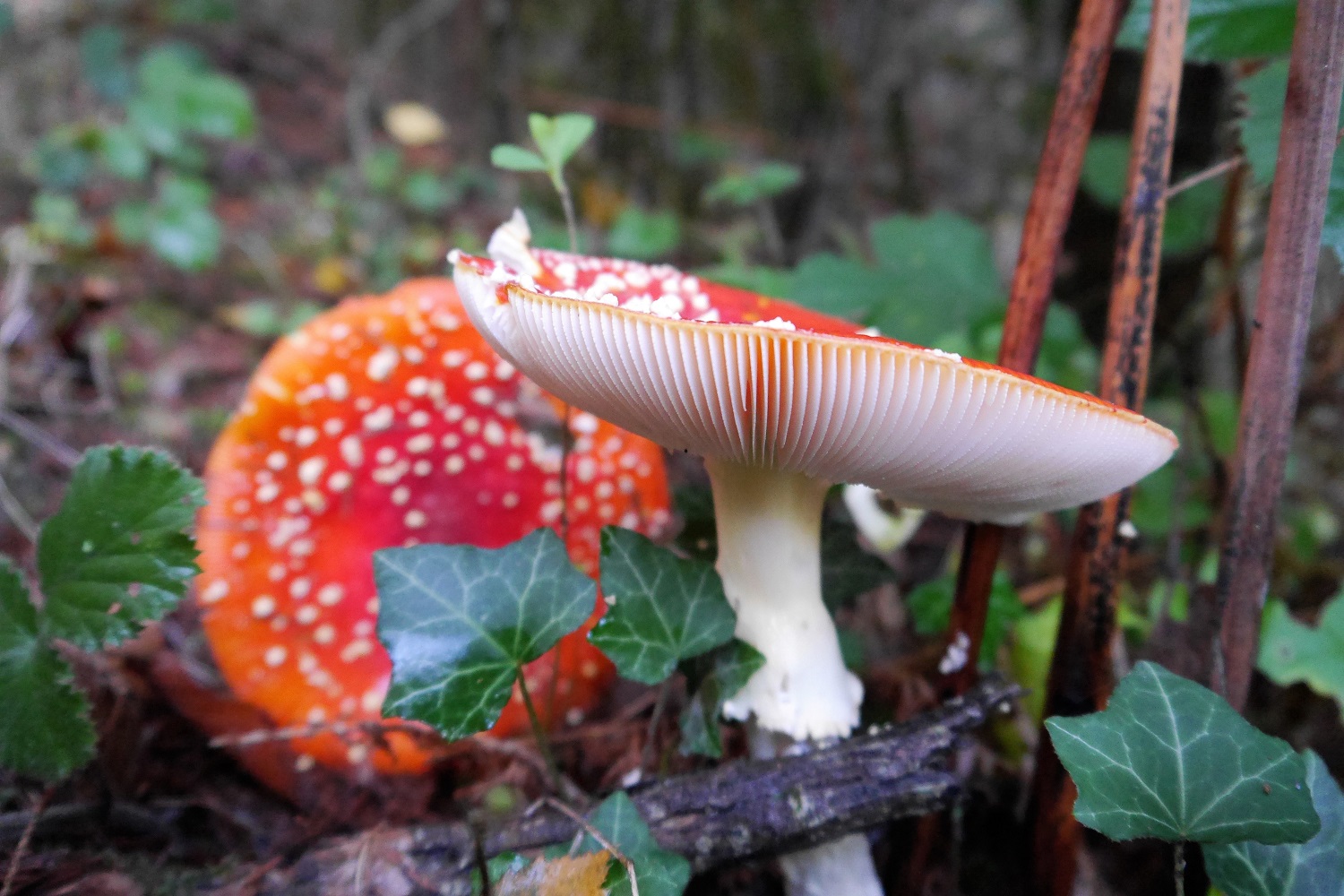
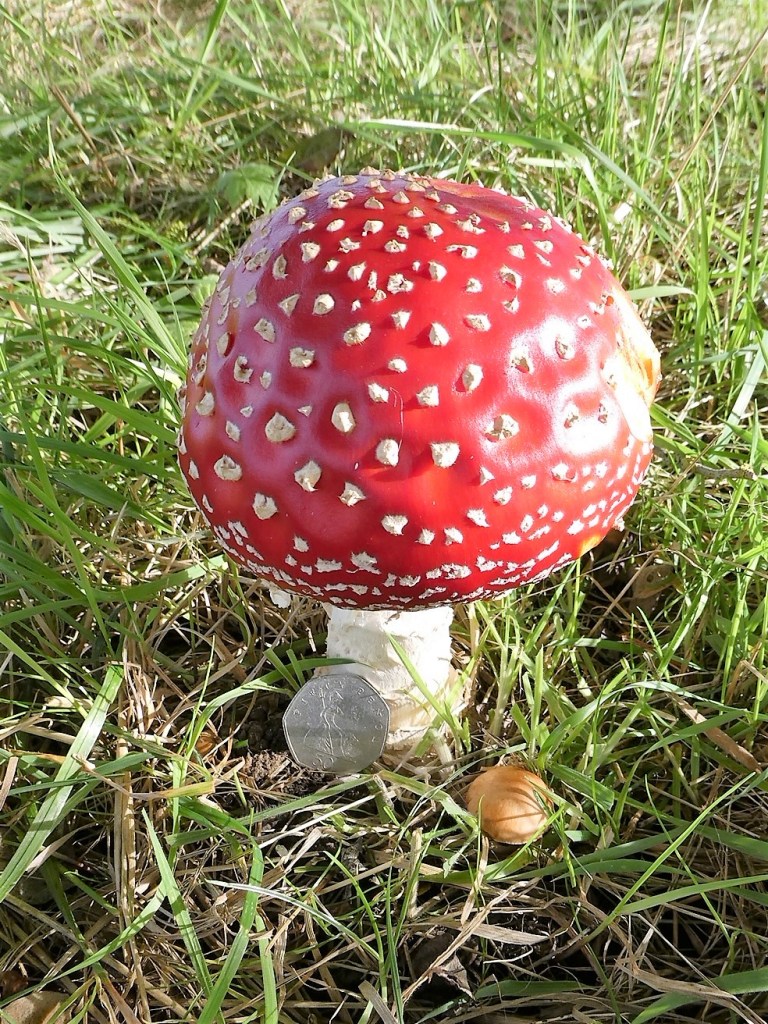
Continue readingLast week, Chris Seymour was mushroom hunting in the reserve: fly agaric and some kind of a boletus. Thanks for the pictures Chris.


The naming of things
This is winter fungus, sometimes called velvet shanks or wild enoki. Its scientific name is (always) Flammulina velutipes.
Continue readingFlammulina velutipes
The winter mushroom or velvet shank, has recently (2019) been reclassified as Flammulina velutipes. In the past, classification of fungi was based on morphology alone, but newly available DNA analysis techniques have resulted in the reclassification of many species.
Continue reading “Flammulina velutipes”MERIPILUS giganteus (Giant Polypore)
by Clive Knight
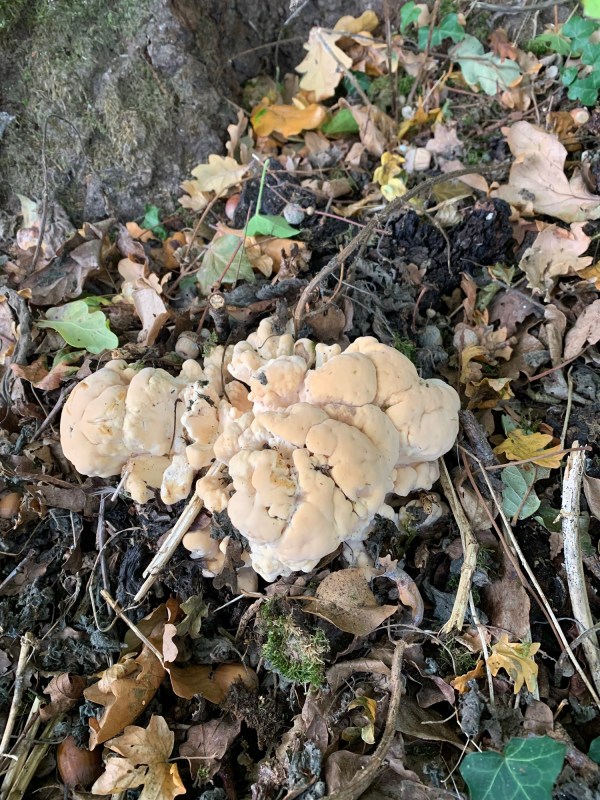
This is the fungus I found at the base of an oak tree in the reserve at the beginning of October. Rich Murphy identified it as a Giant Polypore (Meripilus giganteus). I took the first picture (see above) on October 15th when the fungus was about 10cm across.
Rich and I have followed its progress and photographed it regularly through October, November and up to the 3rd December when it had started to decline. At its fullest it was approx 55cm across by 25cm height.


Fly agaric again
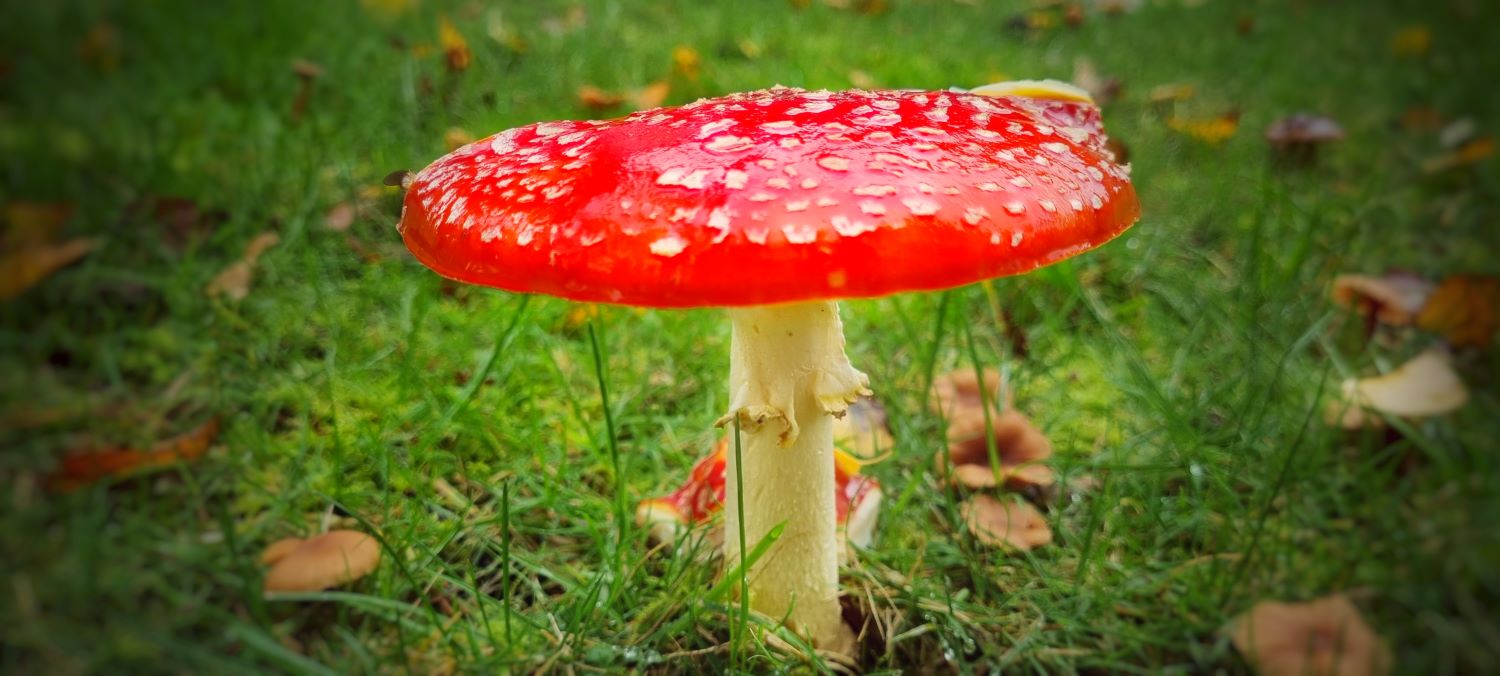
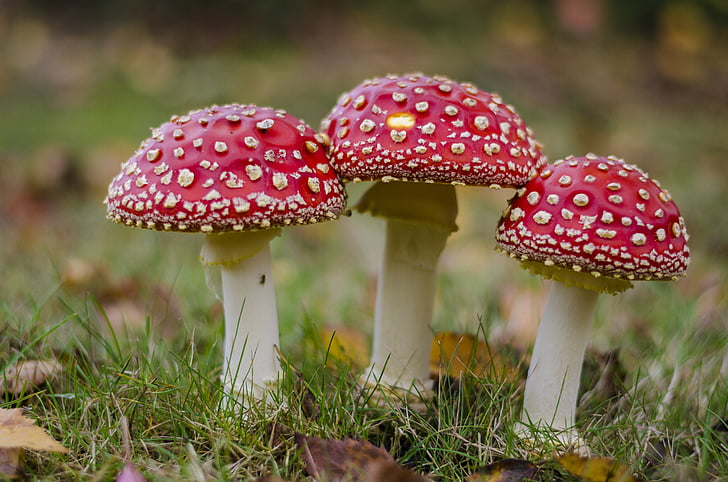
This is fly agaric, a mycorrhizal fungus, Amanita muscaria, which is found in the reserve every year despite our lack of its preferred partners: birch and pine trees. In classic pictures of this red and white fungus, those that don’t have an elf sitting on top are usually growing picturesquely in the moss under a birch tree.
Read on:Fly agaric
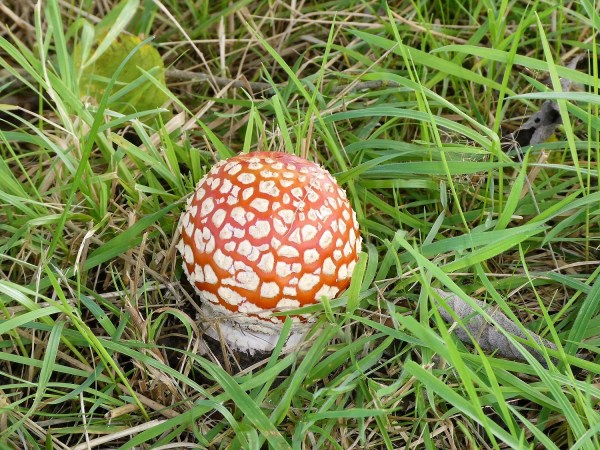
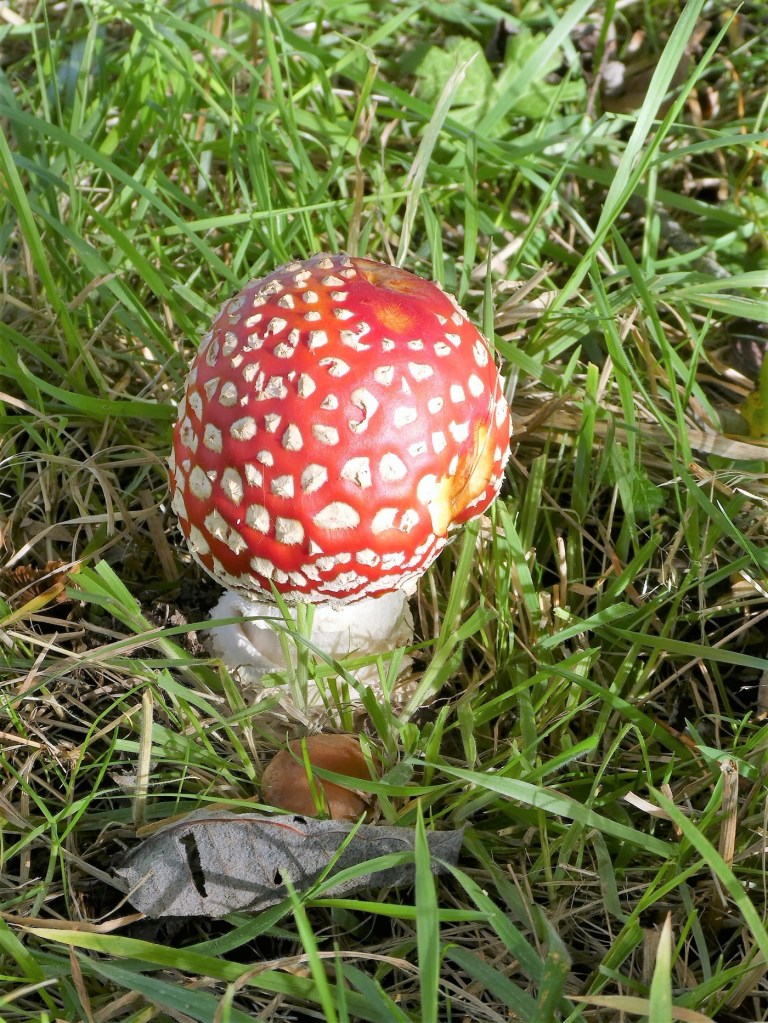
Clive Knight’s yearly search among the reserve’s fungi has turned up fly agaric, the classic spotted toadstool from our fairy tales. Here is a gallery of some of the pictures of Amanita muscaria we have been sent over the years.


Header image by Clive Knight
Time-lapse fungi
None of these species of fungus are local, in fact they all come from the other side of the planet. But this is such stunning time-lapse photography by Australian Stephen Axford that we felt you should see it.
Header image by our own wildlife photographer Simon Knight.

Fungi
Symbiotic fungi explained by David Attenborough.
Header image taken in the reserve by DKG
Candlesnuff fungus
A tiny candlesnuff fungus, Xylaria hypoxylon, growing in the rotting wood and moss of the old willow tree (number 5477 ) by the footpath alongside the Lambrok Tributary.
Continue reading “Candlesnuff fungus”The Wood Wide Web
by David Feather
I enjoy mushrooms, particularly as part of a full English breakfast. What I have never, till now, known, is that they and their other fungi relatives could save the planet.
Continue reading…and there’s more
by Clive Knight
Fly Agaric
by Clive Knight
This is a sequence of pictures of a Fly Agaric (Amanita muscaria) taken every day from last Friday, the 22nd, up until today, Tuesday 26th. The last picture shows the fungus fully developed at approximately 17cm across, but collapsed. I have found that when they are fully open they do not last long so I am keeping my eye on some more in the reserve hopefully to take pictures of one fully open and still upright.

23.10 21 
24.10.21 
25.10. 21 
26.10.21
The header picture is the first in this series, taken by Clive Knight on Friday 22nd October.
Fairy rings
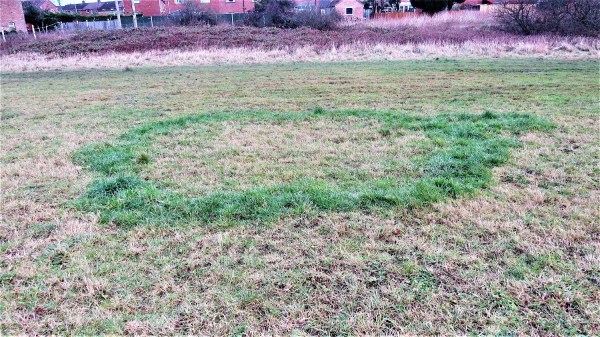
One of several fairy rings in Lambrok Meadow, caused by the mycelium of a subterranean fungus.
Continue reading “Fairy rings”Wood ear
This post was first published in January 2019
Auricularia auricula-judae is one of the few fungi that produces fruiting bodies all year round. Winter hardly seems to trouble it and we found these specimens in the strip of wood between Lambrok Meadow and Kestrel Field, in the second week of January with the early sunshine just beginning to melt the frost that had covered them overnight.
Continue reading “Wood ear”Candlesnuff fungus
A tiny candlesnuff fungus, Xylaria hypoxylon, growing in the rotting wood and moss of the old willow tree (number 5477 ) by the footpath alongside the Lambrok Tributary.
Continue reading “Candlesnuff fungus”Mycena pseudocorticola
by Simon Knight
I was looking for fungi recently in the park, but because it’s now getting late in the fungi season, I wasn’t finding anything that interesting. I was about to head home when the moss on a nearby oak tree caught my attention.
Continue reading “Mycena pseudocorticola”Fly Agaric
This is fly agaric (Amanita muscaria) found, rather unusually, under a willow tree in the park; birch and pine are its preferred partners.
Read on: