Kingfisher
This is the time of year when the summer’s brood of fledgling kingfishers are driven away from the home territory by their parents, and set off to look for good fishing grounds of their own.
Continue reading
This is the time of year when the summer’s brood of fledgling kingfishers are driven away from the home territory by their parents, and set off to look for good fishing grounds of their own.
Continue reading
Kingfishers usually come to the reserve in the autumn when breeding pairs split up and the year’s fledglings spread out to look for their own territories. This year, after such a long period of drought, things might be different.
Read on:
A fabulous picture of a kingfisher taken last week in the reserve by wildlife photographer Simon Knight. If wildlife photography is your thing, Simon’s latest blog is full of tips and tricks.


Mail from Cheryl Cronnie with pictures of a kingfisher:
Hi there, I’d just like to share with you the kingfisher I spotted today at Southwick Country Park by the pond. I was over the moon as I had never seen one before.

Lovely! Thank you, Cheryl.
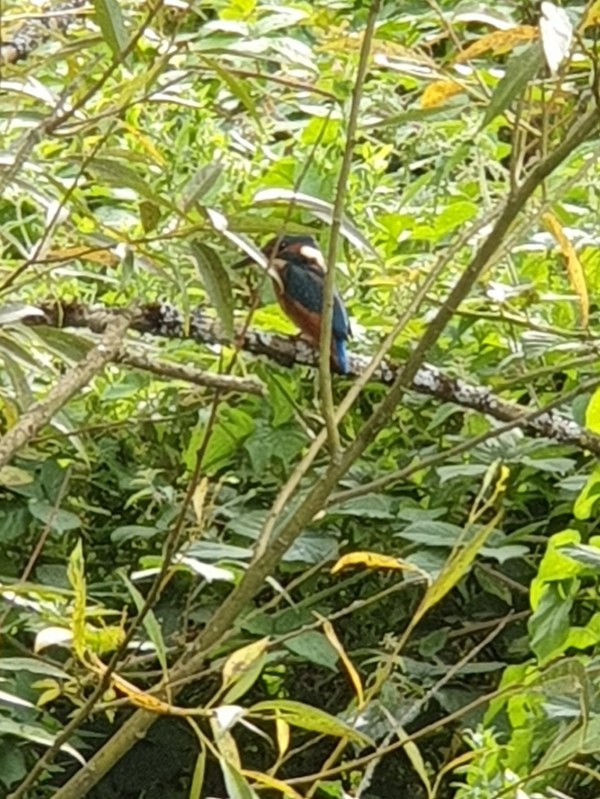
Jay Pickard has sent us a picture of a kingfisher that he took from the Decorated Bridge yesterday.
Thanks Jay.

Keep an eye out for the kingfisher that Jay Pickard saw and photographed two weeks ago.
Continue reading “Winter fishing”
A message and a picture from Jay Pickard:
Spotted a Kingfisher this morning over the pond and stream. Great to see!

Thanks Jay, we love to get pictures from park users.
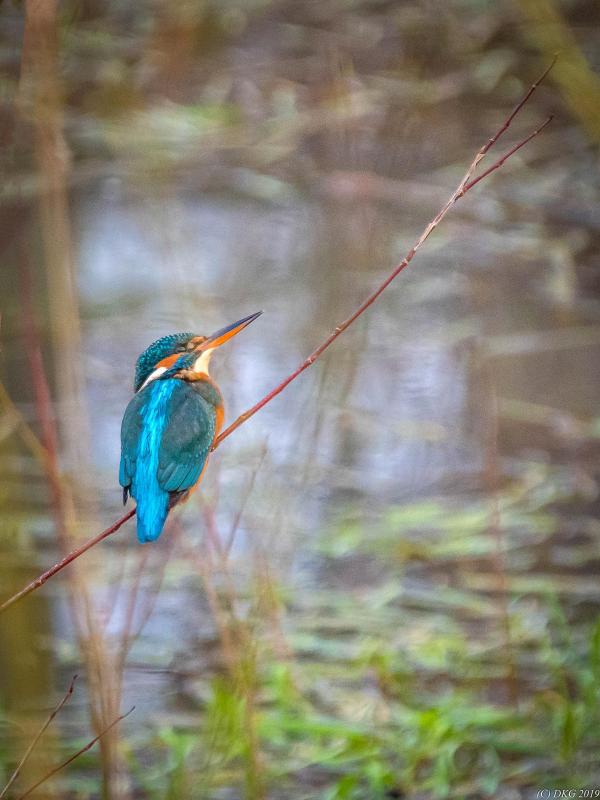
The kingfisher (Alcedo atthis) that DKG photographed at the weekend is a female. The male bird has an all black beak while the female’s lower mandible is orange with a black tip.
Kingfishers are highly territorial; they pair up in the winter but keep separate territories until the following spring. It is probable, therefore, that our female has already paired up with a nearby male.
A kingfisher’s territory covers, on average, a kilometre of waterway; our female will be looking for a nesting site either very close to, or in the park. The Lambrok’s steep clay banks may well be perfect.





 Southwick Country Park Nature Reserve