There are forty six species of trees in the reserve.
Continue reading “Tree numbers”Tree numbers

There are forty six species of trees in the reserve.
Continue reading “Tree numbers”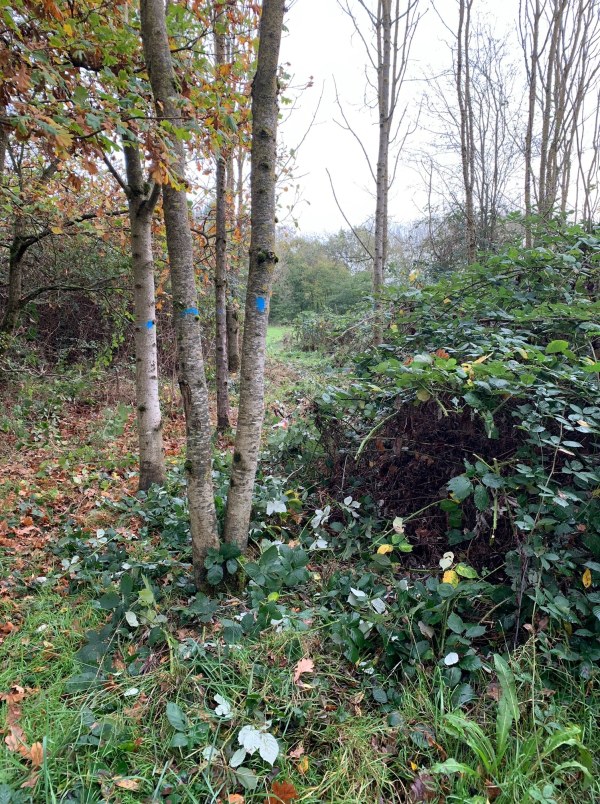
by Ian Bushell
Our Tree Officer, Rich Murphy, has been running chainsaw monitoring sessions with Clive, Phil and myself to check our competence to fell trees in the reserve. The reserve belongs to the county and they are the people who pay to insure us.
Continue reading
The reserve provides habitat for all kinds of wasps. This year, despite the drought, must have been a good year for gall wasps because our oak trees are showing a goodish crop of the various round galls we call oak apples.
Continue reading “More about our oaks”
This is fly agaric, a mycorrhizal fungus, Amanita muscaria, which is found in the reserve every year despite our lack of its preferred partners: birch and pine trees. In classic pictures of this red and white fungus, those that don’t have an elf sitting on top are usually growing picturesquely in the moss under a birch tree.
Read on:
There are three kinds of pigment in a usually green leaf: carotenes which are yellow, red and pink anthocyanins, and chlorophyll, which is the green that masks the other colours until autumn.
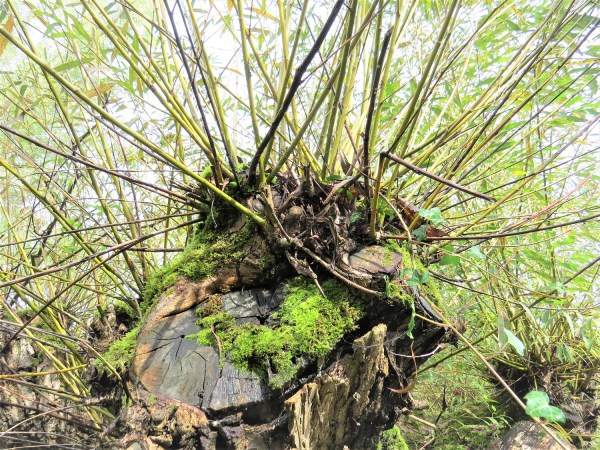
Salix is the genus name of willow, trees known and cultivated for millennia for their medicinal properties.
Continue reading “Salix”
Oak trees produce thousands of acorns every year. Somebody has worked out that an oak tree can produce ten million acorns over its lifetime. In a good year, they carpet the ground under the tree and crunch underfoot.
Read on:
It’s not, as many believe, an instruction to keep your coat on until June; it’s telling you to take your cardigan off as soon as the may is in blossom, which has been known to happen as early as April.
Continue reading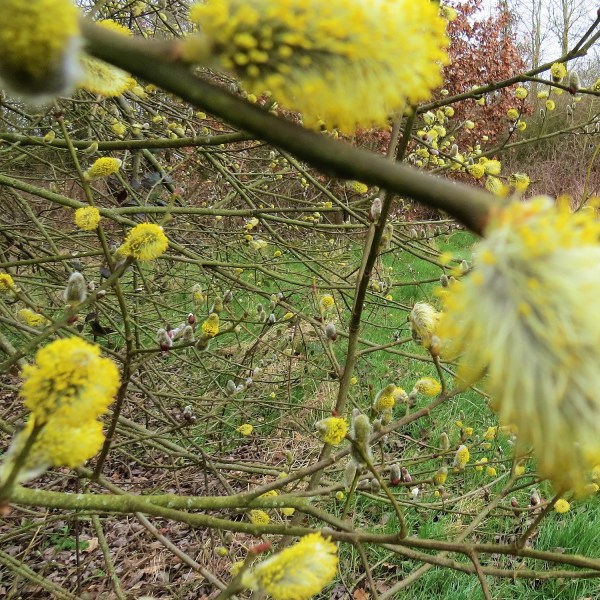
At this time of year, the reserve is full of pollinators carrying pollen from tree to tree in a kind of reproductive frenzy.
Continue reading “Arboreal sex”
Blackthorn (Prunus spinosa) is the earliest of our native flowering trees.
Continue reading “Blackthorn”
Always among the year’s first flowers in the reserve are the hazel catkins in the copse near the picnic place. They are a familiar and friendly sign that spring is on its way.
Continue reading
by David Feather
We, the Friends of Southwick Country Park Nature Reserve think we are doing well with our tree planting etc, but just read this article about an environmentalist in India. It is inspiring.
Continue reading “Inspiration”
Sometimes, healthy and mature trees shed large branches during the summer for no apparent reason. This is what is known as Summer Branch Drop Syndrome and it is what happened to Oak 5552 in August of this year.
Continue reading
Ian Bushell writes:
Unfortunately, in late August oak 5552 suffered from Summer Branch Drop when at least two limbs fractured and fell.
Continue reading “Correction”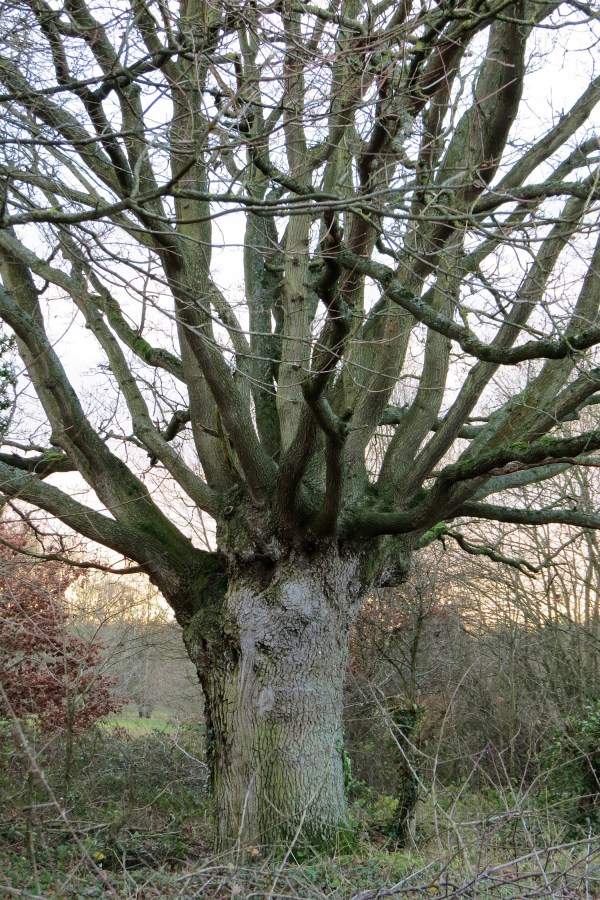
This is tree number 5552: an old pollarded oak standing in the eastern-most corner of Sleeper Field.

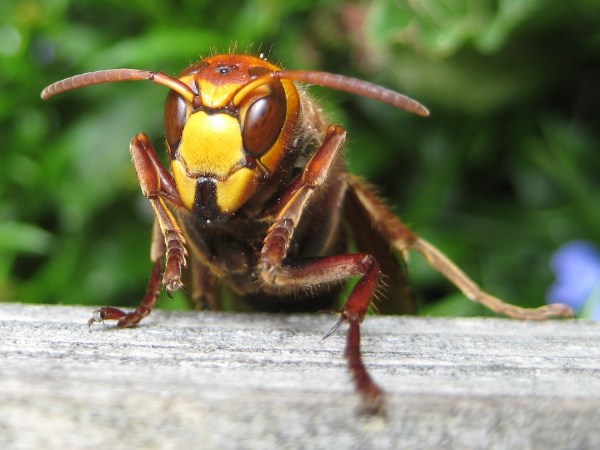
There are European hornets (Vespa crabro) still hunting in the Lone Oak.
Continue reading “European hornets”
by David Feather
I think that we accept that a walk in the park is very good for our mental health. What is not so clear is that it is also good for our physical health.
Continue reading “A walk in the woods”
There are three kinds of pigment in a usually green leaf: carotenes which are yellow, red and pink anthocyanins, and chlorophyll, which is the green that masks the other colours until autumn.
Salix is the genus name of willow, trees known and cultivated for millennia for their medicinal properties.
Continue reading “Salix”
by Ian Bushell
The weather was again kind to the working party: dry but not too hot. Another good turn out, just missing Sarah and Alan who are on holiday.
Continue reading
Researchers have discovered that the trees in a wood are connected by a network of mycorrhizal fungi that grow around and in their roots, a phenomenon they have called the Wood Wide Web.
Continue reading
Oak trees produce thousands of acorns every year. Somebody has worked out that an oak tree can produce ten million acorns over its lifetime. In a good year, they carpet the ground under the tree.
Read on:
by David Feather
“I talk to the trees, but they don’t listen to me.” This was part of a lyric to a song some of our older nature reserve walkers will remember. Well, there is a possibility that the lyric writer might have been mistaken.
Continue reading
Mayflower is the blossom of the hawthorn tree.
Continue reading “Mayflower”


 Southwick Country Park Nature Reserve