The smallest mammal in the world is the bumblebee bat but the Eurasian pygmy shrew (Sorex minutus), a park resident, comes a close second.
Continue reading “Pygmy shrew”Pygmy shrew
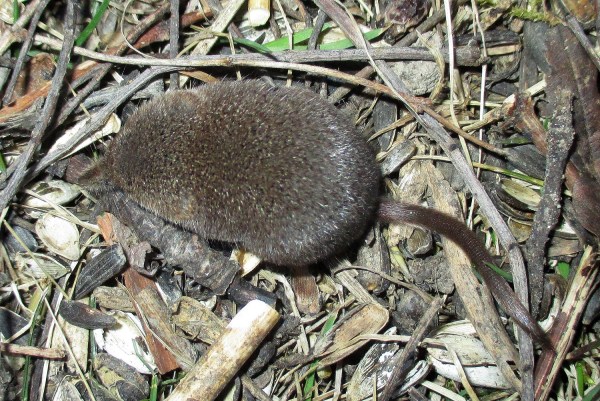
The smallest mammal in the world is the bumblebee bat but the Eurasian pygmy shrew (Sorex minutus), a park resident, comes a close second.
Continue reading “Pygmy shrew”
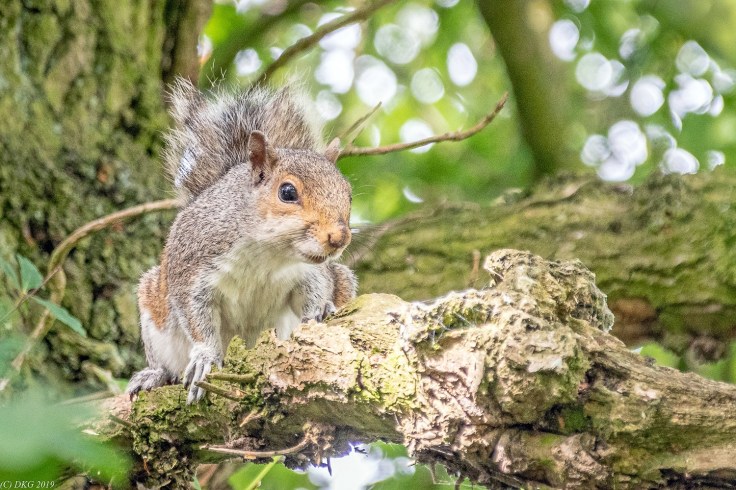
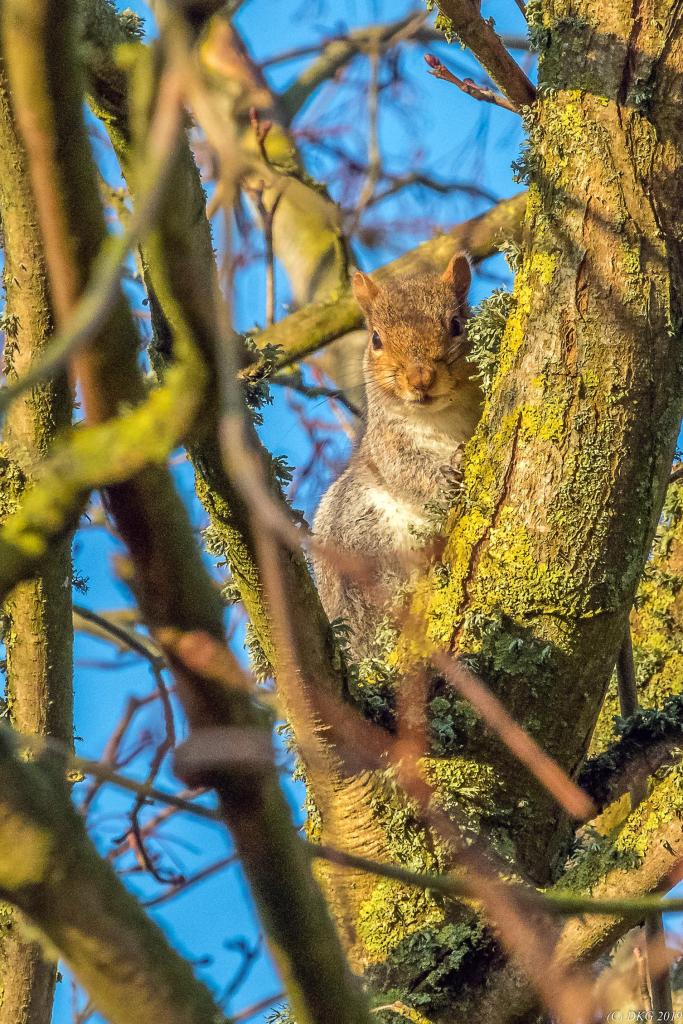
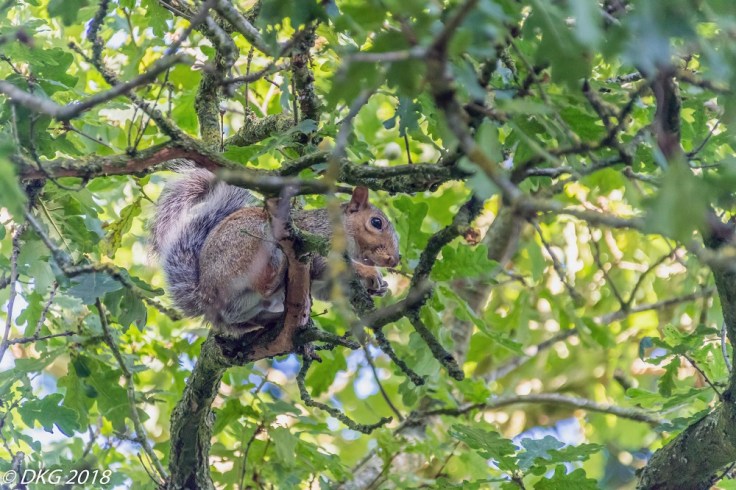
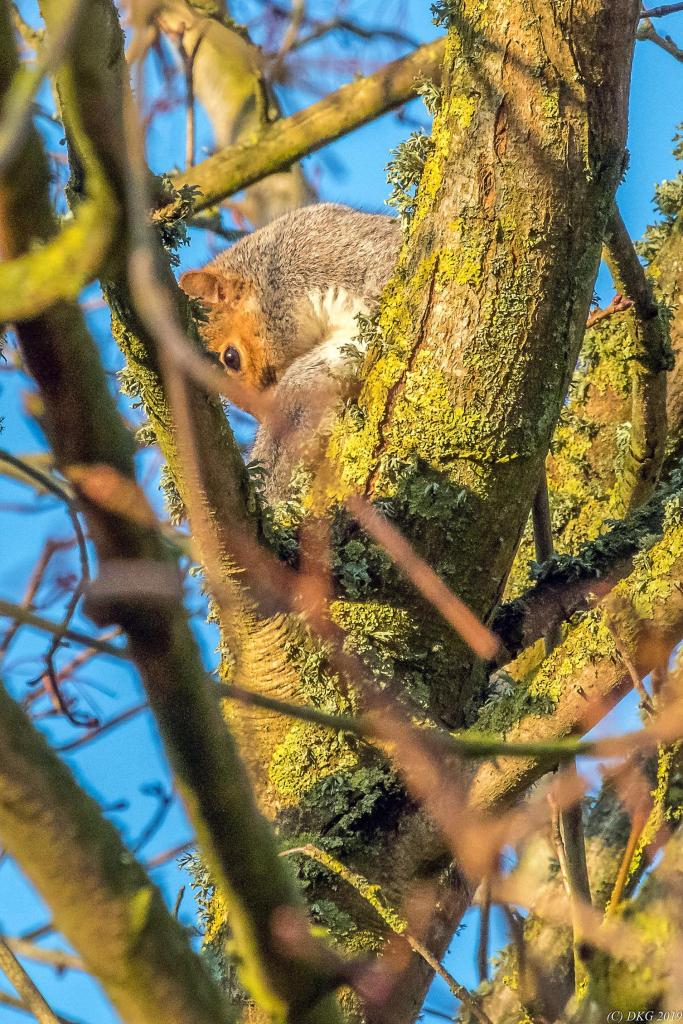
A gallery of the park’s many grey squirrels taken by DKG.






By Ian Bushell
One of the quintessential sounds of summer is the chirping of grasshoppers and crickets (Orthoptera). They are found all over the park, but probably the best places to see them are those areas of longer grass or bramble beside the many paths.
Continue reading “Orthoptera”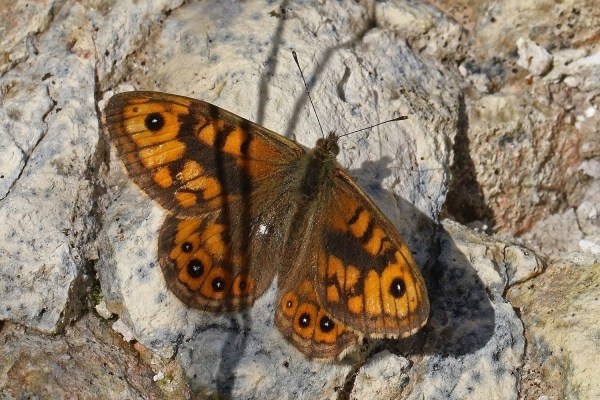
The disappearance of the wall brown (Lasiommata megera) from areas of southern England has mystified conservationists for two decades.
Continue reading “Wall”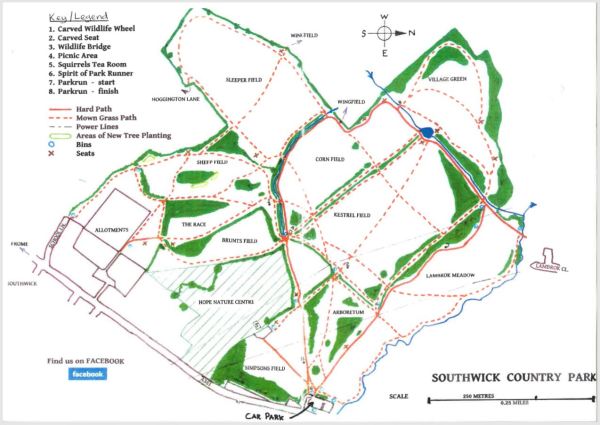
By Ali Rasey
Some of you have been on our bat walks over the last few years. We have heard (using bat detectors) and seen many different species of bats, including noctules, serotines, pipistrelles, Myotis species, and brown long-eared bats. There is also a record of a greater horseshoe bat (very exciting) – but we haven’t heard or seen that on our bat walks. The best time for us to see/hear bats I think is in August and September; at this time juveniles as well as the adults are flying, and sunset is earlier so the bats are out earlier in the evening.
Continue reading
Ian Bushell, Hugh Wright and Mark Bushell conducted a Butterfly Transect in the park on Wednesday.
Continue reading “Butterfly Transect”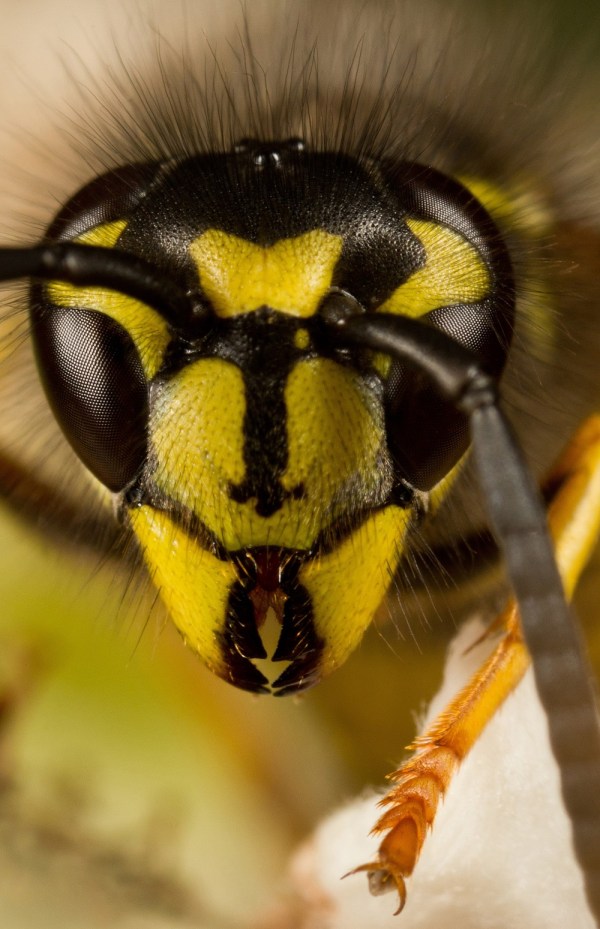
There are six species of social wasp that are native to Britain and this is a good time of year to identify them.
Continue reading “Wasp time”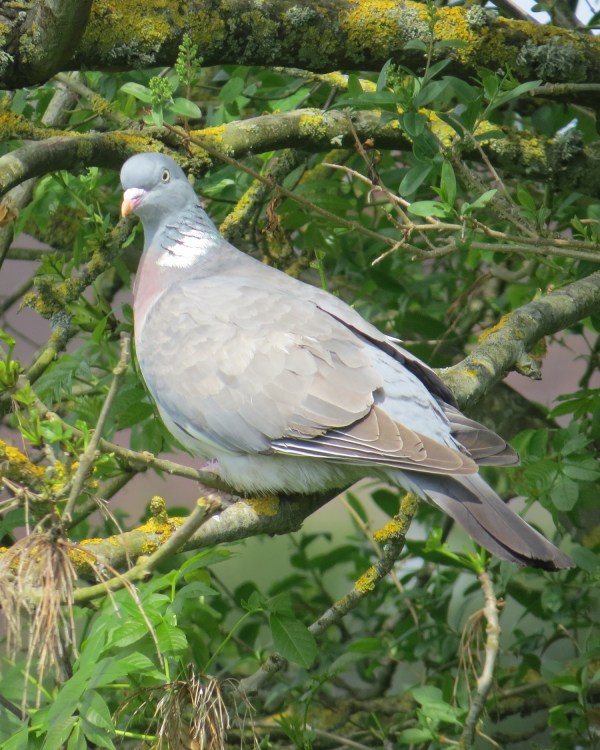
Pigeons are known to have been domesticated for more than 5,000 years. They are mentioned in cuneiform writing on clay tablets dug up in Mesopotamia and in hieroglyphics on the walls of ancient Egyptian tombs. There is a growing belief among archaeologists that pigeons were, in fact, the first birds to be domesticated, more than 10,000 years ago,
Continue reading “Pigeon post”
Under the heading of A Better Biss Approach (ABBA), Wiltshire Wildlife’s Water Team have been conducting a series of events designed to bring the waterways of the Biss Valley to public attention. Yesterday Alice and Nick from the Water Team came to Southwick Country Park for a River Day, to take a group of children and adults dipping in the Lambrok Stream.
Ian Bushell joined them and has sent in this report:
Continue reading “River Day”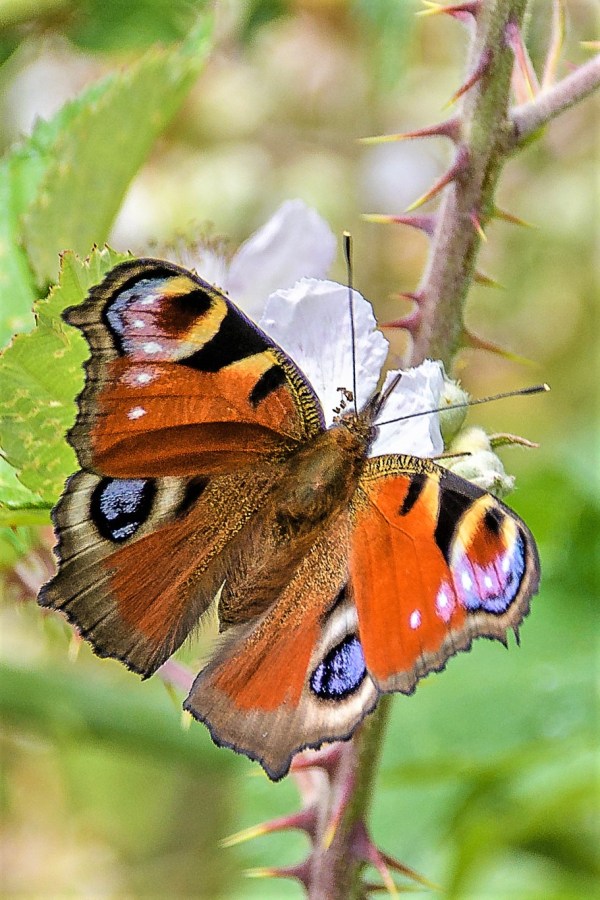
The Big Butterfly Count 2019 ended last weekend on August 11th. Citizen scientists made an amazing 104,294 counts and logged their finding on Butterfly Conservation’s website. Here is a link to the RESULTS MAP.
Continue reading
The Eurasian wren (Troglodytes troglodytes) is one of our commonest birds; it is very widely distributed, with an estimated population of eight million breeding pairs.
Continue reading
Skippers are a family of Hesperiidae in the order of Lepidoptera; because they are diurnal, we generally called them butterflies but many authorities class them as a group intermediate between butterflies and moths. They are called skippers because of their rapid and darting flight.
Continue reading “Skippers”
A beautiful demoiselle (Calopterix virgo), photographed in the park this summer by DKG.
Continue reading
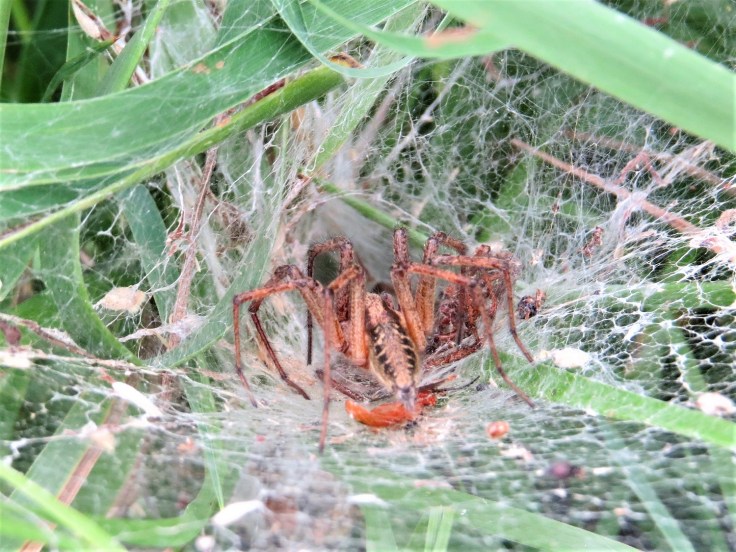
There are funnel shaped webs low down in the dense vegetation of the park’s hedges and edges; what lives in them?
Continue reading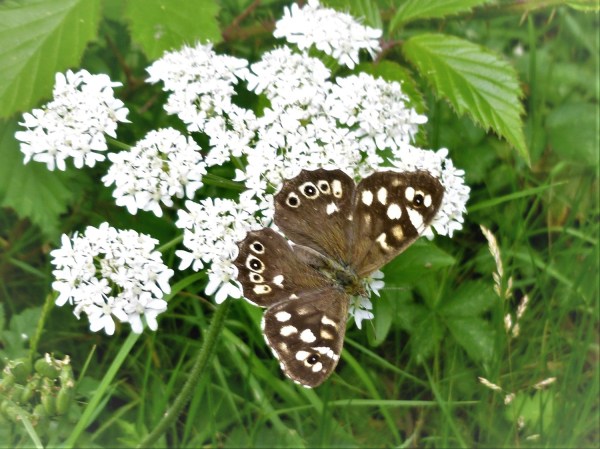
Lepidoptera is the name of the order that butterflies and moths belong to.
Click here for five fascinating facts about lepidopteraExtraordinary little video of an emperor dragonfly hatching into its final adult form.
Published on Jul 31, 2012 by wildvod.
Emperor Dragonfly larvae emerging from the kitchen garden pond at the Tyntesfield National Trust Estate in June 2012.
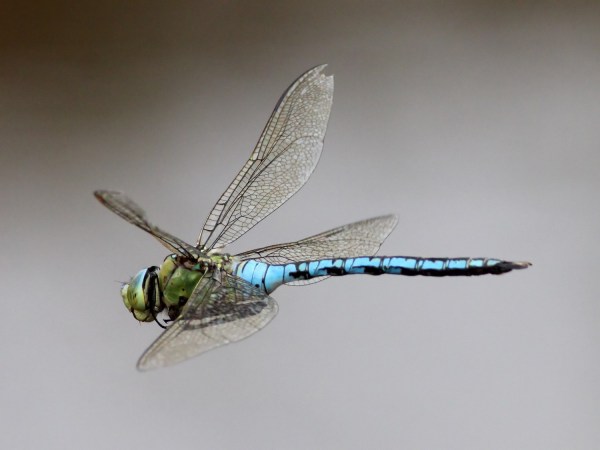
We have positively identified our emperor dragonfly (Anax imperator) and to celebrate here are five fascinating facts about dragonflies.
Continue reading
A peacock butterfly on bramble, by DKG.
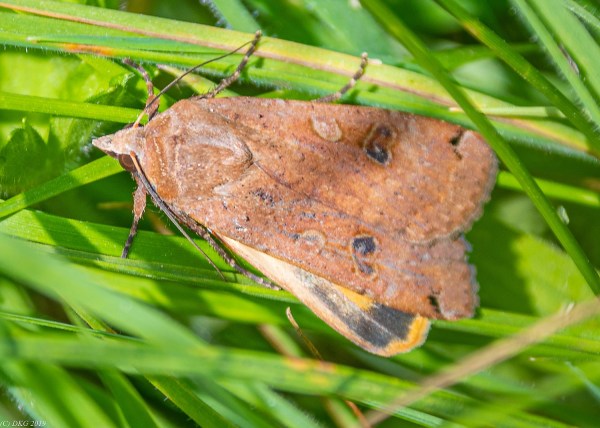
The large yellow underwing moth does exactly what it says on the box; it is one of the largest of Britain’s moths and is easily identified by its yellow underwings, bordered with black. If disturbed as it rests during daylight, it flashes the bright orange-yellow of its underwings in an attempt to scare off any predators.
Continue reading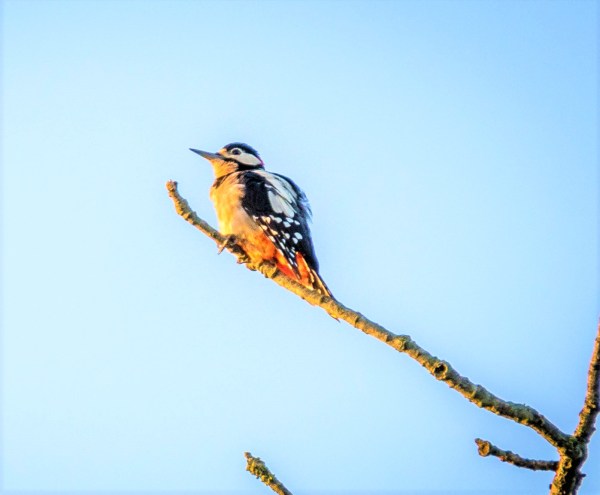
DKG’s first sighting of a great spotted woodpecker this year.
Continue reading “Great spotted woodpecker”At least three pairs of song thrushes nested in the park this year. On any clear July evening, especially after rain, it has been possible to walk right round the park’s boundaries and never be out of earshot of a song thrush singing from the top of a tree.
Here is five minutes of a song thrush’s song; listen to it while you check the morning’s news.
Song thrush recorded by David Bisset in Essex
Header picture:- Song thrush by Simon Chinnery [CC BY-SA 4.0]
Emperor dragonflies (Anax imperator) are the largest of Britain’s Odonata. They are fast, active hunters that rarely come to rest which makes them exceptionally difficult to photograph.
Continue reading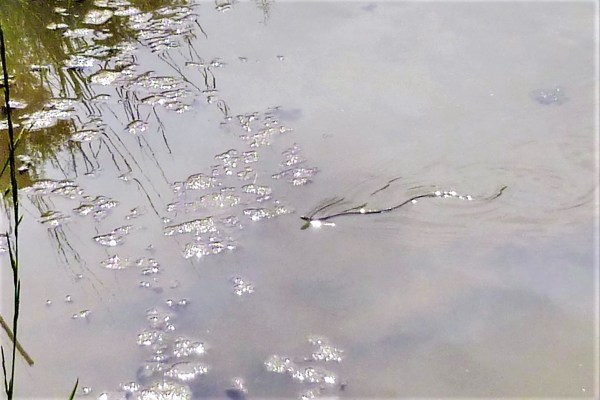
A young grass snake swimming in the Dog Pond yesterday, seen and photographed by Ian Bushell, who said:
“Definitely a youngster – most probably from last years hatch – about a foot or so long and perhaps a little finger’s thickness, but the yellow collar was obvious. Good news as it means that the snakes are breeding here. It swam from the Village Green side to the reed sanctuary below the hedge on the other side.”