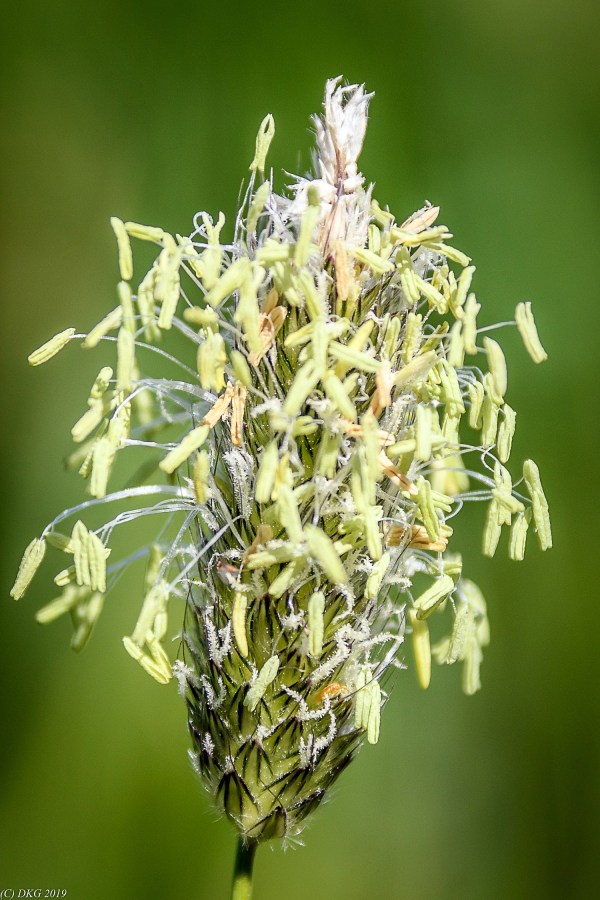
Grasses are flowering plants; they have all the same bits and pieces as a buttercup or a dandelion. The difference is that they are wind pollinated so they have not adapted their structure to meet the needs of insect pollinators; they have no scent, no nectaries, no colours or ultra-violet sign posts and no petals to make landing platforms.
Continue reading “Grass”Mayflower
This is the blossom of the hawthorn tree. It is also called may or mayflower, and the hawthorn tree is still sometimes called a may tree.
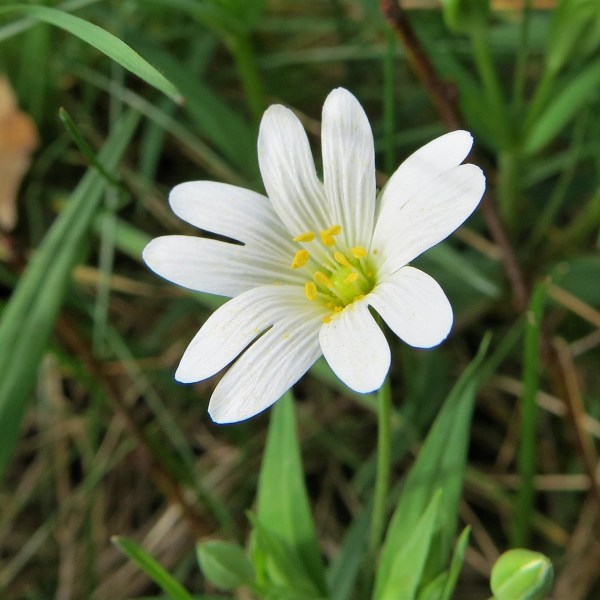
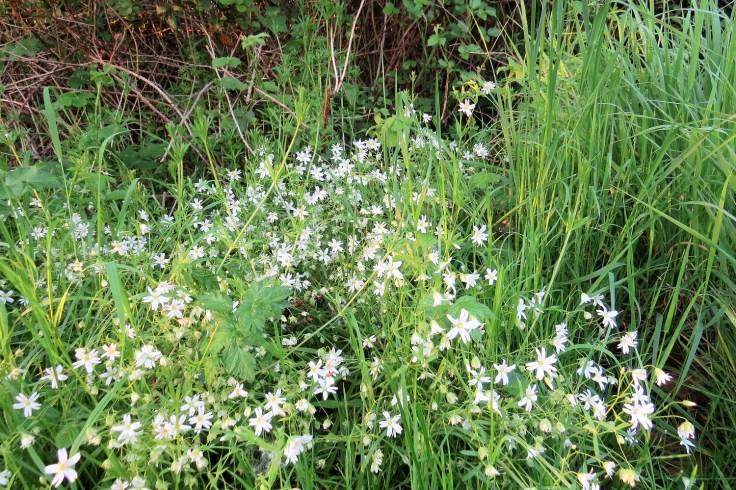
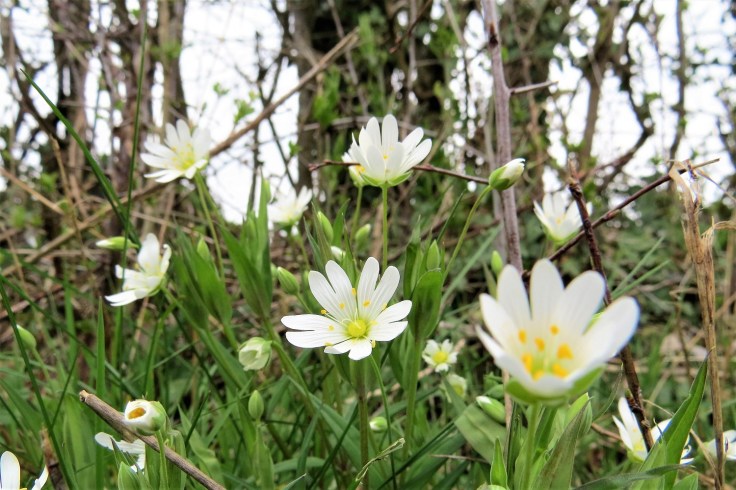
Continue reading “Mayflower”Our woods and hedges are full of greater stitchwort (Stellaria holostea), a fragile plant that avoids the sunlight if it can and leans on the foliage around it for support.
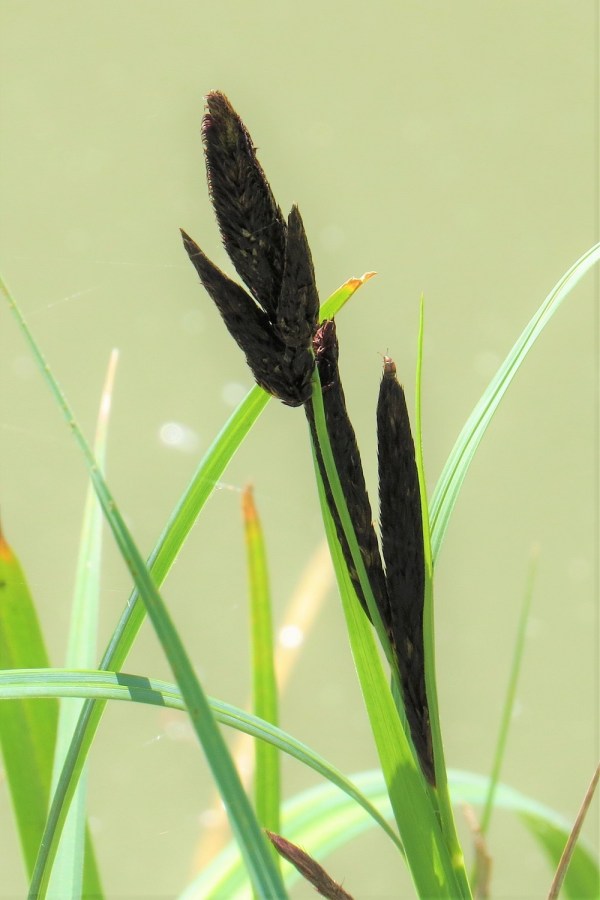
This is black sedge (Carex nigra), also known as common sedge. It grows along the Lambrok tributary either in the shallow water or on the bank and there is a bed of it in the woods just past the wooden bridge.
Continue readingOak flowers
These are the flowers of an oak tree. Oaks are monoecious; they have male flowers and female flowers on the same tree.
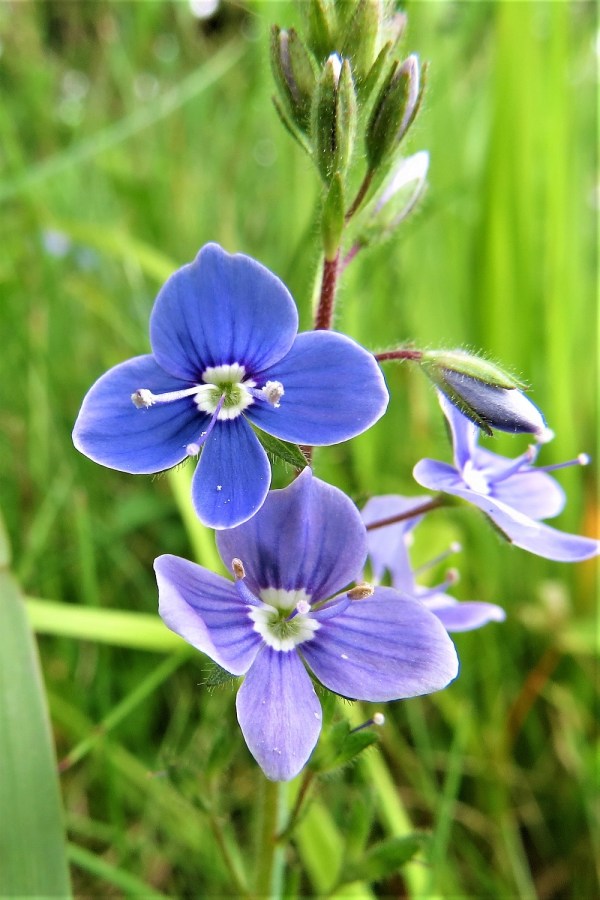
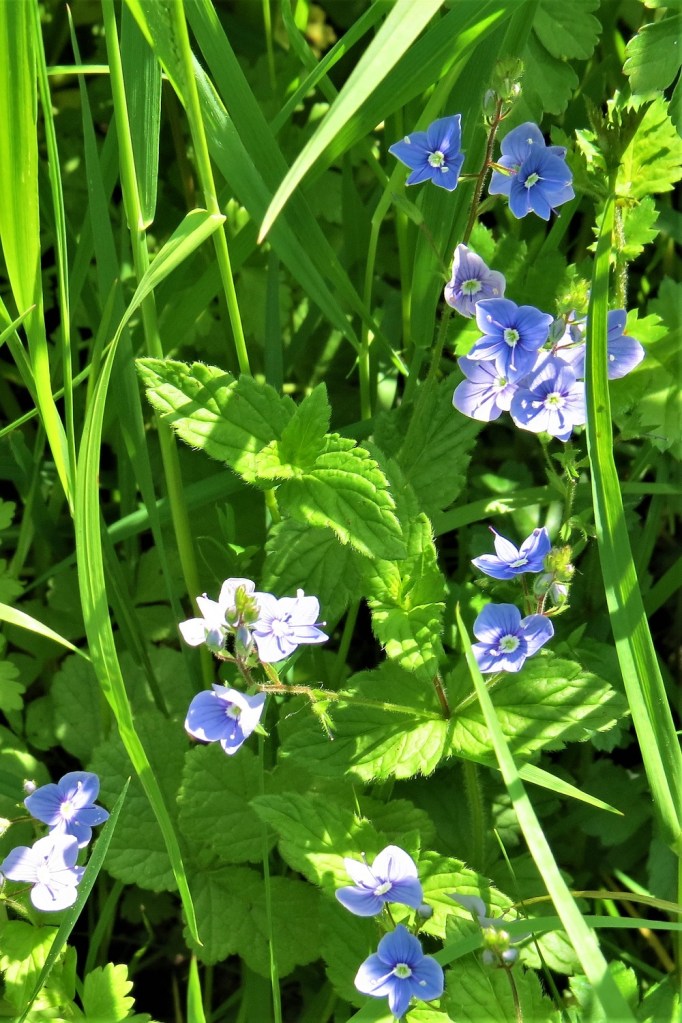
Continue reading “Oak flowers”Germander speedwell (Veronica Chamaedrys) in the hedge in Brunts Field.
Pictures by Suzanne Humphries
Squirrel in the oak flowers
Squirrels are true omnivores, they eat anything. This one is browsing either on the male flowers of an oak tree or on the new leaf buds. To eat either, the squirrel bites off the whole tuft of new leaves and all the flowers, and when it has eaten the tastiest pieces it throws the rest on the ground.
Continue reading “Squirrel in the oak flowers”A closer look at weeds: part 3
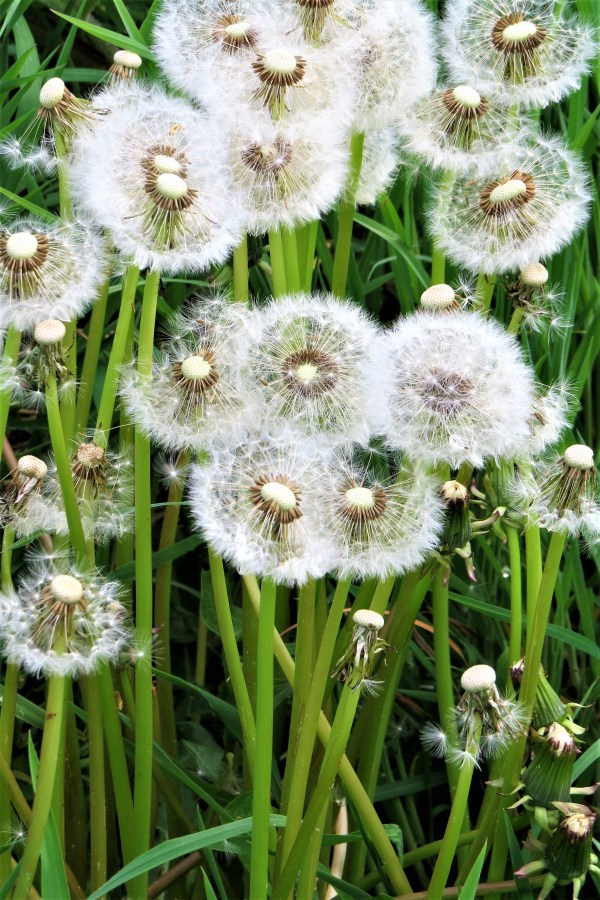
Dandelions (Taraxacum officinale) are the commonest of our wildflowers. They grow everywhere: between our paving stones, in flowerbeds, lawns and roadside verges, and straight up through the tarmac of a well-maintained driveway.
Continue reading “A closer look at weeds: part 3”More about our notable trees
By Patrick Jones
Iโve just been looking through the Tree Survey for the Country Park before passing it on to the committee and was amazed by the sheer number of specimen trees. I could not resist breaking it down. I donโt know if this has been done but the following are my (possibly inaccurate) figures.
Continue reading “More about our notable trees”Marsh marigold
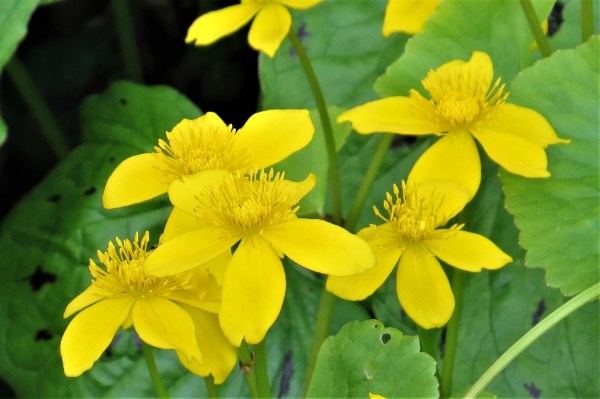
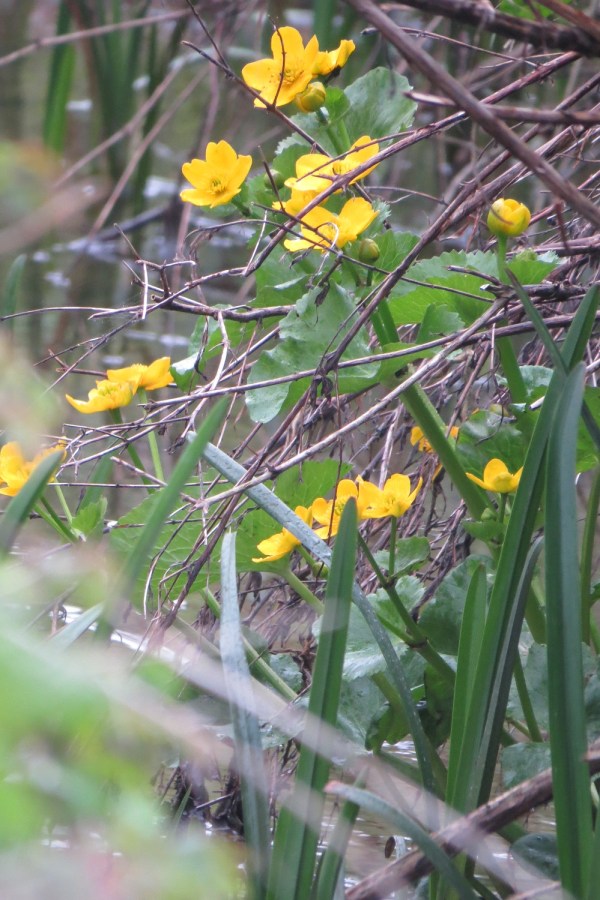
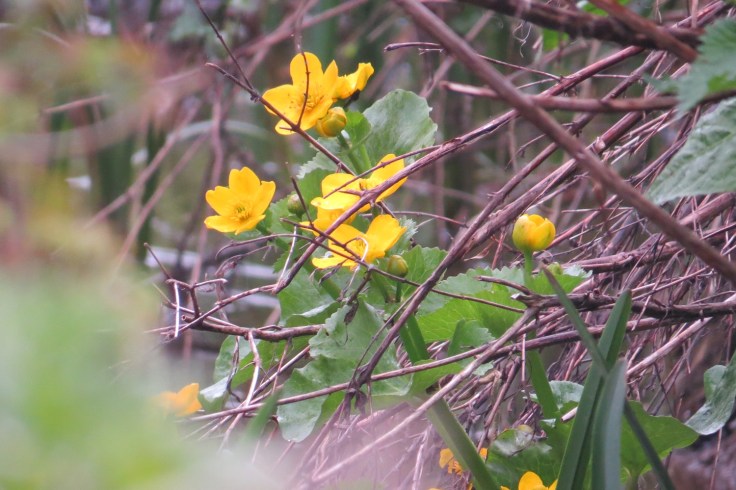
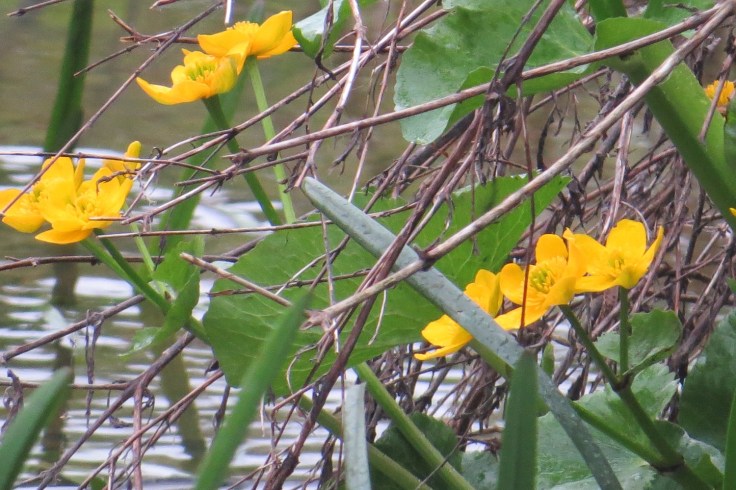
Marsh marigold (Caltha palustris), the latest addition to our species list, is a member of the buttercup family. While its colour and the shape of its flower seem very familiar, there is a lot about this beautiful plant that is quite unusual.
Continue reading “Marsh marigold”Notable trees
Wiltshire keeps a record of all the notable trees on all county-owned land. Each tree’s species, approximate age and its grid reference are written down; it is given a number and its photograph is taken.
Continue reading “Notable trees”Clearing trees from the new plantations and the areas affected by Ash Die-back has brought spring sunlight to the woodland floor for the first time in years.
Continue readingBluebells
The bluebells are out in the park’s woods and copses; come and see.
Turn the page for a gallery of picturesNew species
A new species for our lists: marsh marigold (Caltha palustris).
Conservation status: Least Concern (population stable); locally threatened by drainage and agricultural improvement.

Another recent addition to our species lists:
Coot
Ragwort
Ragwort is extraordinarily successful; all the โinjurious weedsโ named in the 1959 Weed Act are.
Continue reading “Ragwort”The Parkโs Veteran Oaks
By Ian Bushell
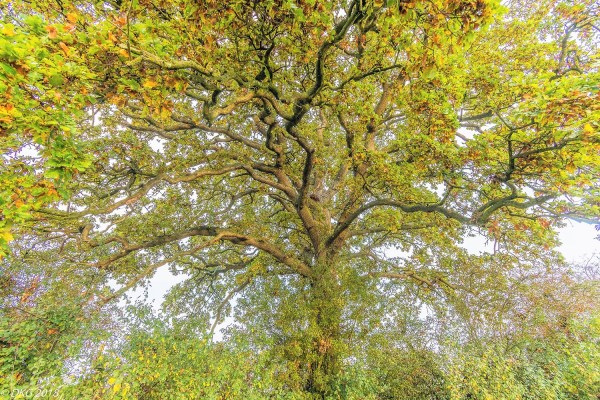
Southwick Country Park has a number of veteran oaks and ten ancient oaks. There are no hard and fast rules about when and why an oak tree becomes classified as veteran or ancient; in different environments and soils oaks grow at different rates and girth is only an indicator. Here the underlying Oxford clay provides an excellent medium and the trees are large and shapely.
Continue reading “The Parkโs Veteran Oaks”Ground Ivy
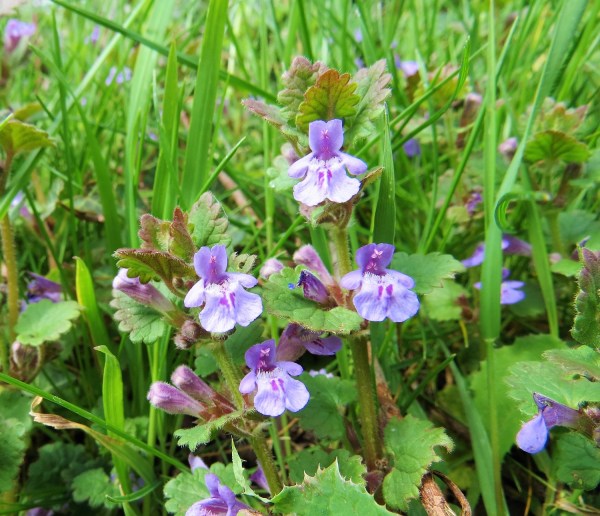
This is ground ivy (Glechoma hederacea), a little blue flower so common as to be almost invisible. It grows all over the park and flowers at any time of the year.
Continue reading “Ground Ivy”Cardamine pratensis
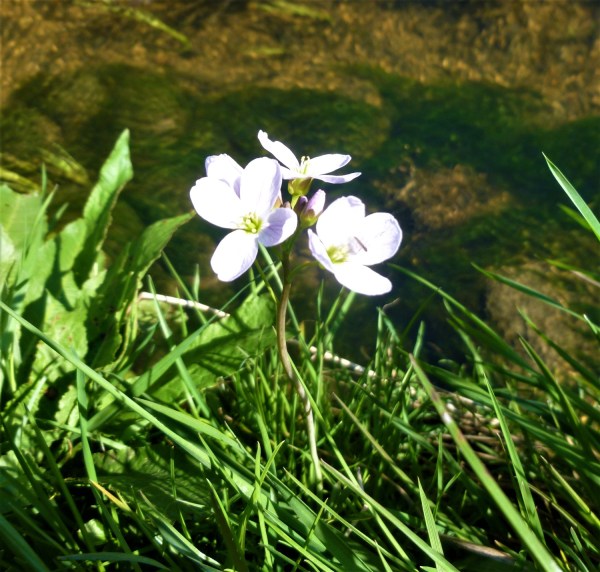
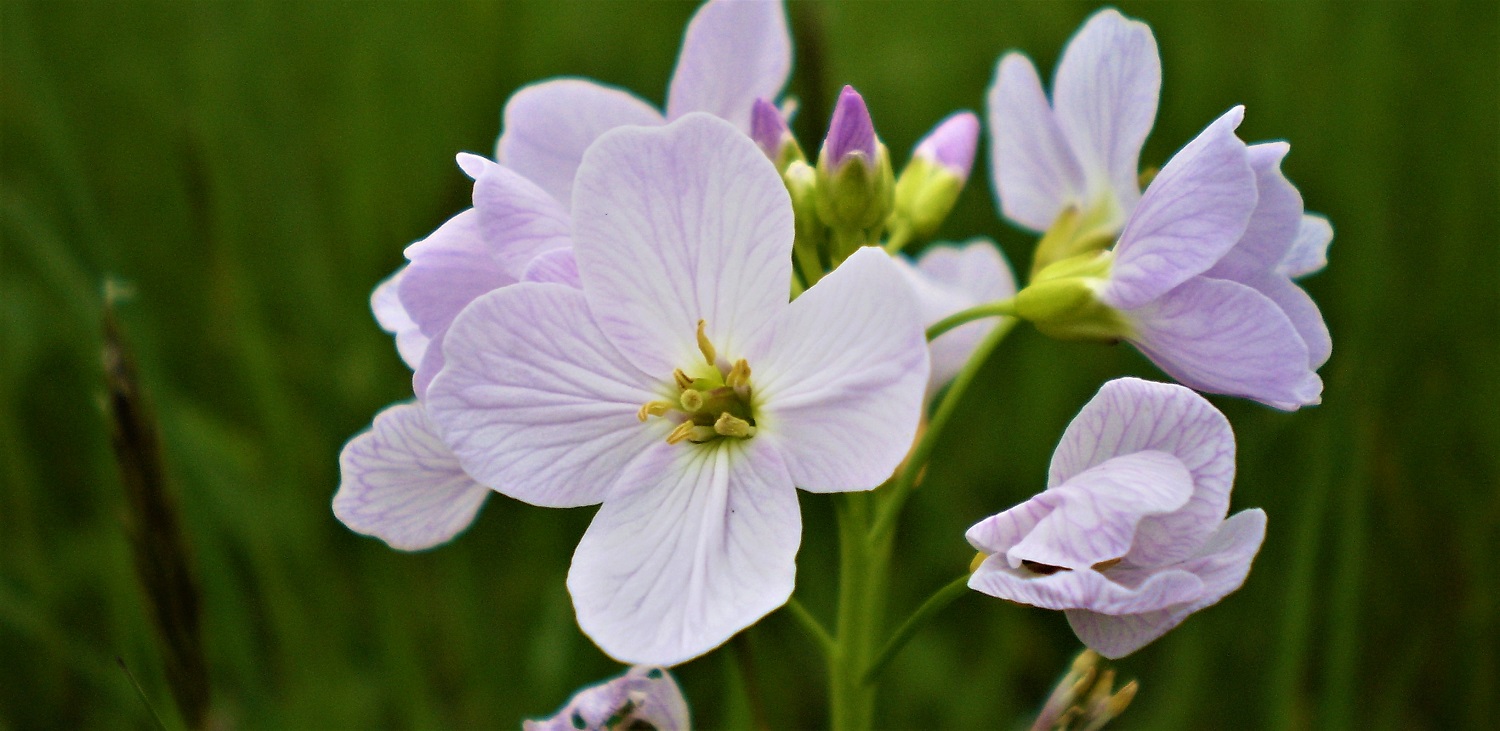
A picture of Cardamine pratensis sent by Ian Bushell with this message:
” . . .Milkmaid flowering on the Lambrok bank very near the boggy area. ”
Does anybody else call it milkmaid? I call it lady’s smock; is it another of those plants with many different names, like ragwort?
Tell us in the comments below if you have a different name for it.

Cardamine pratensis conservation status UK: Common and widespread
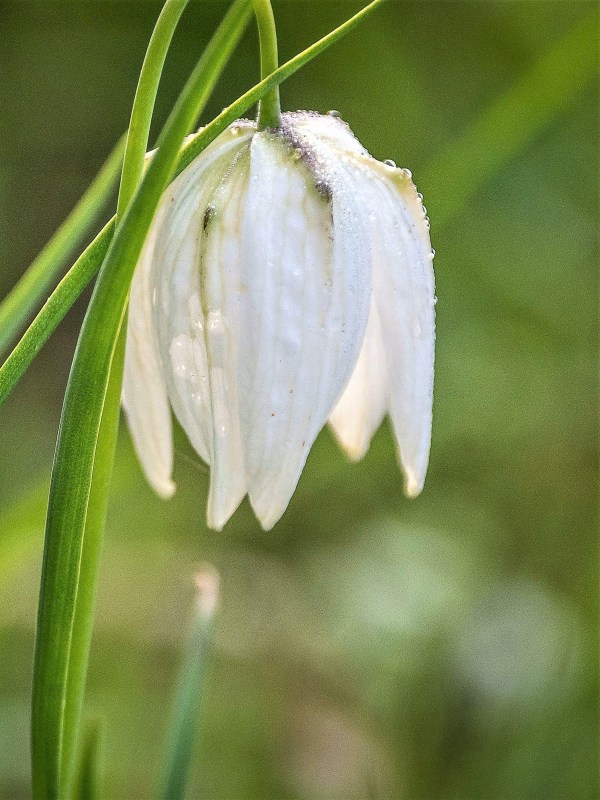
The last of the fritillaries
Photographed by DKG

Snake’s head fritillaries are classified as Vulnerable on the Vascular Plant Red Data List for Great Britain.
Arboreal sex
The park, at this time of year, is full of pollinators carrying pollen from tree to tree in a kind of reproductive frenzy.
Continue reading “Arboreal sex”More pictures of the park in bloom; these are from C.J.Seymour.
Thanks Chris.
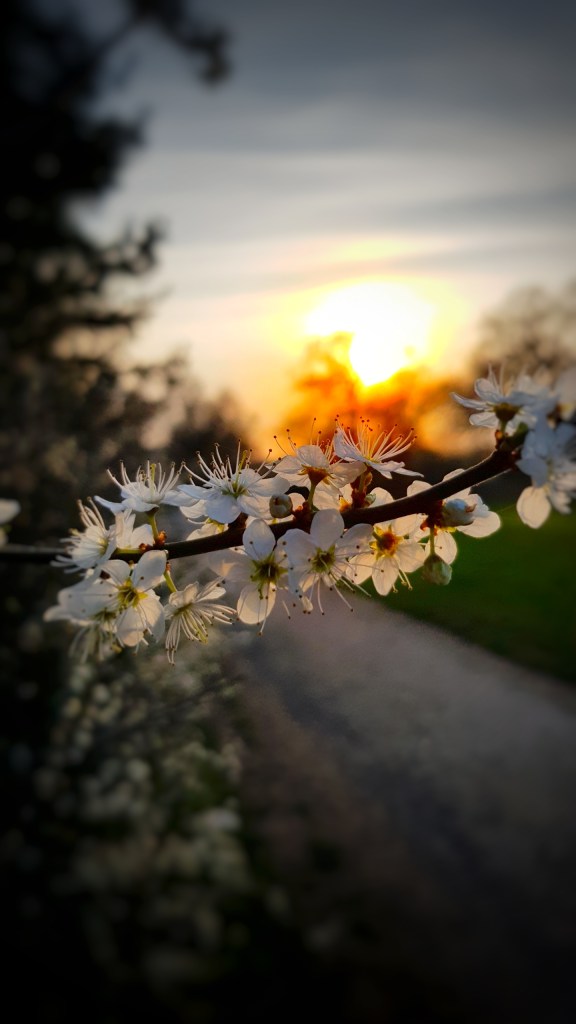
The blackthorn is in flower
The park’s hedges have burst into blossom and the park is looking wonderful. The show will only last a few days; come and see before it vanishes.
continue for More picturesA closer look at weeds
Red dead Nettle
This is a red dead nettle (Lamium purpureum), the commonest of weeds. It flowers for most of the year in untidy vegetable plots, roadside verges and, in this case, country park car parks. Nobody gives it a second glance but its flowers, hidden among its topmost purple leaves, are extraordinarily beautiful.
Vernal Equinox
Yesterday was the vernal equinox so today is the first day of 2019 that is longer than the previous night. The days will get longer and the nights shorter until the summer solstice: June 21st or thereabouts. For the park this is a time of extraordinary growth.
Continue readingHazel’s female flowers
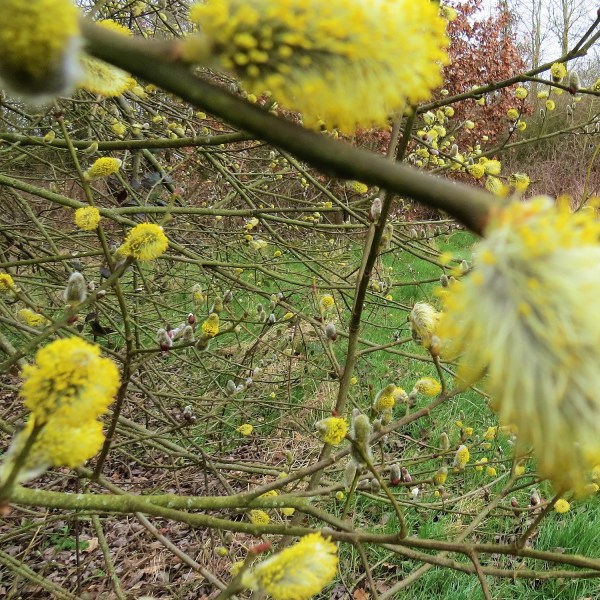
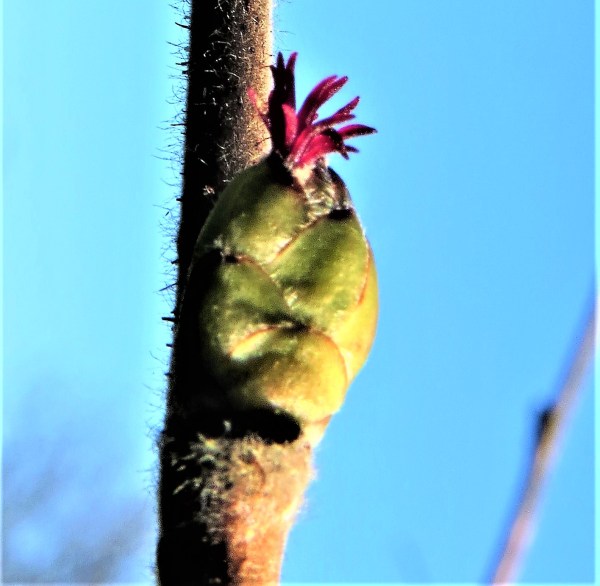
Hazel has both male and female flowers. The familiar yellow catkins are made up of about 250 male flowers. They produce the pollen; if you tap a ripe hazel catkin it will release a cloud of pollen. The female flower is a minutely small red tassel, somewhere on the same twig as the catkins.
Continue reading “Hazel’s female flowers”