A harlequin ladybird nymph photographed yesterday in the reserve by Ian Bushell.
Continue reading
A harlequin ladybird nymph photographed yesterday in the reserve by Ian Bushell.
Continue reading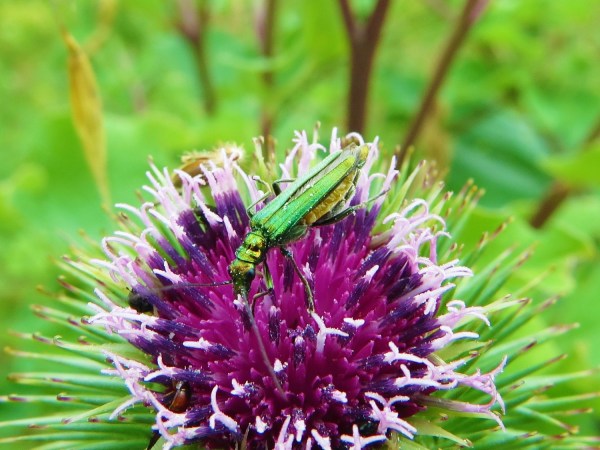
An irridescent green, female Oedemera nobilis, known as the thick legged flower beetle or swollen thighed beetle, photographed in the park this week. It is the male (see below) that has the strangely shaped legs for which the species is named


[1] by Gail Hampshire (CC BY 2.0) flickr.com; [2] © Hans Hillewaert (CC BY-SA 4.0) wikimedia.org

by Simon Knight
In my last post I said I was going after young grasshoppers and crickets.
Continue reading
A bloody nosed beetle (Timarcha tenebricosa) found in the short grass where the rabbits graze at the end of Sleepers Field.
Continue reading “Bloody nosed beetle”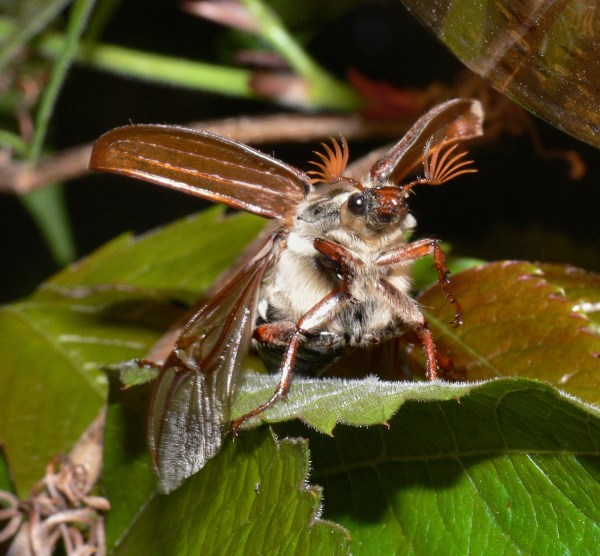
Cockchafers, more familiarly known as May bugs, are one of those things that go bang in the night.
Continue reading “Cockchafer”
ONE: There are about 5,000 different species of ladybirds in the world but only 47 of them can be found in the British Isles and the seven spot ladybird is the most common of them and one of the biggest.
Continue reading
The ladybirds are leaving hibernation.
Continue reading “Sixteen spot ladybird”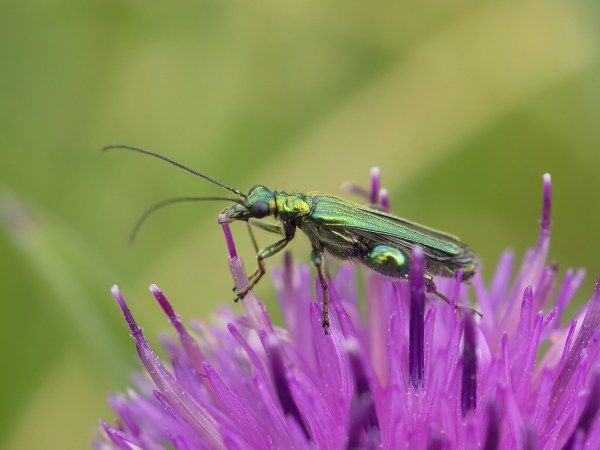
The Wildlife Trusts and the Royal Horticultural Society have set up a website called Wild About Gardens. Its focus is wildlife gardening and it encourages people to use their gardens to help support nature. This year they are all about beetles.
Continue reading “Wild About Gardens”
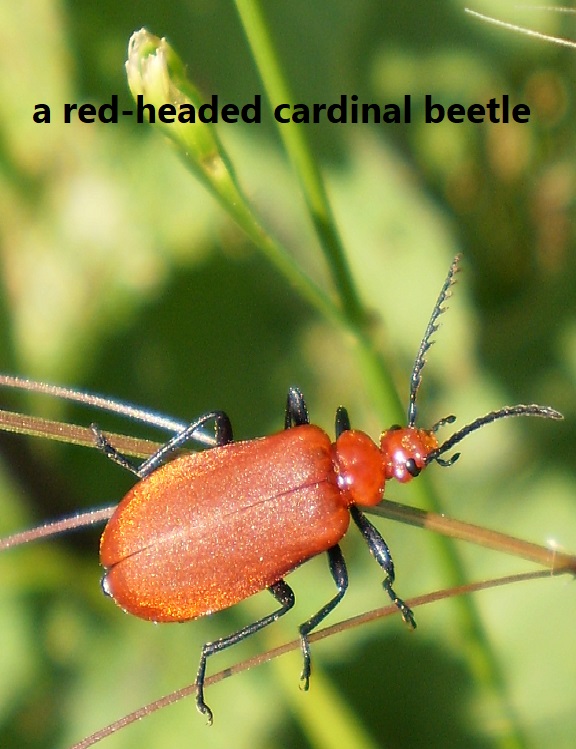
There are forty one species of Cantharidae in Britain and almost all go by the common names of soldier or sailor beetle.
Read on:
A female Oedemera nobilis, known as the thick legged flower beetle or swollen thighed beetle, photographed in the park last week.
The male has the strangely shaped legs for which the species is named

A marbled white (Melanargia galathea) on creeping thistle flowers, photographed in the park yesterday by Julie Newblé. If you look carefully, there are at least three common red soldier beetles hidden in the picture.
Thanks Julie.
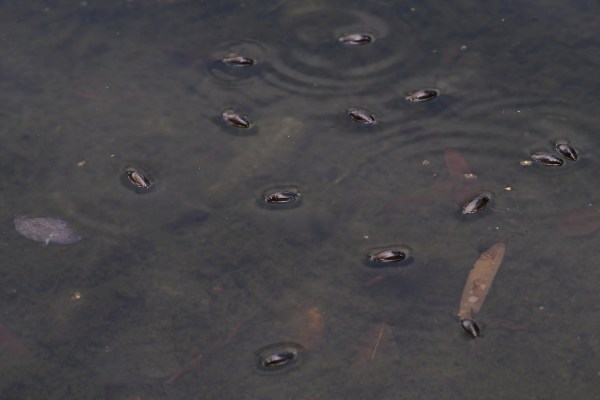
Whirligig beetles are actually a whole family (Gyrinidae) of water beetles: almost 700 different species globally, most of them very much alike and extremely difficult to tell apart. We have no idea what particular species live in the pond above the wooden bridge but all the Gyridinae share some fascinating features.
Read on for details and a short video
Cockchafers, more familiarly known as May bugs, are one of those things that go bang in the night.
Continue reading “Cockchafer”
The ladybirds are leaving hibernation.
Continue reading “Sixteen spot ladybird”
A dandelion crammed with tiny bronze-black beetles. Our favourite entomologist emailed us:
They’re pollen beetles. Getting a positive ID is going to be impossible without sending me a specimen (and they’re too small!) but this time of year the most common species is the Common Pollen Beetle Meligethes aeneus.
Continue reading “Common pollen beetle”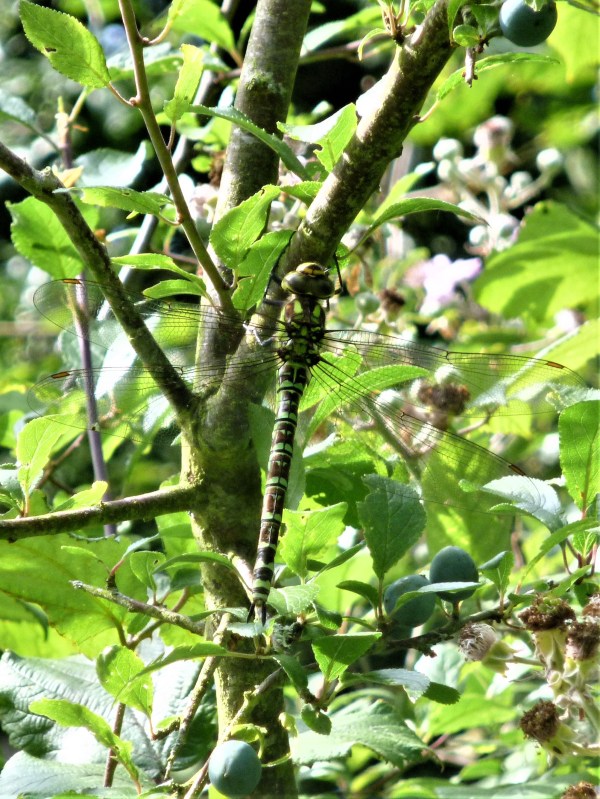
by Ian Bushell
There was a Common Blue butterfly just emerged in the old pond at the end of Lambrok Meadow and, after a long chase, I got a picture of a female Southern Hawker (see above) near the carved Wheel close to the Picnic area.
Continue reading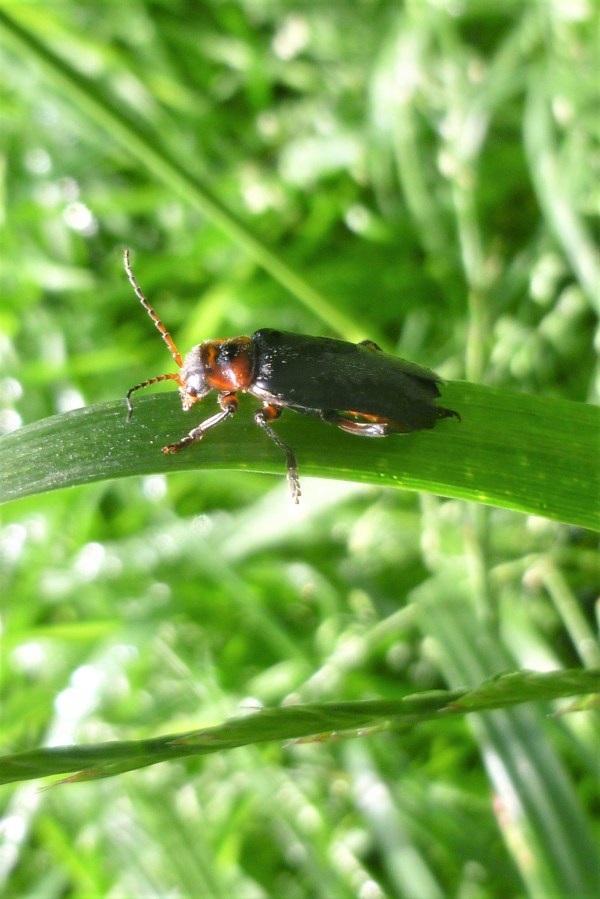
A new species seen in the park on two occasions last week: A cereal leaf beetle (Oulema melanopus) spotted, identified and photographed by Ian Bushell.
Continue readingWhy is blue so rare in nature?
Click here for a video that explores this topic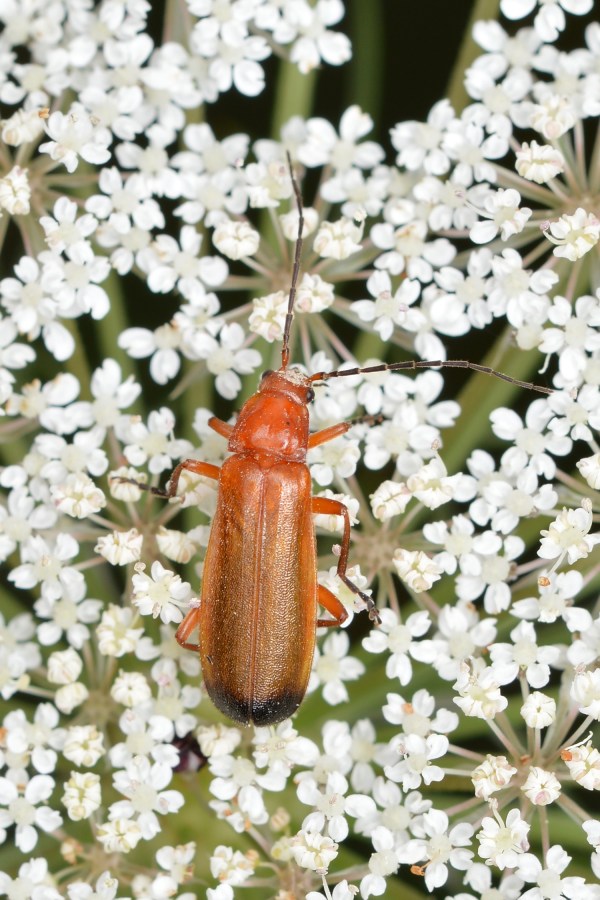
There are lots of common red soldier beetles (Rhagonycha fulva) around. Fortunately there are also lots of aphids, a favourite source of food.
Continue reading
Whirligig beetles are actually a whole family (Gyrinidae) of water beetles: almost 700 different species globally, most of them very much alike and extremely difficult to tell apart. We have no idea what particular species live in the pond above the wooden bridge but all the Gyridinae share some fascinating features.
Read on for details and a short video
There are forty one species of Cantharidae in Britain and almost all go by the common names of soldier or sailor beetle.


 Southwick Country Park Nature Reserve