



Five number facts about ants
There are 63 species of ant in Britain, 17 of which are introduced.
Continue readingBUZZ!

Bees buzz in two different ways.
Continue reading “BUZZ!”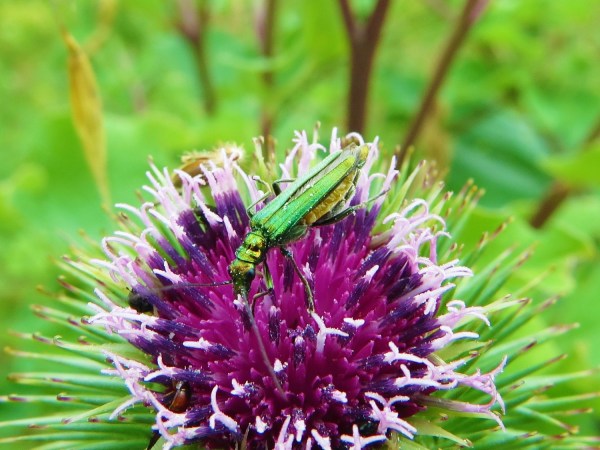
Thick legged flower beetle
A female Oedemera nobilis, known as the thick legged flower beetle or swollen thighed beetle, photographed in the park last week.


The male has the strangely shaped legs for which the species is named
Flying ants

Yesterday, the Met Office’s radar recorded such a large and dense cloud of flying ants off the southern coast of Britain that it registered as a rain storm.
Continue reading “Flying ants”Brown Hawker

A brown hawker female, Aeshna grandis, spotted in the park by Ian Bushell on Tuesday afternoon.
Continue reading “Brown Hawker”
Peacock
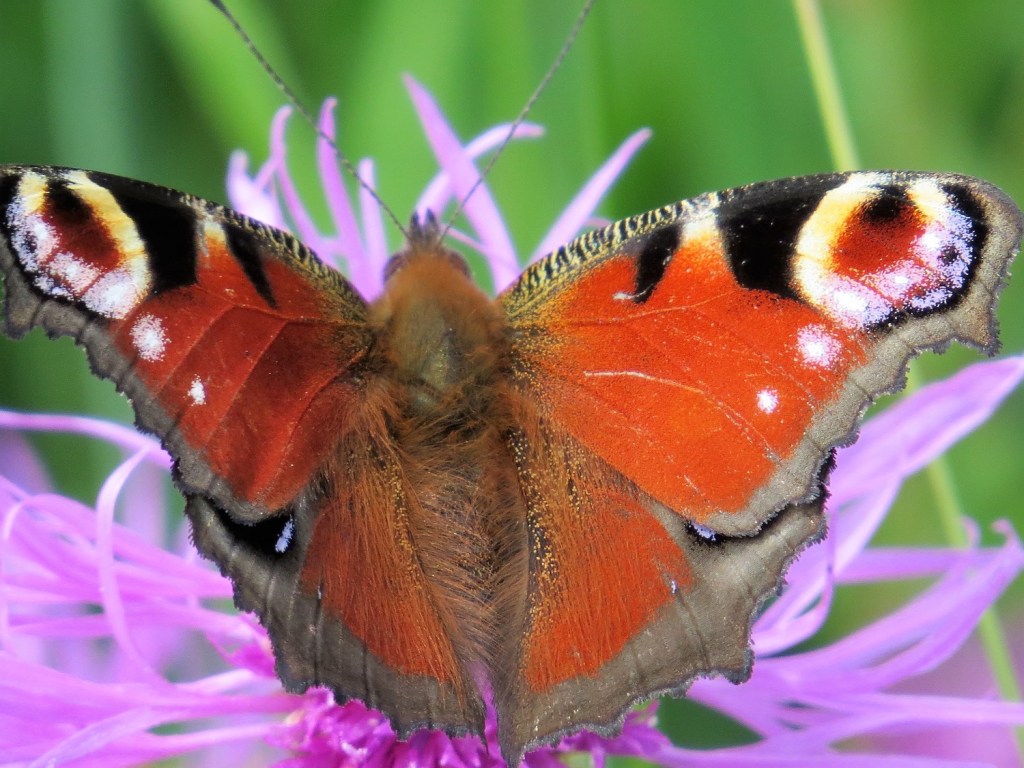
Remember all those peacock caterpillar netsts? They have metamorphosed into a shiny new generation of adult peacock butterflies.


A marmalade hoverfly (Episyrphus balteatus) feeding on the nectar of a bramble flower. This is a new species for our lists, despite its ubiquity.
The marmalade fly gets its name from its colour, and its thin cut/thick cut dark stripes, just like marmalade.

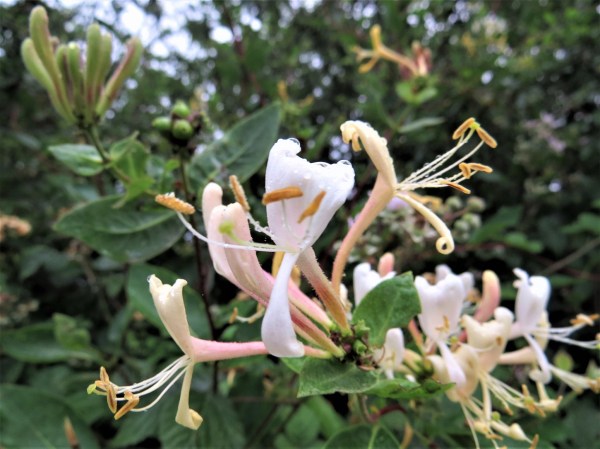
The honeysuckle is in flower.
Continue readingRoesel’s bush cricket
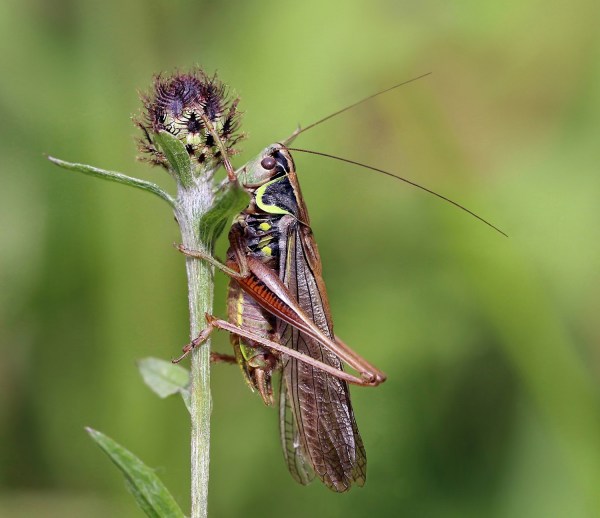
Simon Knight has sent us video taken in the park, of a Roesel’s bush cricket.
Continue reading “Roesel’s bush cricket”Another win!

Gatekeeper
The gatekeeper (Pyronia tithonus) reported in last week’s butterfly transect has turned out to be a winner.
Continue reading “Another win!”National Insect Week – Day 7

Broad bodied chasers
Several broad bodied chaser males (Libellula depressa) have established territories over the big pond.
Continue reading “National Insect Week – Day 7”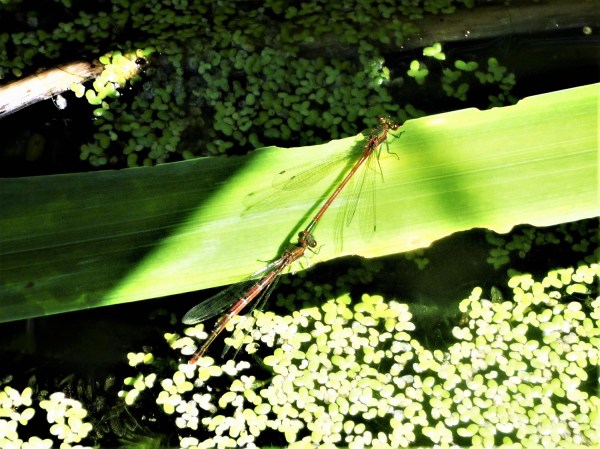
Ian Bushell has sent in a picture of a pair of large red damselflies photographed in the park today, the penultimate day of National Insect Week.
Day 6 of National Insect Week
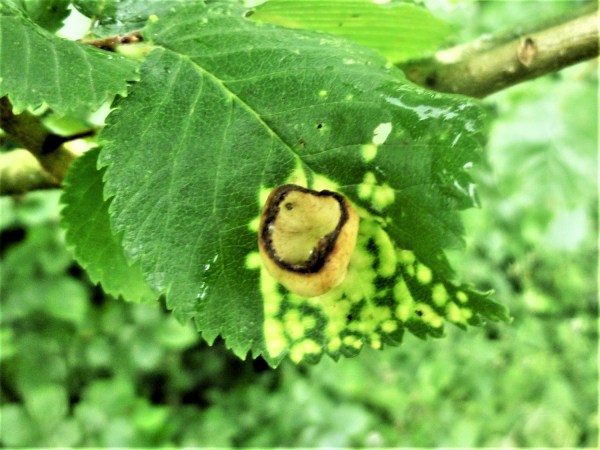
This is a fig gall, found on an elm leaf in the hedge between Sleepers and Cornfield. It is caused by Tetraneura ulmi, an elm-grass root aphid with a very complicated life cycle.
Continue readingNational Insect Week – Day 4
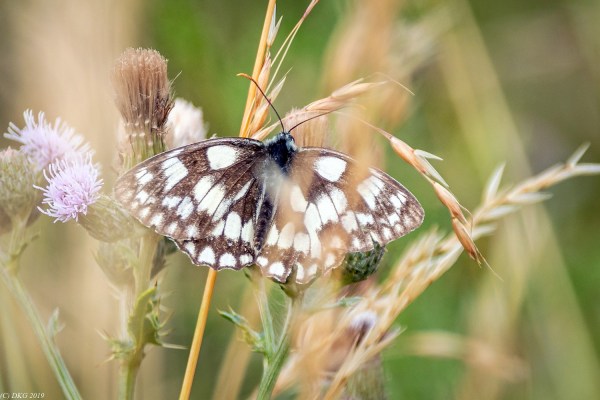
Butterfly Transect
Mon 22/06/2020 13:05
Mail to Mike Fuller, County Butterfly Recorder, from Ian Bushell
Mike,
Attached is the latest transect at Southwick Country Park – the Meadow Brown numbers are if anything an underestimate. The warm May, lower footfall in the park, plus the fact that the hay/silage crop had not been taken could well have contributed to the general increased numbers.
Cheers
Ian
National Insect Week – Day 3

Scorpion fly
by Ian Bushell
This is a Scorpion Fly (Panorpa sp.), a strange-looking insect found all over the park particularly along the field and woodland margins among the Stinging Nettles and Brambles. This photo of a male shows the long beak-like projection from its head that it uses to feed, mostly scavenging dead insects and small invertebrates.
Continue reading “National Insect Week – Day 3”National Insect Week – Day 3
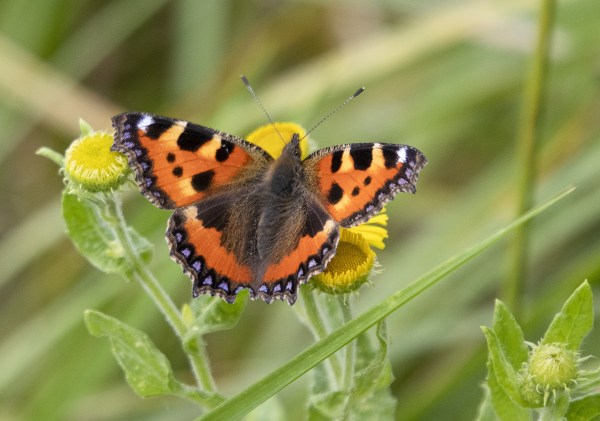
Five Fascinating Facts
ONE
Butterflies taste with their feet. They have receptors on their legs and feet very similar to the taste buds we have in our mouths; these receptors are used to taste whether the plant they are standing on will be alright for their caterpillars to eat.
It’s National Insect Week

Let’s begin with a definition.
Continue reading “It’s National Insect Week”Q&A
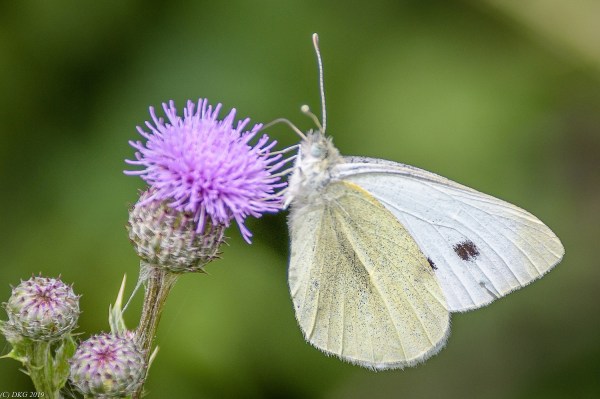
A question from a reader:
If I want large white butterfly caterpillars in my garden AND I want my kale, is that like trying to have my cake and eat it? I suppose they don’t eat anything else, do they? I have sent you a photograph.
Liz
Froghopper
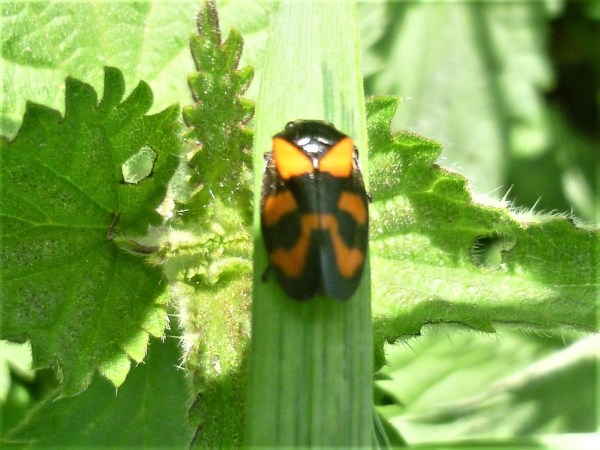
Red-and-black froghopper
This is a red-and-black froghopper (Cercopis vulnerata) photographed in the park yesterday by Ian Bushell. There are ten different species of froghopper in the UK and while the red-and-black froghopper is not the most common, it is widespread.
Continue reading “Froghopper”Fascinating fact about bees

There are bees out and about: tiny solitary ones like this one photographed in the park last week, as well as big fat buff-tailed bumblebee queens.
Read on for a fascinating fact about beesLight pollution

Scientist are beginning to understand that light pollution is a very significant factor in the recent rapid decline of insect populations.
Continue reading “Light pollution”Stop the decline of insects
Nettle bed safari
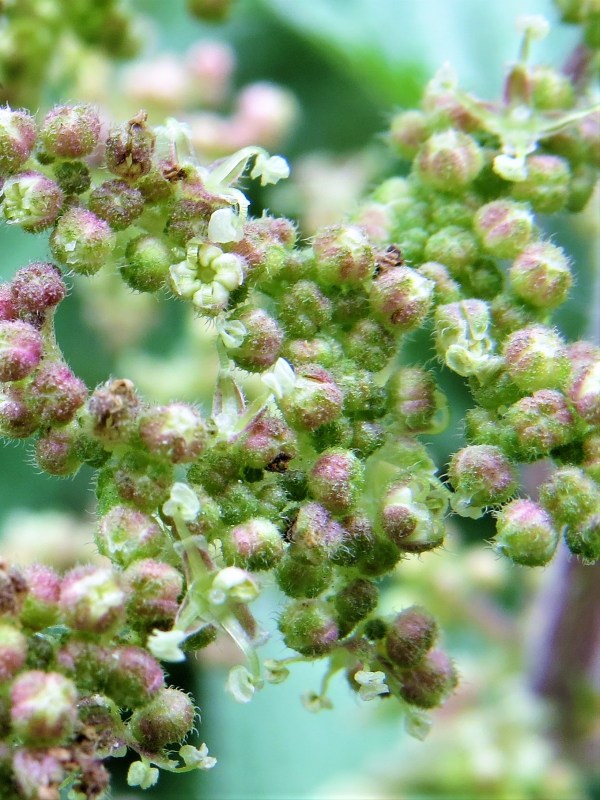
If you look closely enough, you can see that the nettles are beginning to flower. If you look even closer you will find a whole miniature ecosystem living in the nettle bed: sap suckers, nectar feeders, predators and terrifying creatures that hunt the predators.
Read onFroghoppers
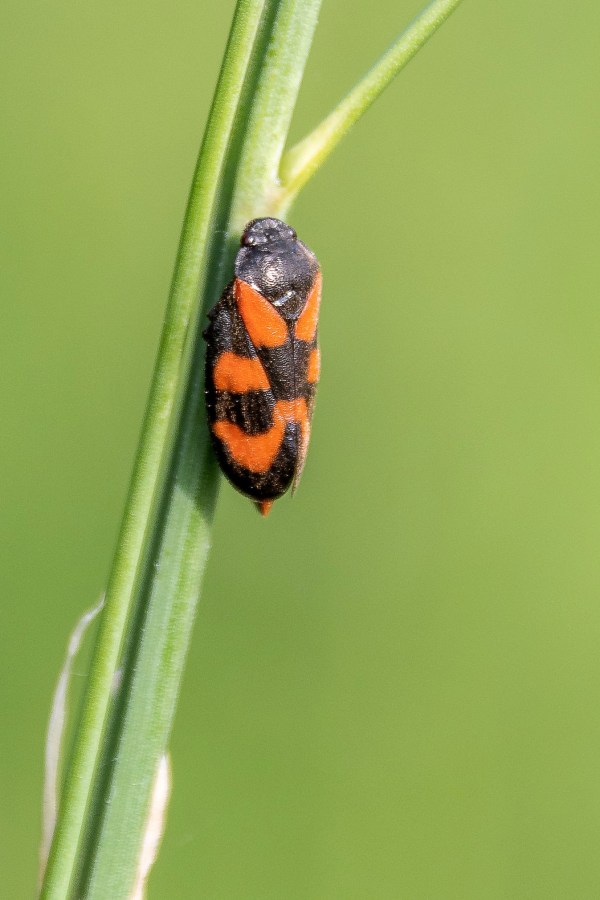
Red-and-black froghopper
This is a red-and-black froghopper (Cercopis vulnerata) photographed by DKG on Sunday morning in Village Green. There are ten different species of froghopper in the UK and while the red-and-black froghopper is not the most common, it is widespread.
Continue reading “Froghoppers”



 Southwick Country Park Nature Reserve