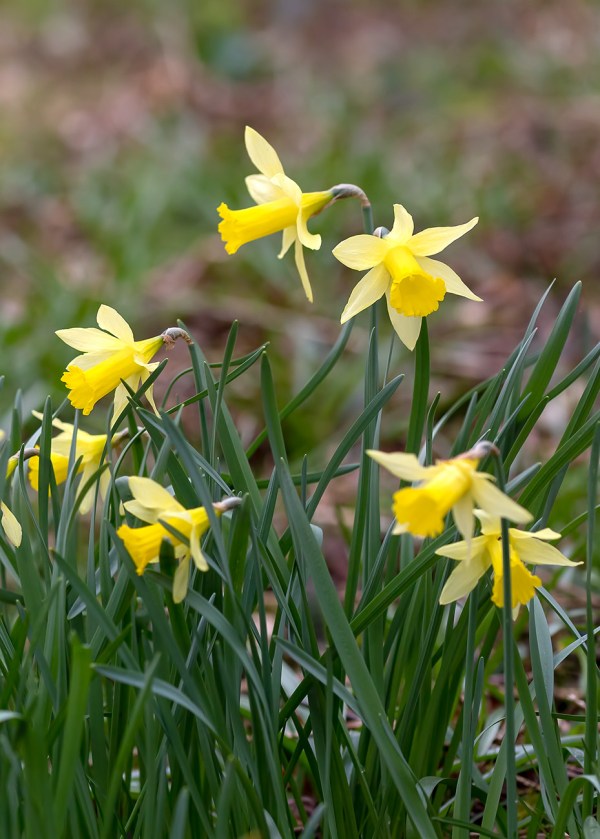
Over the years the Friends have planted hundreds, if not thousands, of native daffodil bulbs in and around the reserve’s woodland. Some, sheltered at the bottom of Kestrel Field, flower in February but the rest wait for spring: a host of golden daffodils etc.
Continue reading “Native versus non-native”Squirrel invaders
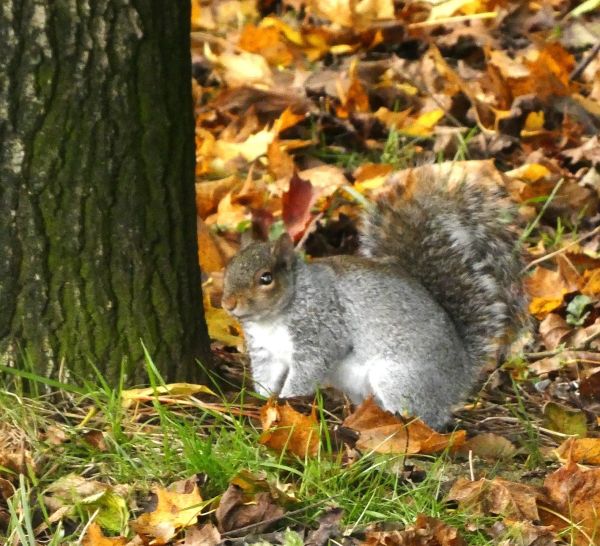
The reserve’s grey squirrels are invasive aliens, brought here during the 19th Century, when the possession of rare and exotic species of plants and animals was the height of fashion. Grey squirrels, native to eastern North America, were first released into the wild in Britain, at Henbury Park, in Cheshire, in 1876.
Read on:One of the reserve’s most controversial residents: much loved sweetheart of our local wildlife or destructive and costly invasive alien species?

Grey squirrel photographed last week in the reserve by Ian Bushell.
Himalayan balsam
We keep constant watch in the reserve for the beautiful invasive alien, Impatiens glandulifera, or Himalayan balsam. It might be very lovely to look at but it is an environmental horror story
Continue reading “Himalayan balsam”Hogweed
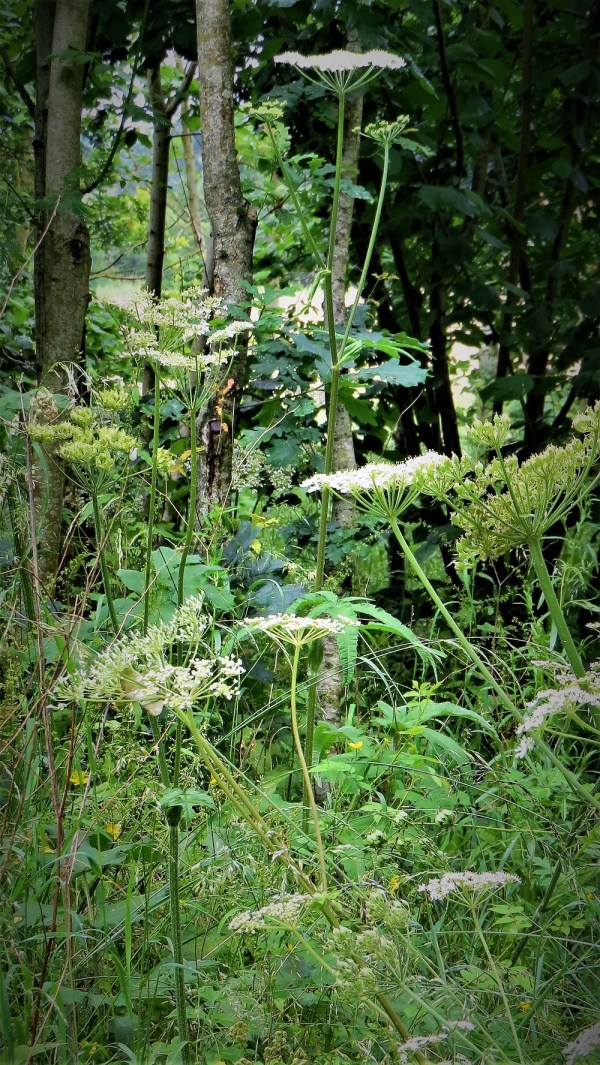
The reserve’s common hogweed (Heracleum sphondylium) can grow two metres tall in just the right place, with flower-heads the size of dinner plates. Every year, somebody asks if it is giant hogweed and the answer is: no.
Continue reading “Hogweed”The battle with Spanish squill
Every year, as the reserve’s bluebells come into flower, the Friends do battle against a dreaded invasive alien: Spanish squill. This week Sarah, Alan, Jim and Ian set to in the copse next to the Heritage Orchard, where the squill are threatening our native bluebells.
Continue reading “The battle with Spanish squill”Lesser Celandine
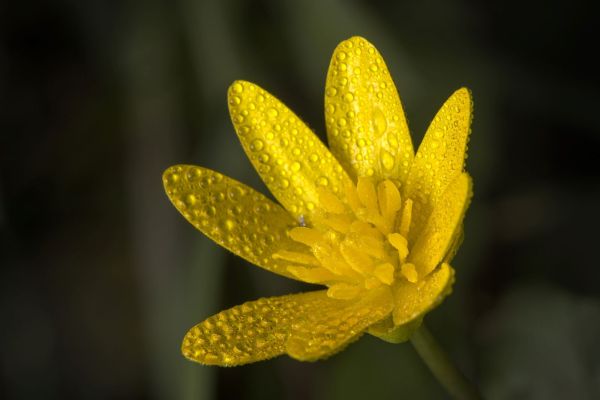
The lesser celandines (Ficaria verna) are in flower.
Continue reading “Lesser Celandine”Eurasian collared dove
Collared doves (Streptopelia decaocto) bred in Britain for the first time in 1955, in Norfolk. Within 20 years they had colonised every county in the British Isles, and had even reached Shetland and the Outer Hebrides.
Continue reading “Eurasian collared dove”Hogweed
The reserve’s common hogweed (Heracleum sphondylium) can grow two metres tall in places, with flower-heads the size of dinner plates. Every year, somebody asks if it is, in fact, giant hogweed and the answer is: no.
Continue reading “Hogweed”Invasion of the Spanish squill
Every year, around this time, we publish some version of this post: our native bluebells need constant protection from this invasive species.
Continue reading “Invasion of the Spanish squill”Eurasian collared dove
Collared doves (Streptopelia decaocto) bred in Britain for the first time in 1955, in Norfolk. Within 20 years they had colonised every county in the British Isles, and had even reached Shetland and the Outer Hebrides.
Continue readingPineapple weed
Pineapple weed (Matricaria discoidea) is an 18th century introduction from northeast Asia that escaped from Kew Gardens into the wild in 1871 to become the fastest spreading invasive plant species of the 20th century.
Continue reading “Pineapple weed”A harlequin ladybird nymph photographed yesterday in the reserve by Ian Bushell.
Continue readingMore about Invasive Species Week
Invasive non-native species are one of the top five causes of biodiversity loss worldwide. Here in the UK they harm the environment, threaten some of our rarest species and cost our economy over £1.8 billion a year.
Read on to find out how you can helpIt’s Invasive Species Week
Human activity has introduced more 3,000 non-native plant and animal species into Britain from all over the world. Most do no harm but some do irreparable damage to their new habitat and its native biodiversity.
Continue reading “It’s Invasive Species Week”Invasion of the Spanish squill
On Friday we posted a gallery of grey squirrels, an invasive alien species that has almost completely replaced our native squirrel population. Unfortunately, our native bluebell (Hyacinthoides non-scripta) is also being threatened by the spread of an invasive alien: Spanish squill (Hyacinthoides hispanica), a similar bluebell species imported into our gardens from southern Europe during the 17th and 18th centuries.
Lesser Celandine
The lesser celandines (Ficaria verna) are in flower. Celandines are the floral equivalent of the swallow, they appear around the same time and mark the coming of spring. In fact the word celandine comes from the Greek name for swallow: chelidon. One of its local names is spring messenger; others are brighteye, butter and cheese, frog’s foot, golden guineas and, less romantically, pilewort because it was once used to treat haemorrhoids.
Continue reading “Lesser Celandine”Mink
American mink have been in the news as a disease vector for COVID-19. Millions of animals on hundreds of Danish fur farms are to be destroyed.
Continue reading “Mink”Himalayan balsam
We keep constant watch in the park for the invasive alien, Impatiens glandulifera, or Himalayan balsam. It might be very beautiful to look at but it is an environmental horror story
Continue reading “Himalayan balsam”The Battle of The Spanish Squill
By Ian Bushell
For the last couple of Sundays, I have been looking for Spanish squill among the bluebells. I have gone early and used the allotment entrance to the park.
Continue readingInvasion of the Spanish squill
Our native species of bluebell (Hyacinthoides non-scripta) is threatened by the spread of Spanish squill (Hyacinthoides hispanica), a similar species imported into our gardens from southern Europe during the 17th and 18th centuries.
Grey squirrel invaders
The park’s grey squirrels are invasive aliens, brought here during the 19th Century, when the possession of rare and exotic species of plants and animals was the height of fashion. Grey squirrels, native to eastern North America, were first released into the wild in Britain, at Henbury Park, in Cheshire, in 1876.
Read on:Lesser Celandine
The lesser celandines (Ficaria verna) are in flower. Celandines are the floral equivalent of the swallow, they appear around the same time and mark the coming of spring. In fact the word celandine comes from the Greek name for swallow: chelidon. One of its local names is spring messenger; others are brighteye, butter and cheese, frog’s foot, golden guineas and, less romantically, pilewort because it was once used to treat haemorrhoids.
Continue reading “Lesser Celandine”Ash dieback
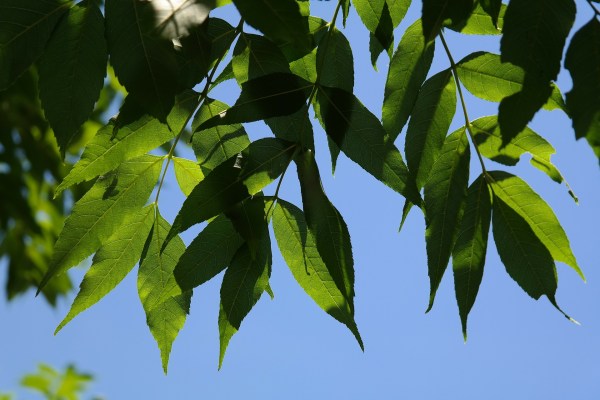
Ash dieback is a disease that is especially deadly to Britain’s native ash trees, Fraxinus excelsior.
Continue reading “Ash dieback”