Cockchafers, more familiarly known as May bugs, are one of those things that go bang in the night.
Continue reading “Cockchafer”Cockchafer
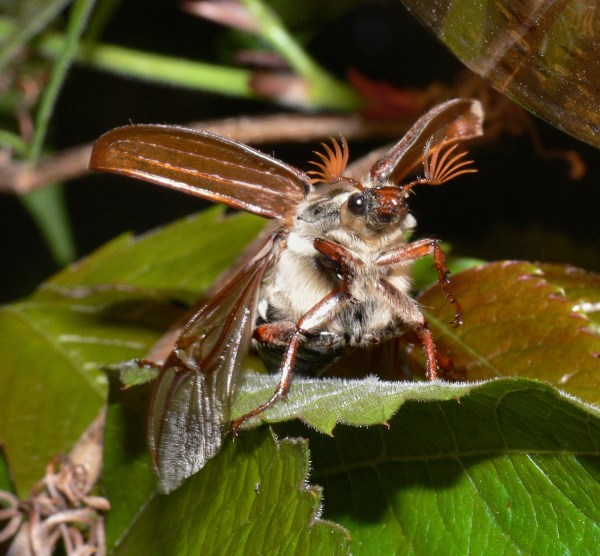
Cockchafers, more familiarly known as May bugs, are one of those things that go bang in the night.
Continue reading “Cockchafer”
The ladybirds are leaving hibernation.
Continue reading “Sixteen spot ladybird”
A dandelion crammed with tiny bronze-black beetles. Our favourite entomologist emailed us:
They’re pollen beetles. Getting a positive ID is going to be impossible without sending me a specimen (and they’re too small!) but this time of year the most common species is the Common Pollen Beetle Meligethes aeneus.
Continue reading “Common pollen beetle”
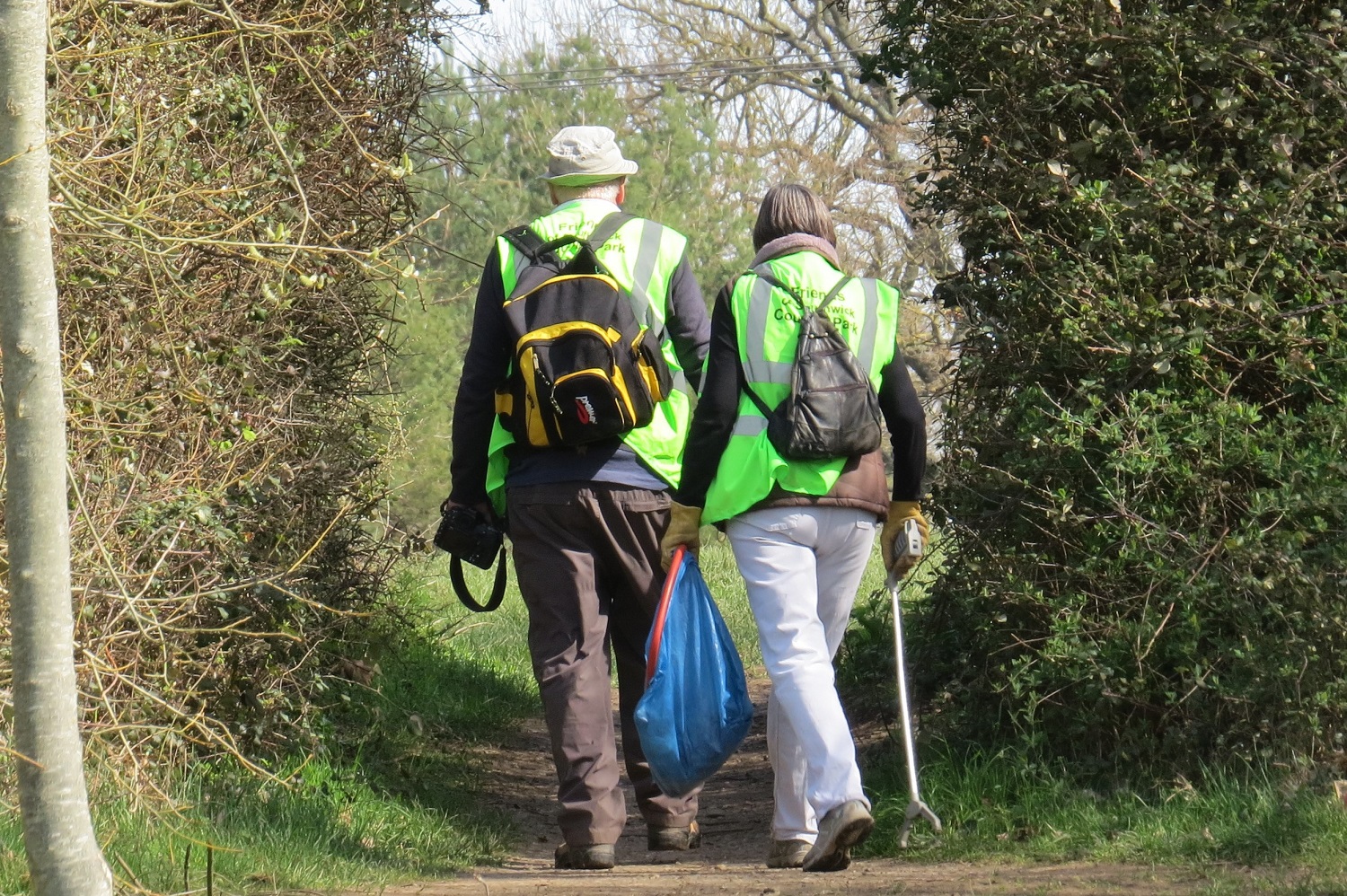
Most of the Friends of Southwick Country Park are retirees, all of us inclined to begin sentences with: When I was a child….
Continue reading “Splatometer”
While exploring in our species lists, we found a report of a white letter hairstreak butterfly (Satyrium w-album), reported in 2017 by an expert observer. This is a real rarity, a UK Biodiversity Action Plan priority species.
Continue reading “White letter hairstreak”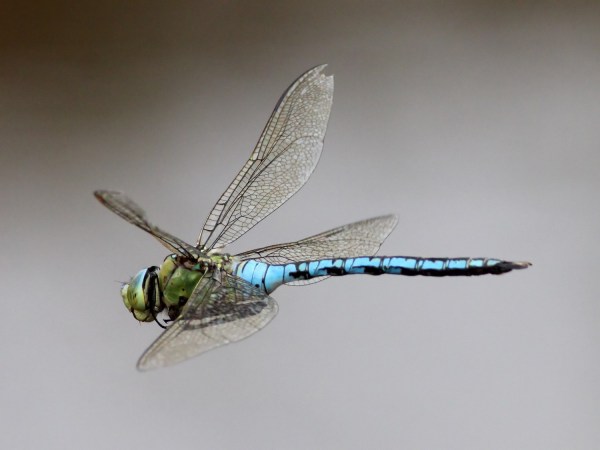
We have added three species of Odonata (dragonflies and damselflies) to our species lists this year. They have raised our total to a round dozen.
Continue reading “2019 review – part 4”
The temperature is dropping and we have already seen the first frosts. The park’s invertebrates are preparing for hibernation.
Continue reading
Ian Bushell reports on cutting back the set-aside on the northern edge of Village Green with brush cutters.
Continue reading “Wet Wednesday cont.”

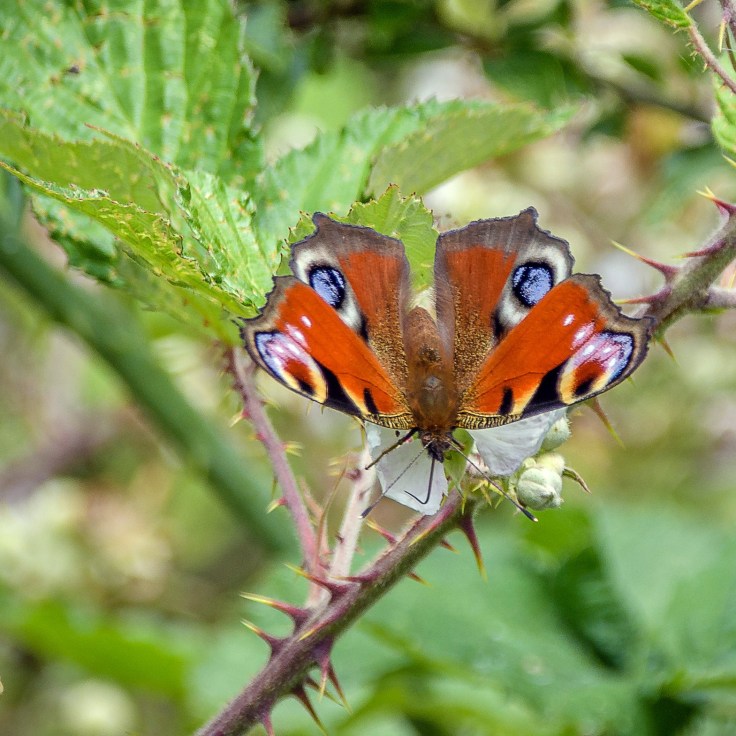
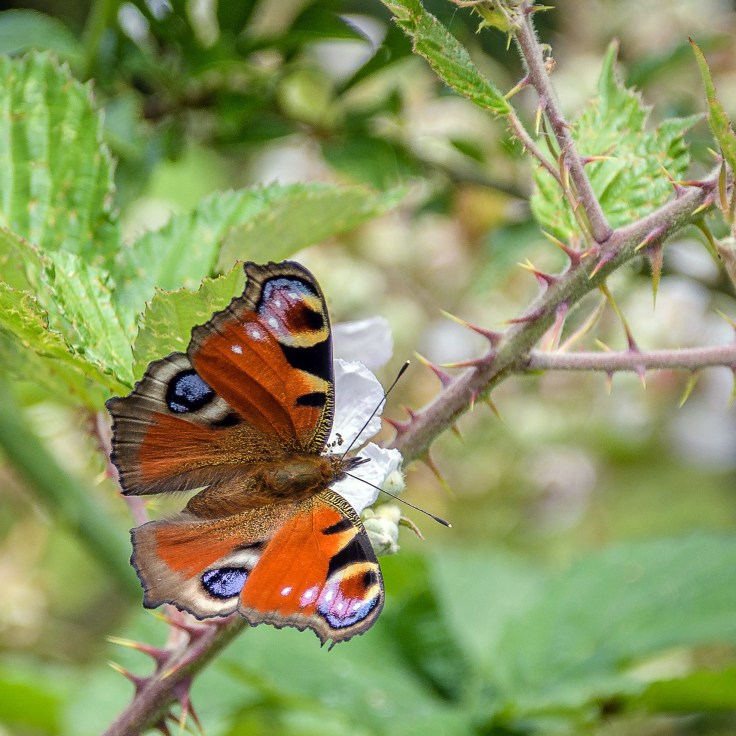

Pictures of a peacock butterfly taken by DKG during the summer.

This is a drone fly (Eristalis tenax), named for its mimicry of a male honeybee.
Continue reading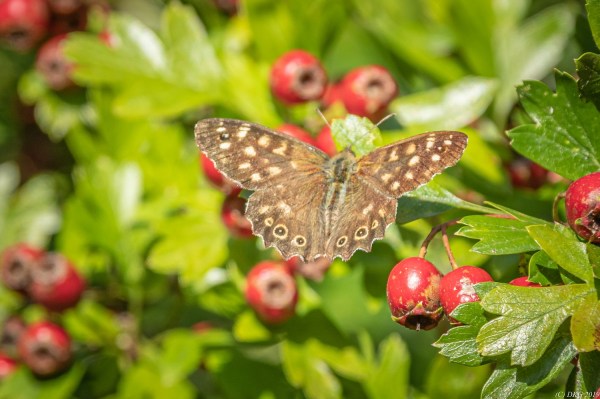
A speckled wood (Pararge aegeriais) on hawthorn berries photographed last weekend by DKG.
Continue reading “Speckled wood”
Yesterday’s picture of an artichoke gall among oak tree leaves produced questions and enquiries from our readers via Messenger, Facebook and our website’s below-the-line comments column. Here is more information about oak gall wasps.
Continue reading
By Ian Bushell
One of the quintessential sounds of summer is the chirping of grasshoppers and crickets (Orthoptera). They are found all over the park, but probably the best places to see them are those areas of longer grass or bramble beside the many paths.
Continue reading “Orthoptera”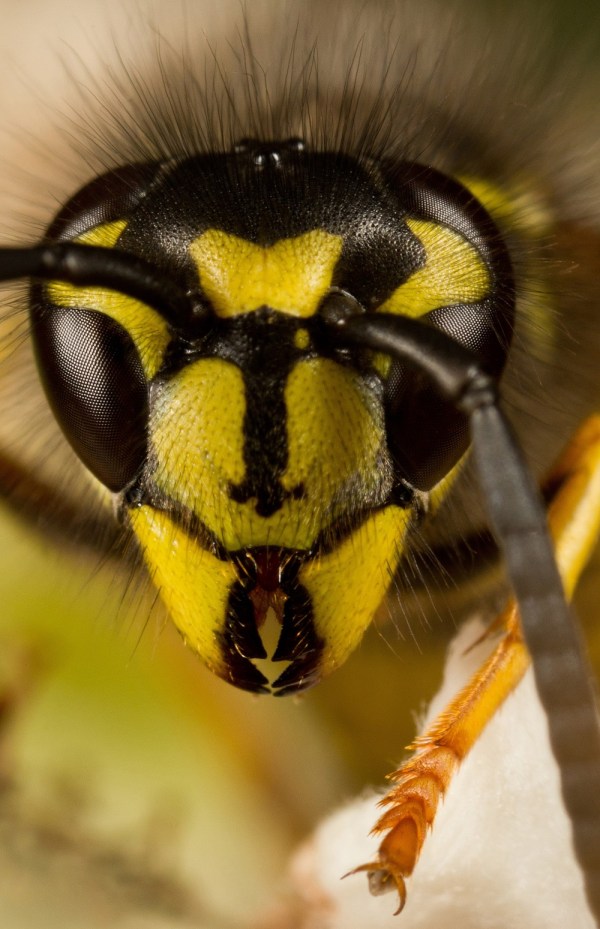
There are six species of social wasp that are native to Britain and this is a good time of year to identify them.
Continue reading “Wasp time”
Skippers are a family of Hesperiidae in the order of Lepidoptera; because they are diurnal, we generally called them butterflies but many authorities class them as a group intermediate between butterflies and moths. They are called skippers because of their rapid and darting flight.
Continue reading “Skippers”
There are funnel shaped webs low down in the dense vegetation of the park’s hedges and edges; what lives in them?
Continue reading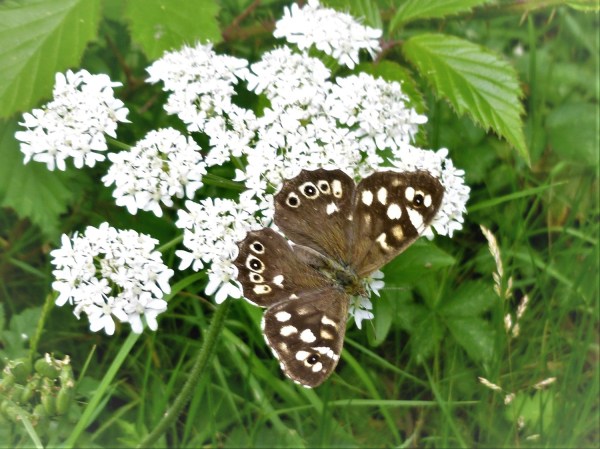
Lepidoptera is the name of the order that butterflies and moths belong to.
Click here for five fascinating facts about lepidopteraExtraordinary little video of an emperor dragonfly hatching into its final adult form.
Published on Jul 31, 2012 by wildvod.
Emperor Dragonfly larvae emerging from the kitchen garden pond at the Tyntesfield National Trust Estate in June 2012.
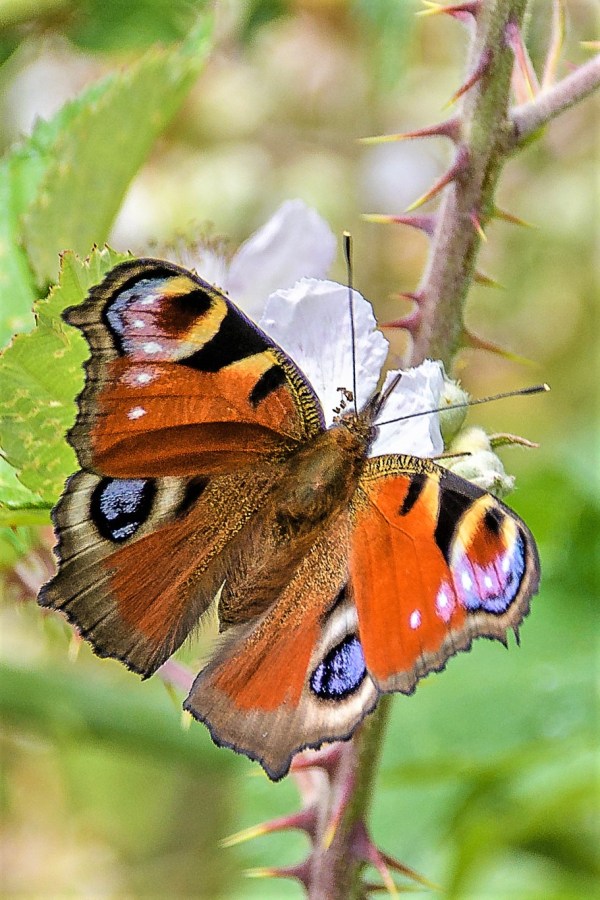
A peacock butterfly on bramble, by DKG.
Emperor dragonflies (Anax imperator) are the largest of Britain’s Odonata. They are fast, active hunters that rarely come to rest which makes them exceptionally difficult to photograph.
Continue reading
A lucky speckled wood that just got away at the cost of a more than half of one of its four wings.
The picture is by DKG
Yesterday was the first day of the Big Butterfly Count. Here are some of the park’s butterflies to encourage you to sign up.


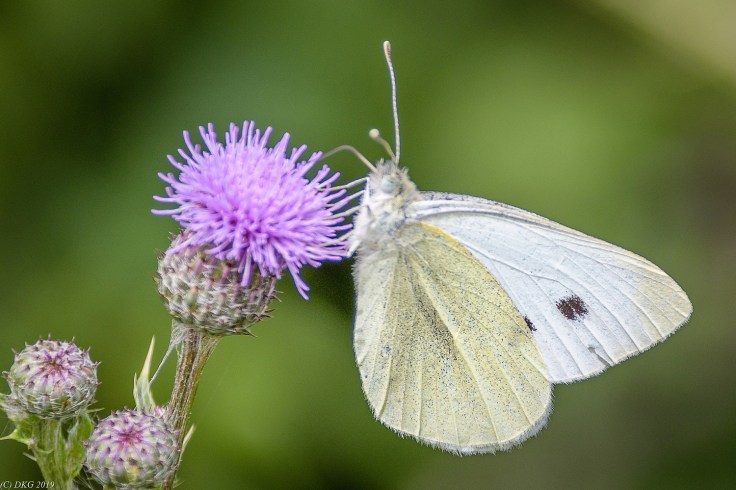


Southwick Country Park’s BUTTERFLIES 2019 list

Every year since 2010, Butterfly Conservation has conducted a survey of the country’s butterflies using thousands of volunteer citizen scientists. Last year over 100,000 volunteers took part.
Continue reading “big butterfly count”
This extraordinary creature is the nymph of a speckled bush cricket (Leptophyes punctatissima). It is an inadvertent portrait: the photographer was focusing on the flowers of the common vetch and only found the bush cricket when the picture was enlarged for detail.
More tiny creatures here:


 Southwick Country Park Nature Reserve