A host of golden daffodils….

Over the years the Friends have planted at least a couple of thousand native daffodil bulbs (Narcissus pseudonarcissus) around the edges of the reserve’s woodland. Back breaking work, rewarded at this time of year with the first golden flowers.

Continue reading

Dryoptera

There are three species of fern in the reserve belonging to the genus Dryopteris: a buckler fern and two species of male ferns, all very much alike. At the moment all three are busy unfurling long, bright green, finely divided leaves.

Continue reading

Blue tit nest part 3

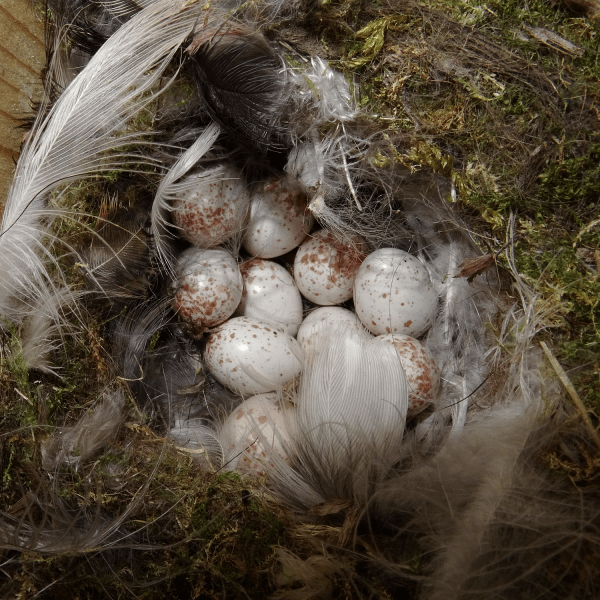
In the header photograph, the blue tit’s eggs are lying in a cup shaped nest lined with soft feathers that are obviously intended to keep the eggs warm. But around the edge of the cup there are larger feathers; their purpose is not so clear.

Continue reading

Blue tit nest part 2

After yesterday’s video post, a reader asked what triggered the blue tit female (it is always the female blue tit that builds the nest) to stop collecting moss and to begin collecting what he called fluffy stuff. While failing entirely to find an answer to his question, I found a treasure trove of research into blue tit nests and the materials they use to build them.

Continue reading

Blue tit colours

The blue tit (Parus caeruleus) has been classified as sexually monochromatic, which means that male and female are the same colour. This classification is based, though, on human colour perception, not on blue tit colour perception.

Continue reading

Chaffinch

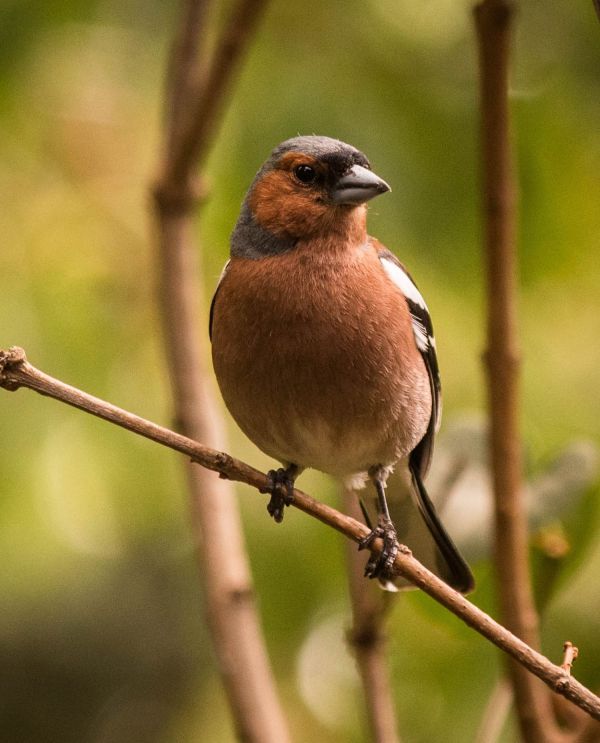
According to the RSPB, trichomonosis, an avian disease caused by a parasite called Trichomonas gallinae, has reduced the UK’s chaffinch population by 34% in the last decade.

Audio: Common Chaffinch by Krzysztof Deoniziak (CC BY-NC-ND 4.0 DEED) xeno-canto.org XC884915

Continue reading “Chaffinch”

Muntjac

A message from an early-bird dog walker:

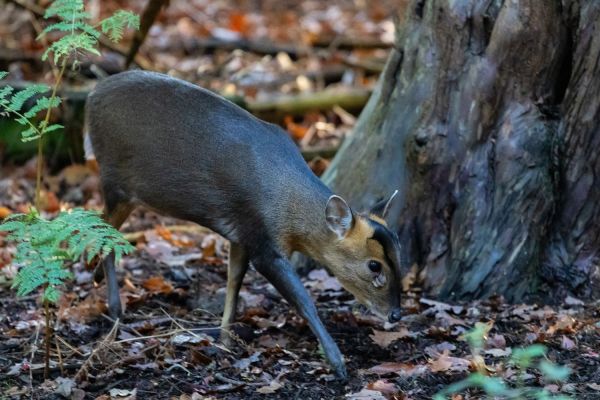
I spotted a Muntjac deer this morning, about 5 o’clock whilst walking my dog, who luckily is always kept on his lead. It was In the hedgerow that runs along the path from the carpark towards Studley, just one by itself only. Is this a species you are aware of?
I was very surprised to see it so close to a built up area which has quite considerable footfall. But for well over a year I haven’t haven’t seen the larger deer which frequented the park.

Continue reading

Moss

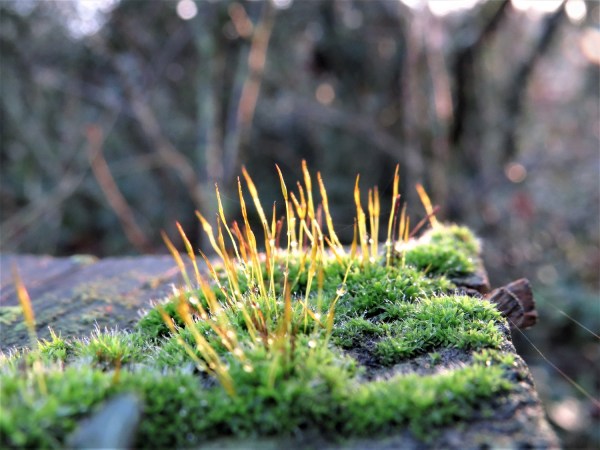
Before you drag the pressure washer out of its winter hibernation, let’s talk about the ecological importance of the moss growing between your patio pavers.

Continue reading

Wood anemone

There are wood anemones (Anemone nemorosa) in the copse between Sheep Field and Sleepers, and under oak 5552 in the corner by the central path..

Continue reading
Create a website or blog at WordPress.com

Up ↑