Wiltshire Wildlife Trust is trying to buy habitat for the critically endangered marsh fritillary butterfly. Please, read their appeal and consider donating.
Continue reading “Marsh fritillary”Marsh fritillary
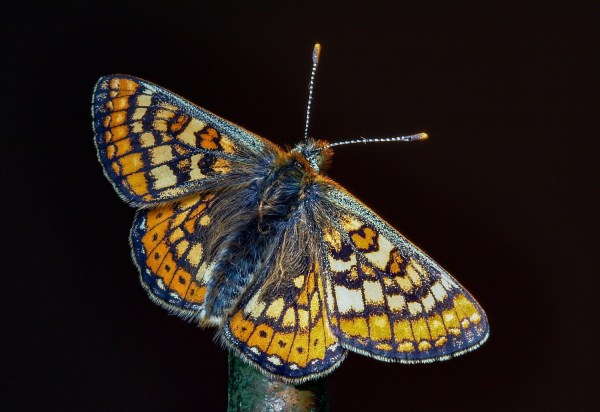
Wiltshire Wildlife Trust is trying to buy habitat for the critically endangered marsh fritillary butterfly. Please, read their appeal and consider donating.
Continue reading “Marsh fritillary”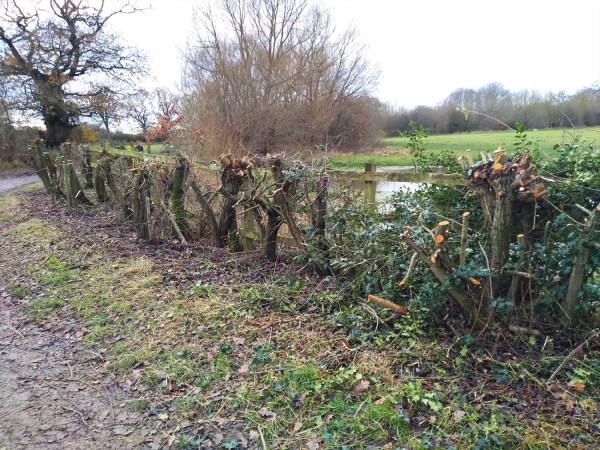
Contractors have cut the hedge between the central path and the pond. It does look a bit brutal at the moment, we know, but all these stumps will make vigorous new growth in the spring.


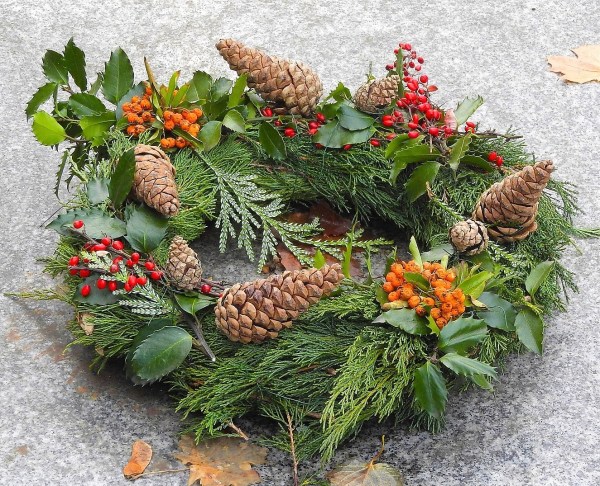
Many of the evergreen plants in the park have traditionally been used in the celebration of winter festivals. As the days grew ever shorter and colder, winter must have been a frightening and dangerous time for the early human cultures of northern Europe.
Continue reading “Winter festivals”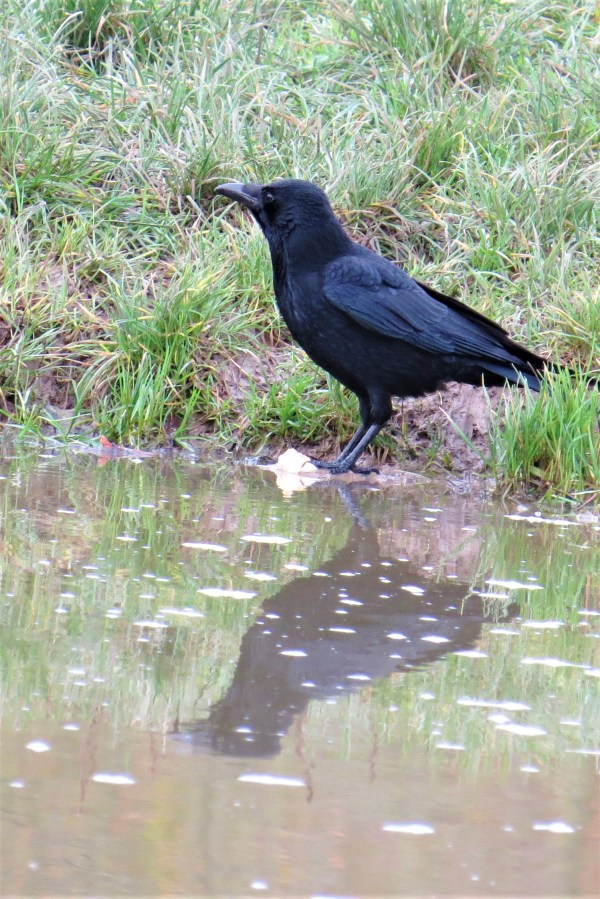
Here’s a clever carrion crow (Corvus corone) bringing a piece of dried bread, from a bird table somewhere in Studley Green, to soak it in our pond until it is soft enough to eat.


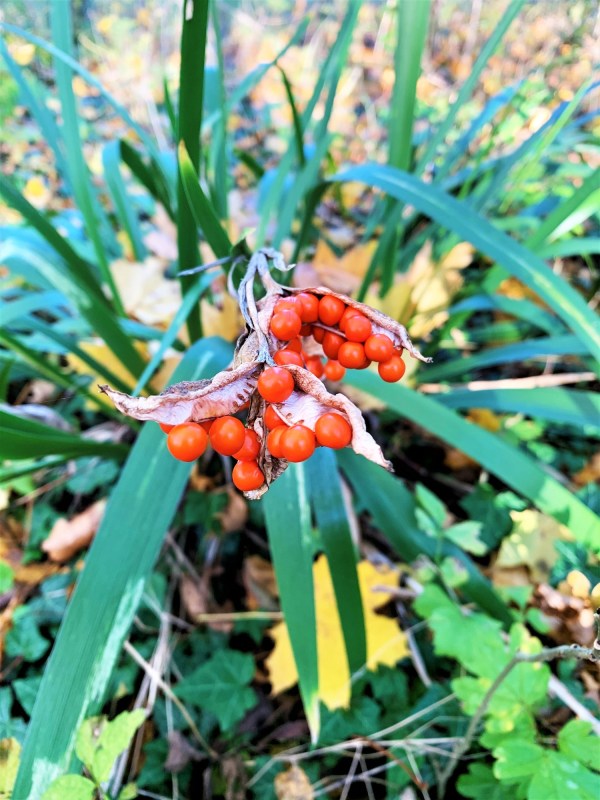
Clive Knight has sent us pictures of the beautiful scarlet seeds of Iris foetidissima growing in our woods.
Continue reading
Since our report that there are tawny owls in the park, we have had several more from park-going night owls and early risers. Here are some tawny owl facts:
click here for tawny owl facts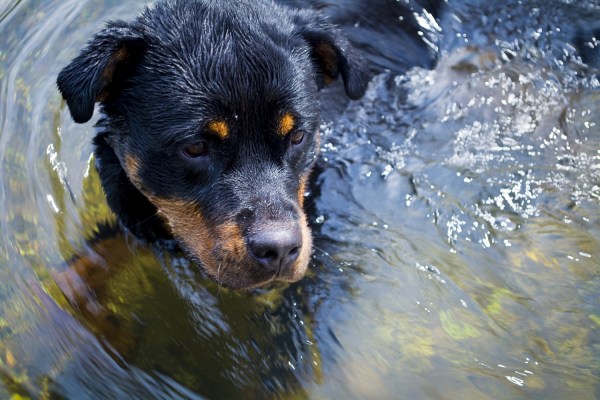
by Barbara Johnson
After reading how chemicals used in flea treatment can damage and pollute our waterways, I asked a vet for information and asked if he could suggest an alternative flea treatment.
Continue reading “Flea circus part 3”
Fieldfare (Turdus pilarus) and redwing (Turdus musicus), migratory thrushes from mainland Europe, are common winter visitors to the park. They are easily confused; here is a video to help you distinguish the two species.
Header picture: Fieldfare (Turdus pilaris) by Teresa Reynolds (CC BY-SA 3.0)

by Simon Knight
I was looking for fungi recently in the park, but because it’s now getting late in the fungi season, I wasn’t finding anything that interesting. I was about to head home when the moss on a nearby oak tree caught my attention.
Continue reading “Mycena pseudocorticola”
Three well camouflaged roe deer in the Church Lane fields, photographed yesterday: a doe and her kids. Typically, a pair of roe kids is one of each sex, and here, the male is in the middle of the group; you can just see the buttons covering the pedicles, the places from which his antlers will grow.
Continue reading “Church Lane fields”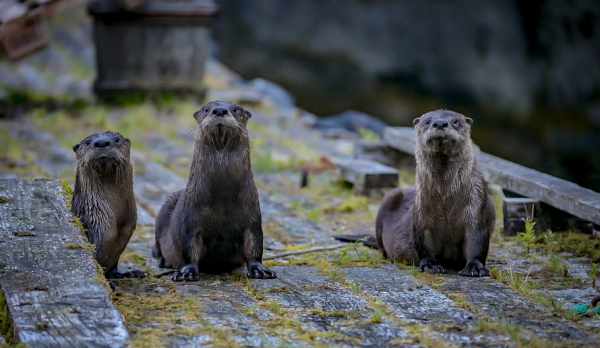
among mammals, otters have the thickest fur. In every square inch of a Eurasian otter’s skin, there are around half a million hairs. For comparison: the average dog has 15,000 hairs per square inch and the average human, only 1,000.


It had been assumed that a warming climate would lead to a longer growing season for our deciduous trees, followed by a later autumnal leaf-fall. However, research has indicated that this might not be so.
Continue reading
Thanks to Sarah Gould for reminding us that the tawny owl’s classic tu-whit tu-whoo noise is, in fact, made by two birds in conversation.
Click for audio
By David Feather
What would you say if you went to see your GP because you were feeling a bit down and was told to get out into a green space like Southwick Country Park? I ask because a number of GP practices in Scotland are doing just that.
Continue reading “Nature Prescriptions”
The Winter moth (Operophtera brumata) is one of the few moth species that can cope with winter’s freezing temperatures in its adult stage. They are endothermic which means that they can produce heat internally by biochemical processes, just as warm-blooded creatures do.
Continue reading “Winter moths”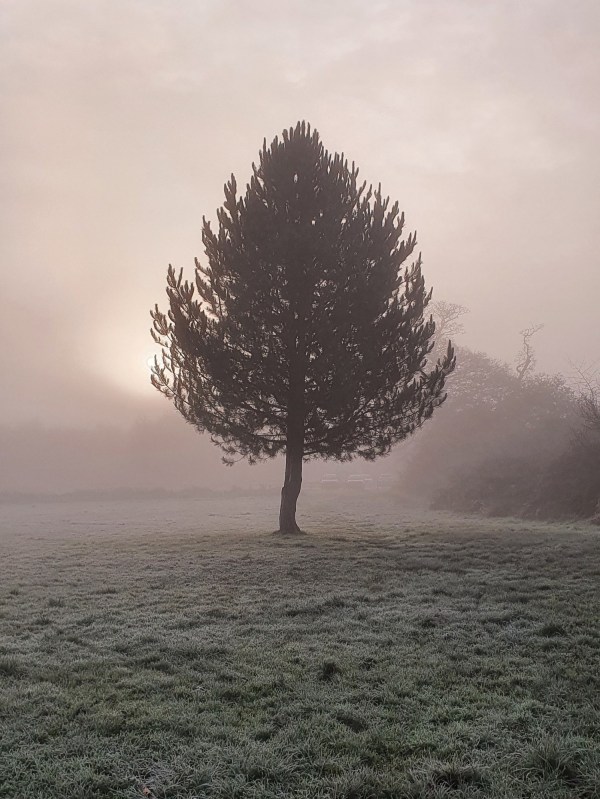
photographed by Luiza Bell


Data published in September by the Environment Agency revealed that all English rivers have failed to meet the new chemical pollution standards set in 2017. The levels of sewerage discharge, and agricultural and industrial chemicals entering our water system is still too high. Lambrok Stream is classed as a main river by the EA and must be included in these findings.
Continue reading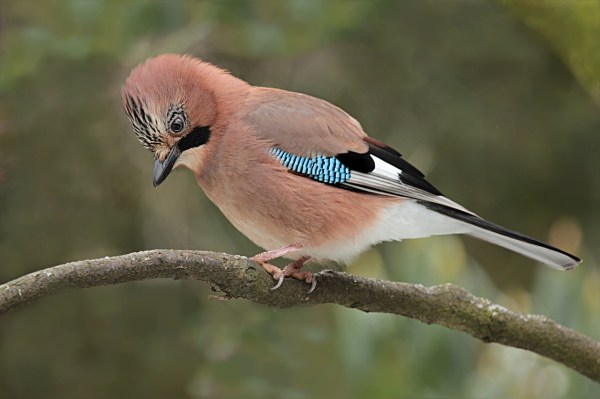
There are all sorts of things that shriek in our woods: the Eurasian Jay (Garrulus glandarius) is just one of them.
Jay (Garrulus glandarius) audio by Bodo Sonnenburg ( CC -BY-SA) xeno-canto.org

Last year the Department for Environment Food and Rural Affairs (DEFRA) published a report called Wild Bird Populations in the UK, 1970 to 2018. We published this post at the time but feel it bears repeating: the coronavirus crisis may be at the top of our list of concerns but the environmental crisis has not gone away.
Continue reading “Bird populations in crisis”
An important message from Sir David Attenborough.
Header picture by DKG
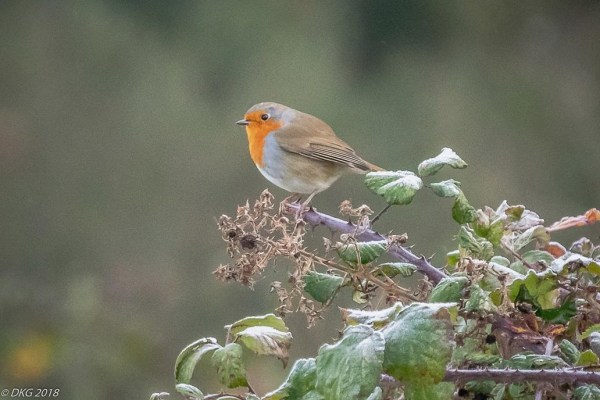
A robin’s lifespan is just 13 months on average due to high mortality among robins in their first year. However, once they’ve passed that first year barrier, they stand a much better chance of surviving for quite a while – the record currently stands at 19 years!

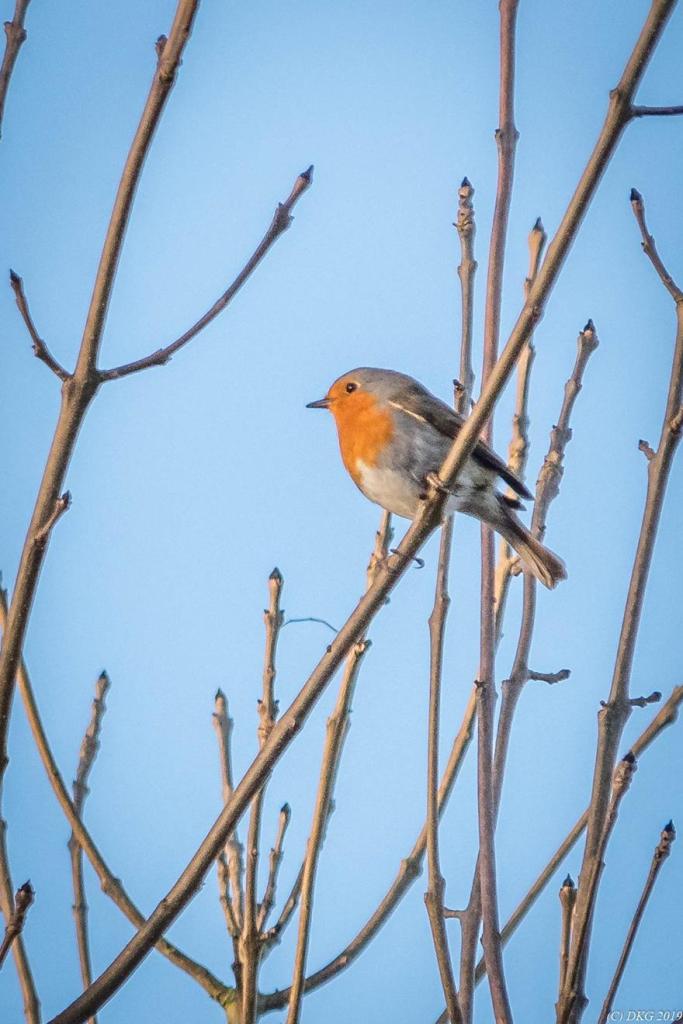

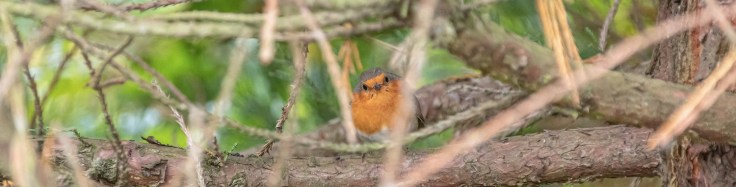
All pictures taken in the park by DKG

Though you may not have seen them, there are field voles all over the park. Here ten things you may not have known about them.
Continue reading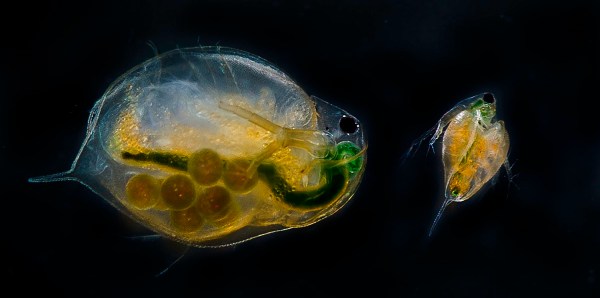
This is a water flea (Daphnia magna), not even a distant cousin to the fleas on your dog, but very close to the bottom of the freshwater food chain that is being disrupted by your dog’s flea treatment.
Continue reading “Flea circus part 2”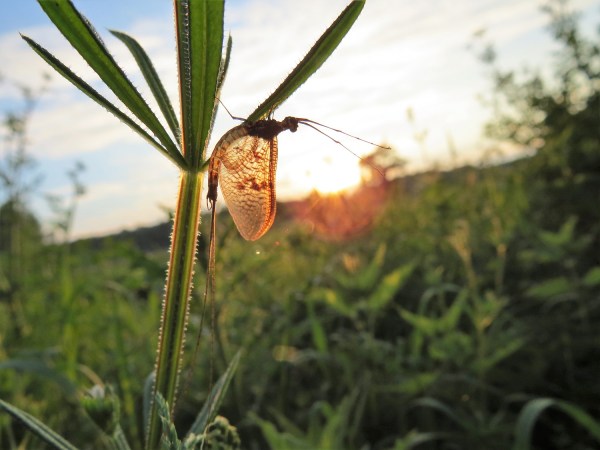
Research has recently found that the highly toxic insecticides used on cats and dogs to kill fleas are poisoning England’s rivers. Scientists believe that significant environmental damage is being done to important water insect populations, down at the bottom of the freshwater food chain.
Continue reading “Flea circus”


 Southwick Country Park Nature Reserve