Unlike common wasps, honey bees (Apis mellifera) don’t die at the end of the summer. The hive stores enough food for the queen and the workers to survive through the winter.
Continue reading “Honey bees”Honey bees
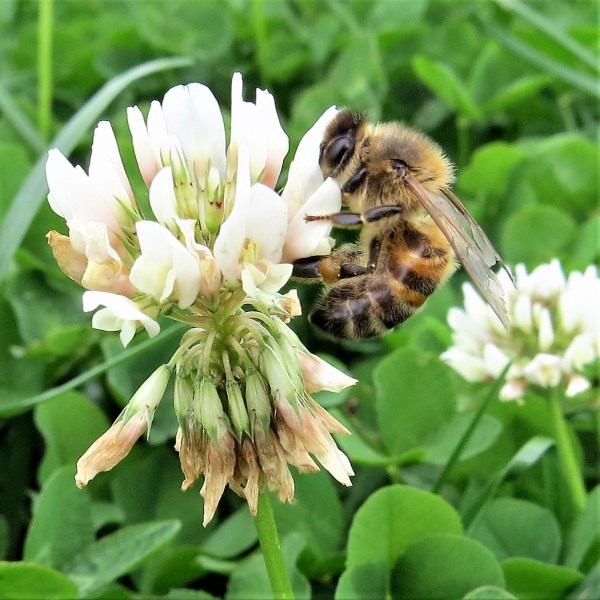
Unlike common wasps, honey bees (Apis mellifera) don’t die at the end of the summer. The hive stores enough food for the queen and the workers to survive through the winter.
Continue reading “Honey bees”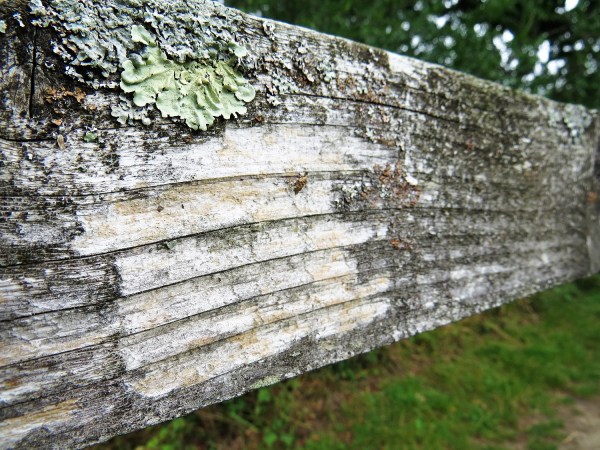
Wasps have stripped wood from the fence in the picnic area, leaving light-coloured lines on the weathered grey boards. All British social wasps make their nests out of paper and they make the paper out of wood fibres and saliva.
Continue reading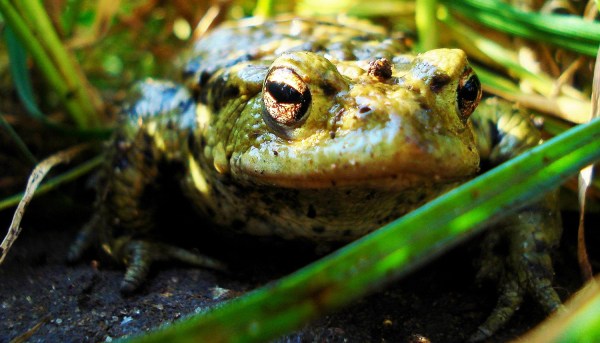
The common toad is no longer common: its population is in decline and it is listed as a Priority Species in the UK Post-2010 Biodiversity Framework. So, we are returning for a closer look at the toad we found and photographed in Village Green on Wednesday, the first toad-sighting for some years.
Continue reading “More about toads”
In Britain, the maximum recorded age of a blue tit is 10 years and 3 months but the world record is 11 years and 7 months.


All pictures taken in the park by DKG
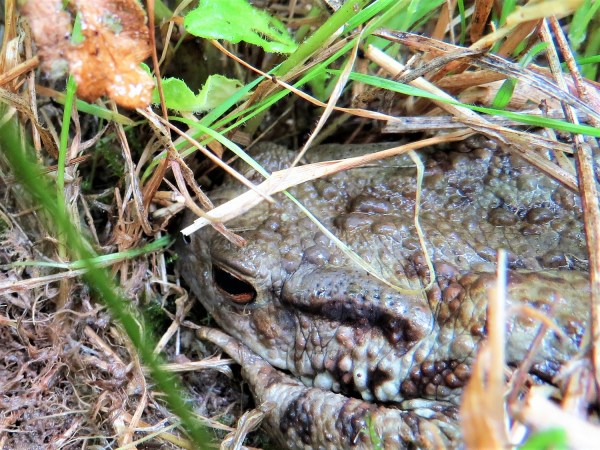
A common toad (Bufo bufo) found in a very wet Village Green this morning, living peaceably in a field vole tunnel under a ragwort plant. We pulled up the ragwort and the toad moved further down the tunnel.


Pictures taken in the park by Suzanne Humphries.

Lambrok Stream is home to rare and protected water voles.

Message to Ian:
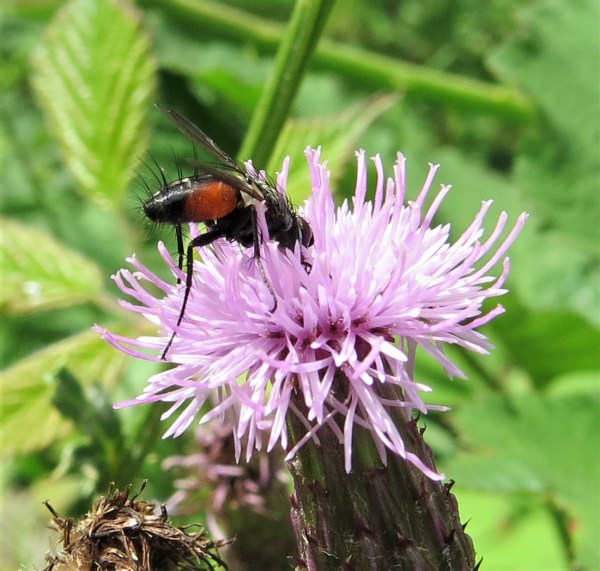
Another unidentified insect inadvertently included in a botanical picture. Any idea what it is?




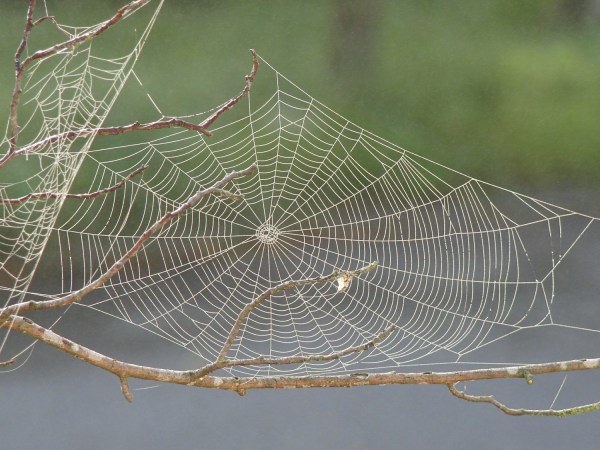
The fields are full of spiders’ webs.
Continue reading “spider silk”
There are 63 species of ant in Britain, 17 of which are introduced.
Continue reading
This is the cutest thing we have read on the internet for some time.
Continue reading “Small scissor bee”
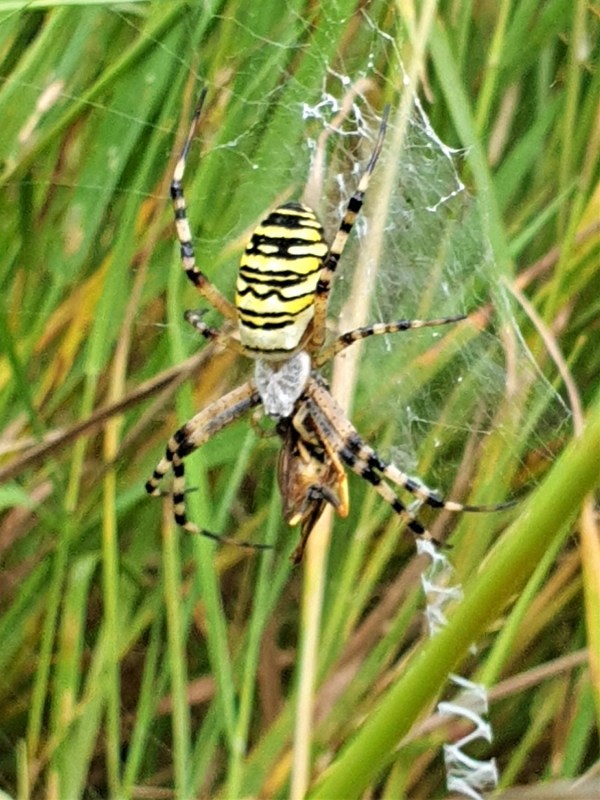
Jason Pickard photographed this specimen on Wednesday in The Race, in the south facing hedge among the tall grass there. Perhaps we have the makings of a colony.
Continue reading “and there’s more….”
A large colourful female wasp spider found yesterday by Ian Bushell in the set-aside at the top of Kestrel Field.
Continue reading
Bees buzz in two different ways.
Continue reading “BUZZ!”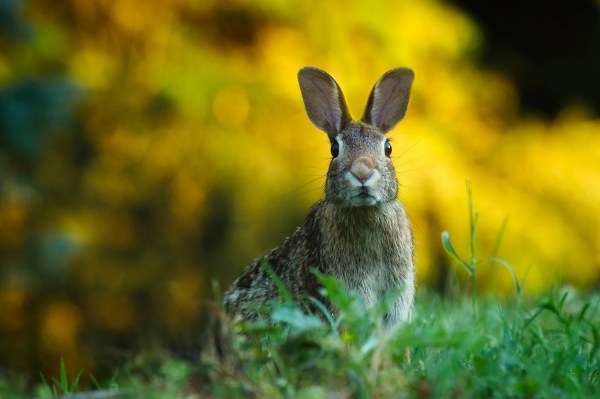
There is a well established rabbit warren in the hedge between Cornfield and Sleepers Field. But, despite their long-term place in our landscapes and myths, rabbits are not British natives; they are an introduced alien species.
Continue reading
On the evening of July 16th, Ian Bushell and lepidopterist, Hugo Brooke set up moth traps at the top of Village Green. You may have seen them and wondered what they were doing.
Continue reading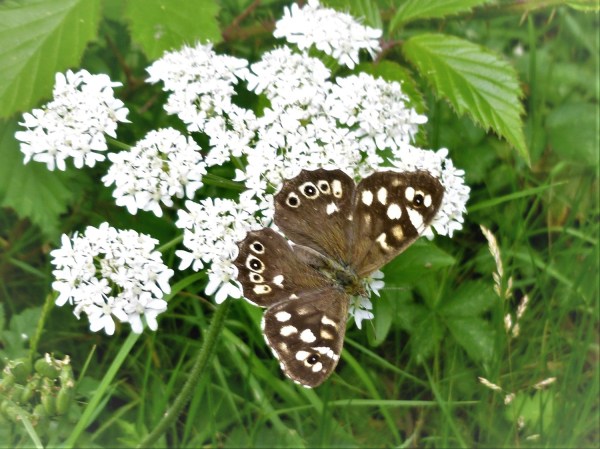
Recorder Ian Bushell
Date 21 July 2020
Start time 1420hrs Finish time 1615hrs
Temperature 23C; Cloud 70% Sunshine
Wind direction – westerly, light, odd gusts.
All fields now mown.

There are funnel shaped webs low down in the dense vegetation of the park’s hedges and edges; what lives in them?
Continue reading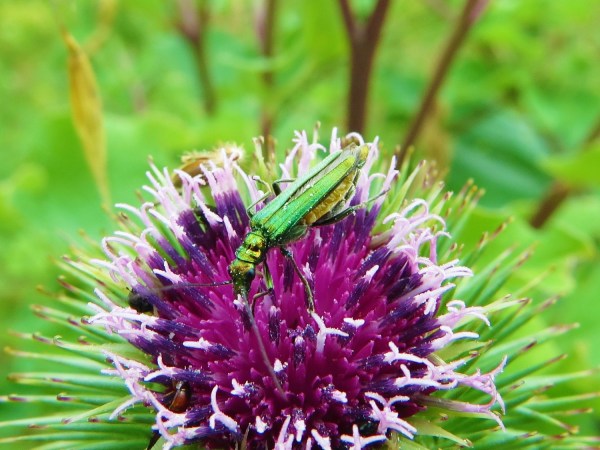
A female Oedemera nobilis, known as the thick legged flower beetle or swollen thighed beetle, photographed in the park last week.


The male has the strangely shaped legs for which the species is named

Yesterday, the Met Office’s radar recorded such a large and dense cloud of flying ants off the southern coast of Britain that it registered as a rain storm.
Continue reading “Flying ants”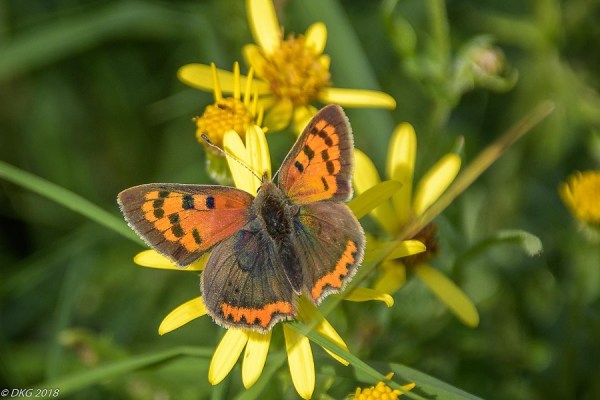
The Big Butterfly Count began yesterday and will run until Sunday August 9th. Join in and help Butterfly Conservation monitor the health of Britain’s Lepidoptera. Spend just 15 minutes in the park, your garden, a field or wood, counting the common butterflies you see.
Continue reading “The Big Butterfly Count”
A brown hawker female, Aeshna grandis, spotted in the park by Ian Bushell on Tuesday afternoon.
Continue reading “Brown Hawker”